Employee evaluation record
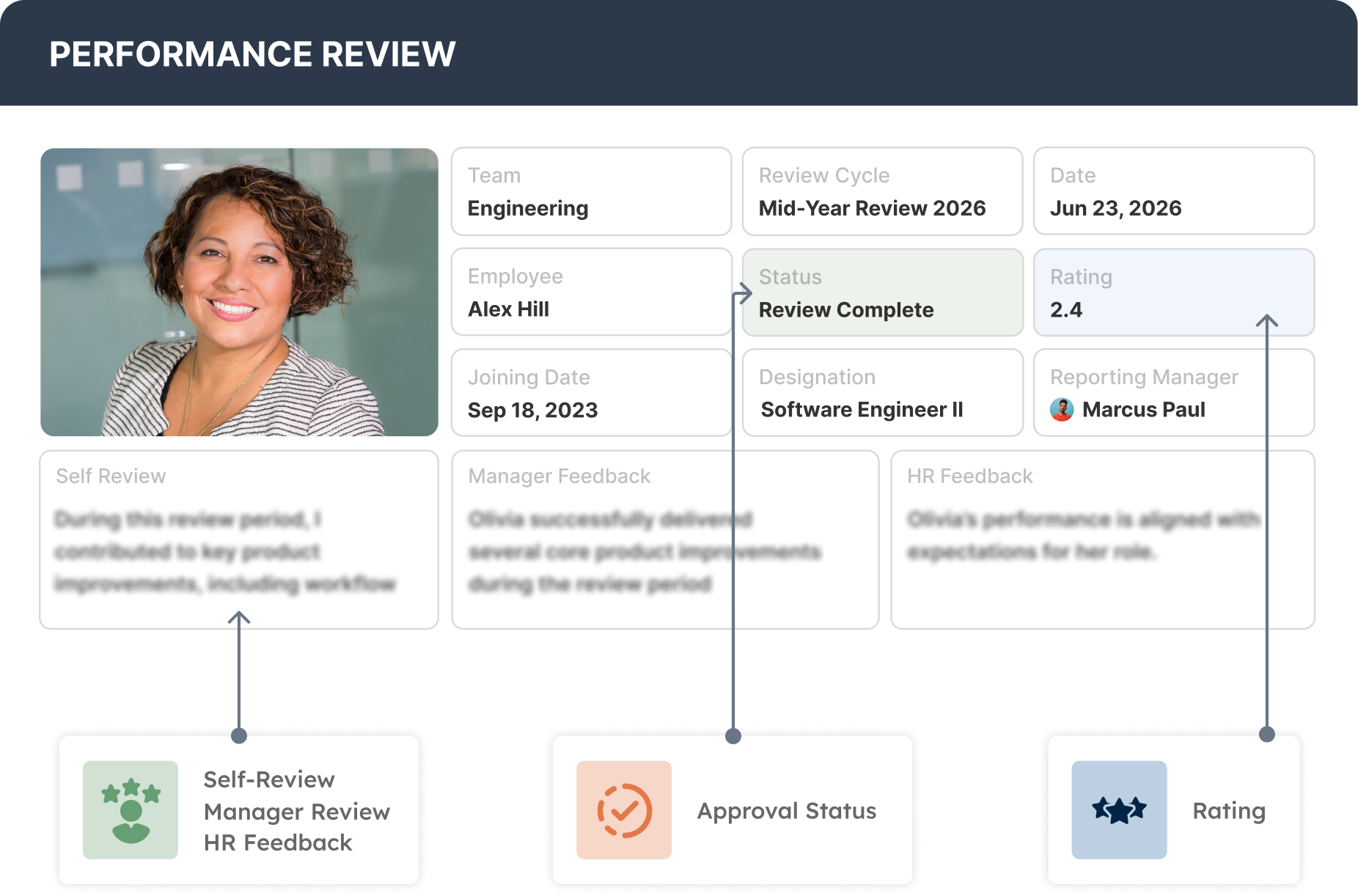
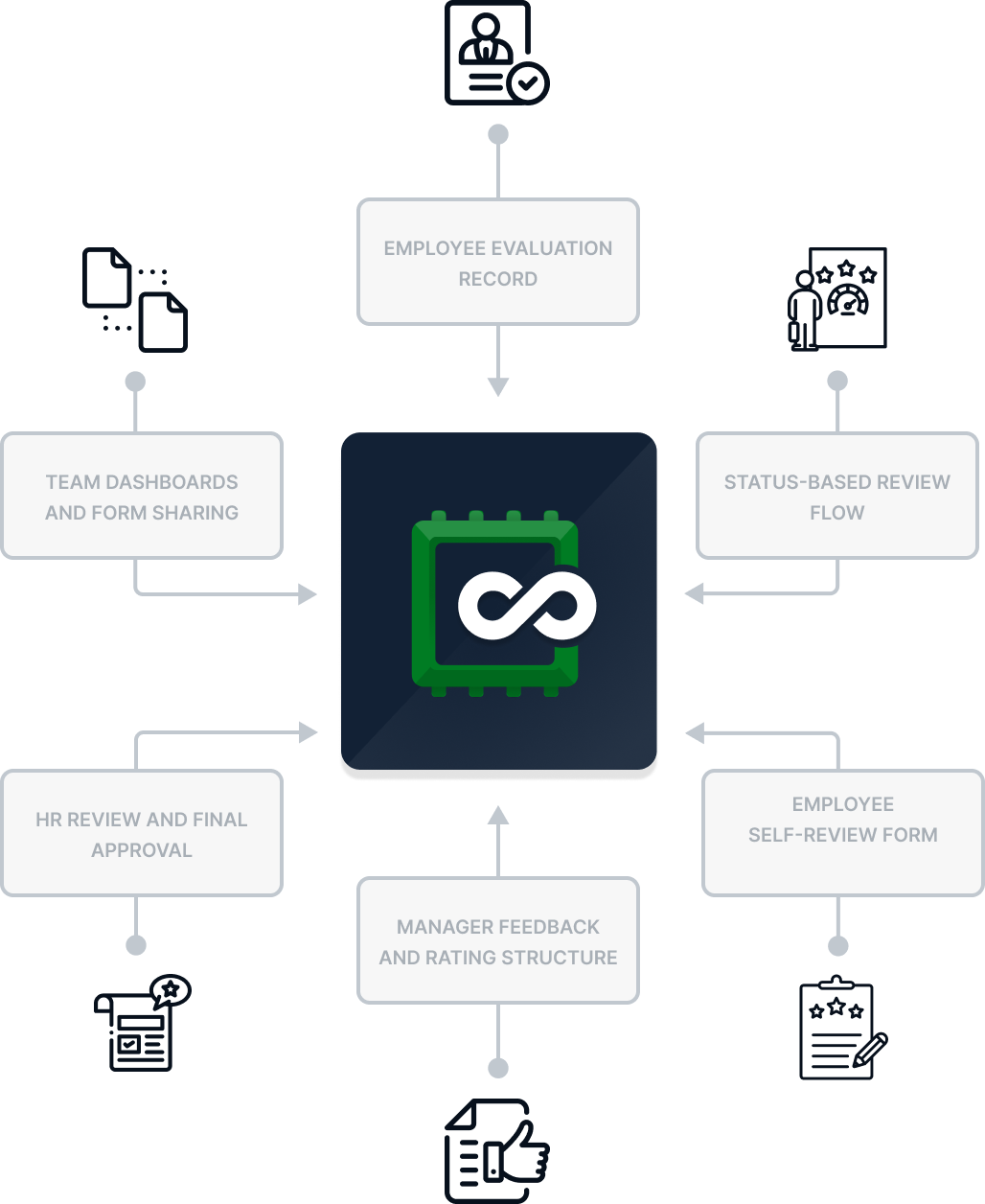
Each evaluation is managed as a structured record.
The record includes the employee name, employee ID, designation, joining date, department, reporting manager, team, review cycle, review date, status, manager rating, and feedback.
This gives HR, managers, and leadership one place to review employee details, feedback, ratings, status, and approvals.
Status-based review flow
The review cycle follows a clear progression:
- Employee self-review
- Manager review
- Employee final discussion
- HR review
- Next-level manager approval
- Review complete
In AnyDB, status options can include:
- Waiting for Employee Self-Review
- Waiting for Manager Review
- Waiting for Employee Final Discussion
- Waiting for HR Review
- Waiting for Next-Level Approval
- Review Complete
This helps each stakeholder understand what needs attention and who owns the next step.
Employee self-review form
Employees complete a structured self-review form during the cycle.
The form captures key accomplishments and areas for improvement, giving employees a consistent way to describe their work, progress, and development needs.
Each submission becomes part of the evaluation record, giving managers direct context for their feedback.
Manager feedback and rating structure
Managers review employee submissions and add feedback inside the same record.
The rating grid standardizes evaluations across key areas:
- Competence
- Quality of Work
- Timeliness
- Engagement, Communication, and Teamwork
- Client Engagement
Each category can be rated using defined options such as:
- MS: Meets Some
- ML: Meets All
- EM: Exceeds Most
- EA: Exceeds All
The system also captures overall manager feedback, HR or executive feedback, and an overall rating.
HR review and final approval
After the employee and manager complete their discussion, the final version moves to HR for review.
The next-level manager can then approve the final outcome, keeping the approval path visible and tied to the same evaluation.
This creates a clearer handoff between managers, HR, and leadership during each cycle.
Team dashboards and form sharing
Team dashboards give managers and HR visibility into review progress across teams.
Each dashboard can show the team name, manager or lead, review cycle, date, team size, submitted reviews, completed forms, and completion percentage.
AnyDB forms allow the company to share the review template with employees and teams. Each submitted form connects back to the system, keeping responses, feedback, status updates, and completion tracking in one place.
This reduces manual coordination during review cycles and keeps each submission tied to the correct employee, manager, team, and status.