
Unclear Ownership and Location
See who is responsible for each asset and where it is currently assigned.
Track assets, ownership, locations, maintenance, inspections, financial details, and lifecycle history in one connected system.
Start with a flexible asset structure, then customize its records, workflows, permissions, documents, and reporting around your operation.
Need help getting started? We can set up your asset management system at no cost.



Replace scattered asset lists, finance notes, documents, and manual updates with one connected source of truth.
See who is responsible for each asset and where it is currently assigned.
Record repairs, inspections, service work, and usage as they happen.
Connect acquisition cost, depreciation, insurance, and operational usage.
Track condition, availability, risk, and lifecycle status without chasing updates.
Keep records, supporting documents, and change history together.
Start free, build the system yourself, or have our team build and manage it for you.
Use a ready-to-customize asset structure or shape the system around your asset types, locations, lifecycle rules, and reporting needs.
Keep identity, category, status, files, and specifications together.
2Follow assignments, transfers, sites, teams, and availability.
3Build a live journal of inspections, repairs, usage, and retirement.
4Keep purchase, value, depreciation, coverage, and renewal data linked.
5Adapt records, automations, access, reports, and connected workflows.
Manage each asset as a connected operational record with a complete, usable history.
Track identity, type, status, ownership, specifications, and related information.
Keep current owner, team, site, transfer, and availability details accurate.
Record every assignment, inspection, repair, transfer, and retirement event.
Connect purchase price, depreciation, costs, coverage, and renewal dates.
Attach records and documents while monitoring condition, usage, risk, and status.
Keep the information teams need to identify, use, assign, maintain, and evaluate an asset inside one structured record.
Track asset ID, category, model, serial number, specifications, and operational status.
Show the person, team, department, or customer responsible for each asset.
Attach manuals, receipts, images, certificates, warranties, and related records.
Track assignments and transfers without relying on separate logs. Current ownership, location, availability, and movement stay visible across teams.
Connect assets to employees, crews, departments, customers, or operational records.
Record each move between warehouses, offices, sites, vehicles, and field teams.
See whether an asset is available, assigned, reserved, under repair, or retired.
Record inspections, repairs, usage, transfers, incidents, and retirement as journal entries connected directly to the asset.
Log service work, parts, labor, vendors, dates, findings, and completion.
Capture inspection results, condition changes, photos, and required follow-up.
Preserve acquisition, assignment, transfer, use, maintenance, and retirement events.
Keep purchase details, depreciation, maintenance costs, insurance coverage, and renewal dates linked to the same asset record.
Track supplier, purchase order, acquisition date, price, warranty, and supporting documents.
Maintain current value, depreciation method, useful life, and financial review information.
Connect coverage, policy, insurer, renewal dates, claims, and risk documentation.
Customize asset records, categories, forms, workflows, permissions, automations, views, and reports around your organization.
Add new asset types, locations, lifecycle events, or connected systems as operational requirements evolve.
Model the identifiers, categories, specifications, conditions, and relationships you need.
Trigger assignments, inspection reminders, maintenance tasks, renewals, and escalations.
Control who sees or updates information while providing each team with relevant views.
Every assignment, maintenance event, transfer, financial update, and retirement remains connected to the asset.
Maintain identity, category, specifications, status, and ownership.
Keep assignments, transfers, and availability current.
Record maintenance, inspections, usage, and lifecycle changes.
Link cost, depreciation, insurance, and asset value.
Keep documents, records, decisions, and changes available for audits.
Operations, warehouse, logistics, finance, and leadership work from the same asset model.
Capture identity, category, specifications, ownership, and supporting files.
Connect the asset to its current owner, team, warehouse, office, or field site.
Add journal entries for transfers, inspections, maintenance, usage, and incidents.
Keep depreciation, insurance, warranty, and cost information connected.
Add fields, asset types, automations, workflows, and reports as operations change.
Give every team clearer ownership, more reliable history, and current asset information.
Teams can see who has each asset, where it is, and whether it is available.
Log service events as they happen and keep upcoming work visible.
Finance can review value, depreciation, purchase details, and costs in one place.
Managers can monitor condition and risk without chasing updates.
Auditors can access asset events, documents, and changes in one connected system.

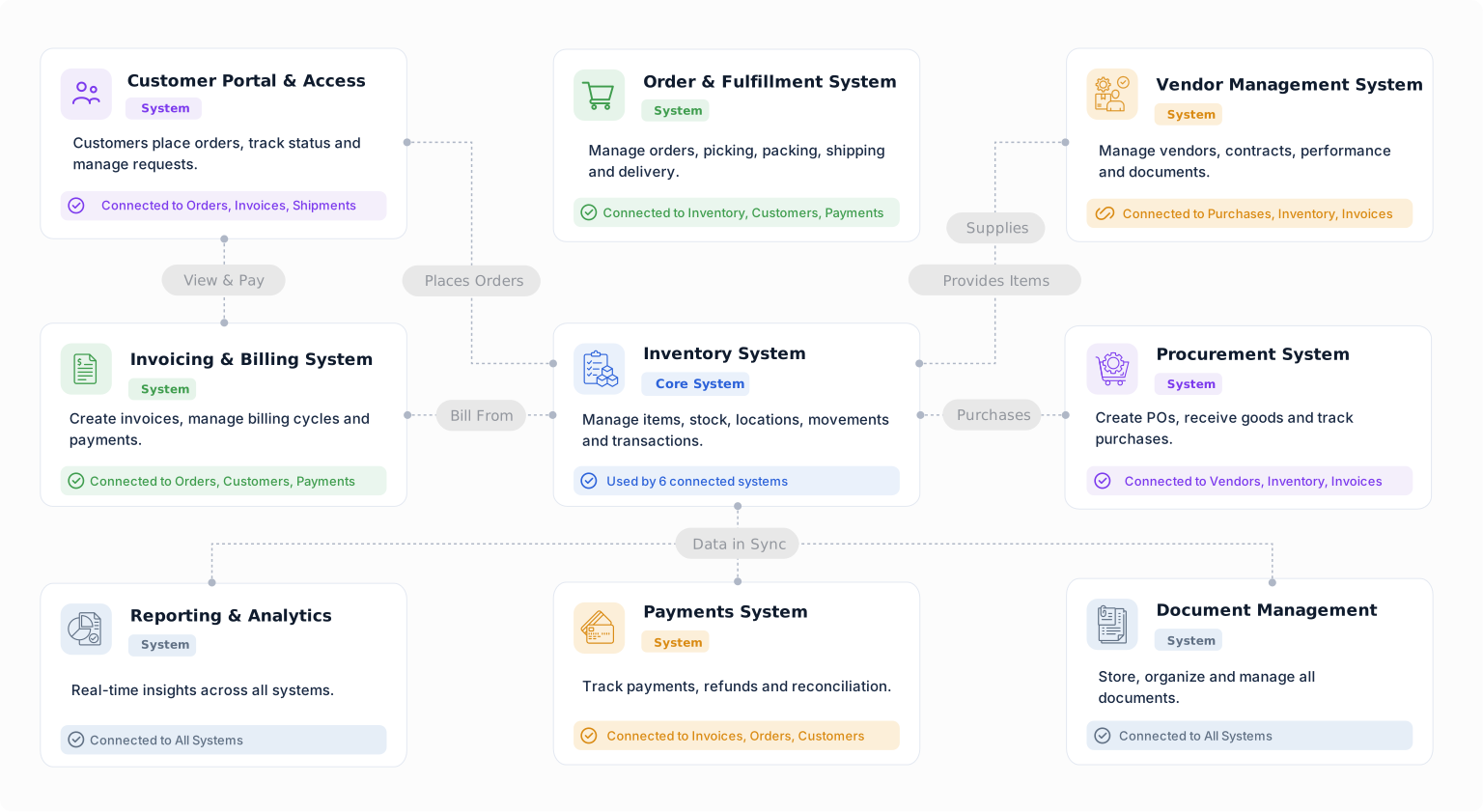
Build a starting point for asset operations with objects from the Business Object Library. Customize their fields, relationships, forms, views, and workflows around the way your team works.
Keep owned or managed assets connected to locations, documents, and service history.
Organize sites, warehouses, rooms, and storage areas in one connected structure.
Record inspection findings and connect them to assets, items, or work.
Coordinate maintenance, repair, installation, or service work with clear ownership.
Keep supplier details connected to sourcing, purchases, and deliveries.
Record business costs and relate them to the work that generated them.
Bring asset records, ownership, locations, maintenance, financial details, documents, and lifecycle history together.


