Run complex order operations as a connected system, not scattered tools

From fragmented and unreliable tools to a single operational system for industrial orders, production, and delivery
Schedule demo
Book a demo and let us set up AnyDB for you. Free of charge!
  • Company

    High-performance resin and polymer manufacturer

  • Team

    ~50 people

  • Industry

    Chemical manufacturing for industrial coatings

  • Scale

    Hundreds of active orders

This team runs hundreds of parallel orders where approvals, production decisions, formulation requirements, and shipment coordination must stay aligned. When information was scattered, work slowed as teams chased updates and verified data.

The operation manages specialty resins used in industrial coatings, where orders depend on precise formulation control, along with strict requirements for timing, approvals, and quality.

Each order has its own client, formulation setup, priority, and delivery schedule. Procurement, manufacturing, shipment, and quality teams rely on shared, accurate information to execute without errors.

As volume increased, the operation reached a breaking point. Orders moved forward with outdated specifications, shipment details became inconsistent, and teams stopped trusting the data. Coordination slowed because every update required verification.

Result: A connected order workflow with clear status, ownership, and live visibility across all active orders.

Operational Objective

Know exactly what is happening across all orders without asking, checking, or reconciling data.

In practice, that meant:

  • See which orders are delayed, blocked, or ready to move instantly
  • Understand production, quality, and shipment status without checking multiple tools
  • Keep all teams working from the same reliable information
  • Allow multiple teams to update orders without conflicts
  • Share controlled visibility with partners, vendors, and clients
  • Keep formulations, documents, and approvals attached to each order

What They Tried at First?

The team used multiple tools across operations. Each solved a part of the problem, but none could operate as a complete system.

Spreadsheets and disconnected tools

Flexible but unstructured. Orders, formulations, and shipment data lived in different places, leading to constant cross-checking and version drift.

ERP systems

Designed for financial control, not operational coordination. Extending them to handle formulation rules, production workflows, and shipment dependencies required heavy customization and long implementation cycles.

No-code and on-prem tools

Allowed some customization, but lacked the depth to model complex operational relationships. Reliability issues and rising costs made them unsuitable for day-to-day execution.

What was missing

None of these approaches created a single system where:

  • Orders, production, shipment, and quality stayed connected
  • Data moved with the workflow instead of being re-entered
  • Multiple teams could operate on the same record without conflict

Instead of improving coordination, the tools fragmented it.

Where the Operation Broke Down?

Order tracking lived in ERP systems while operations were handled in separate tools, with updates happening in different places at different times.

What broke?

  • Manual cross-checking across multiple systems
  • Version drift between multiple tools and ERP data
  • End-of-day updates instead of live tracking
  • Lost context between orders, formulations, documents, and approvals
  • Repetitive sorting and filtering to answer basic questions

Operational Impact

  • Time lost confirming order status
  • Misalignment between procurement, manufacturing, shipment, and quality
  • Production started with outdated specifications
  • Delays in production and shipping
  • Constant follow-ups with partners and clients
  • Duplicate reporting and manual reconciliation
  • Low confidence in operational data

The Operating Model After AnyDB

A system where orders, formulations, shipments, documents, and approvals are structured as connected records.

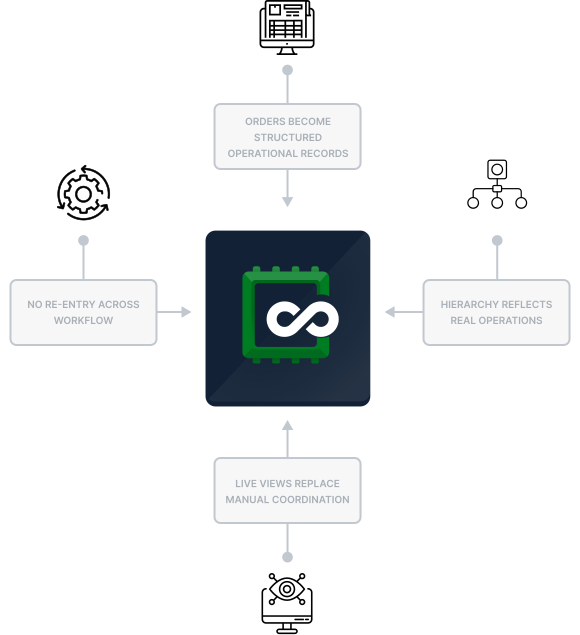
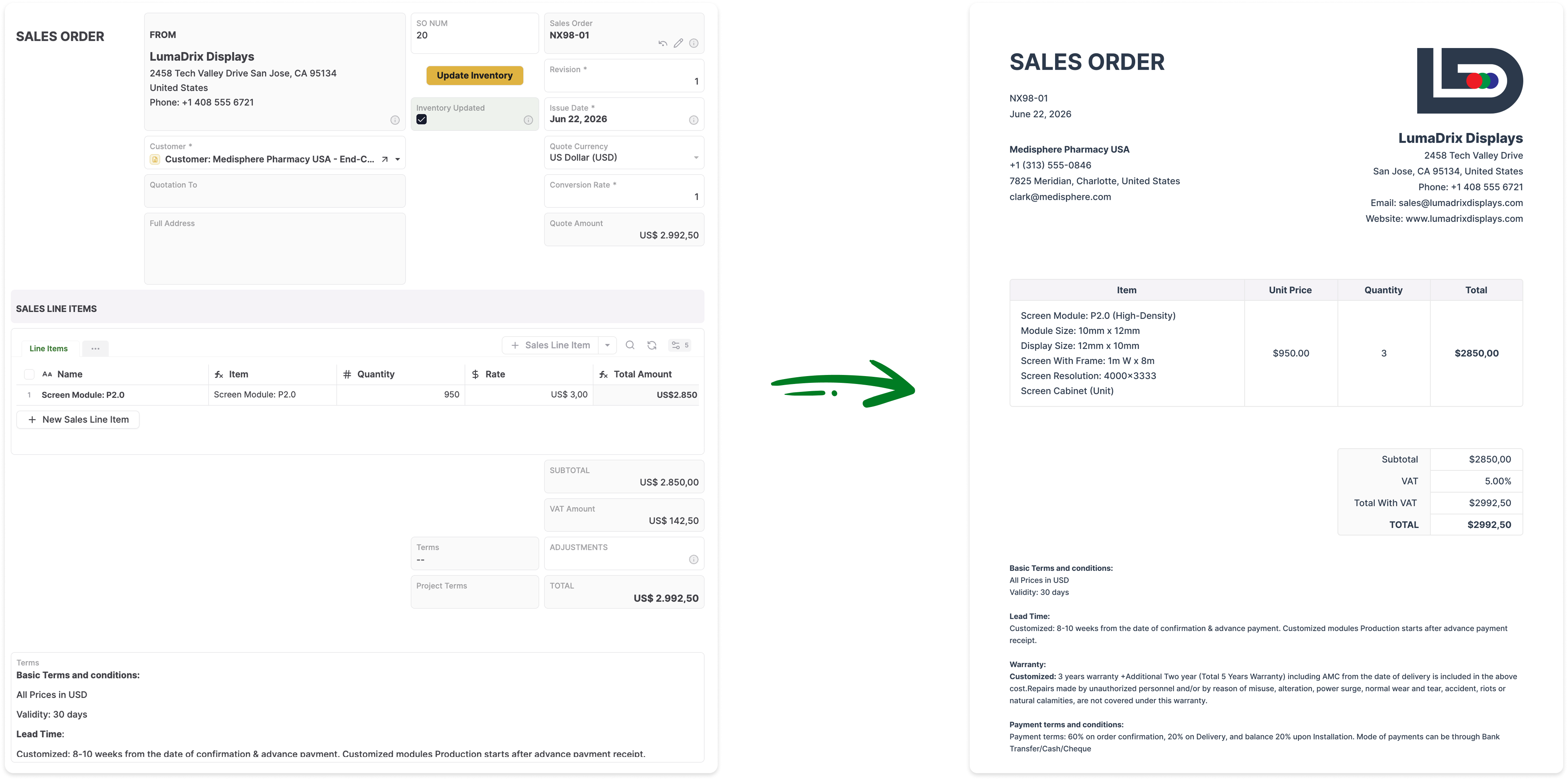
Orders become structured operational records

Each order holds its full context, including client, formulation, priority, and status, along with linked production batches, shipments, quality checks, and approvals. Nothing critical requires a separate spreadsheet.

No re-entry across workflow

Data moves with the order as it progresses. Updates stay on the same record, removing the need to copy or rebuild tracking.

Hierarchy reflects real operations

Orders connect to production batches, shipments, documents, and approvals as child records, keeping all teams aligned on the same structure.

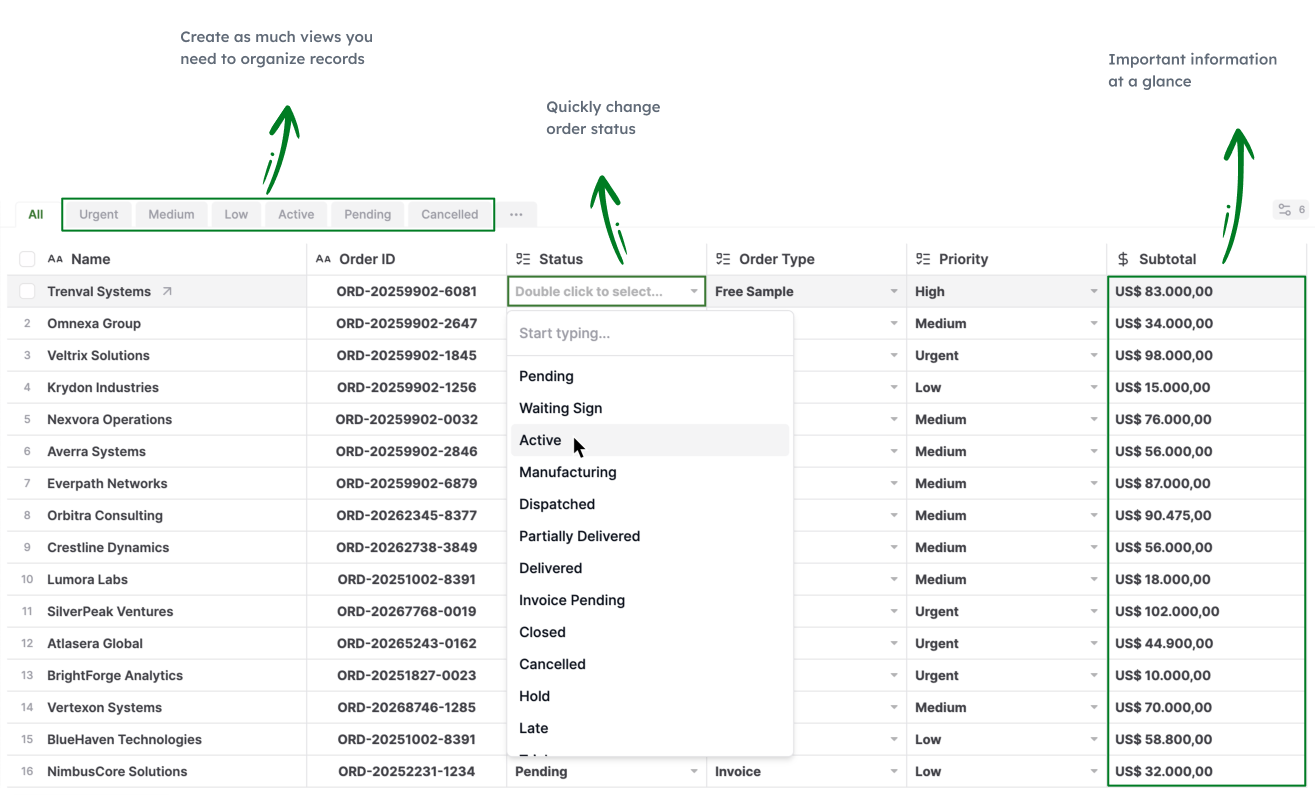
Live views replace manual coordination

Orders are organized by status or priority through live views that update automatically, so teams see what requires action without manual sorting.

What Changed in Daily Work?

  • Orders are updated once instead of across multiple systems
  • Teams check status instantly instead of verifying across tools
  • All teams work from the same order data
  • Multiple users update orders simultaneously without conflicts
  • Partners check progress directly without follow-ups
  • Customers access real-time order status through shared views

Operational Outcomes

Order status checks reduced from minutes to instant visibility

Manual reconciliation work reduced by ~60–70%

Delays from missed or outdated updates have been reduced across production and shipping

Follow-ups with customers and partners reduced by ~50%

Faster identification of blocked or delayed orders

Higher confidence in operational data

Result: Orders move through production, quality, and delivery with clear status and fewer delays.

Why This Works and Scales?

Because this is not a collection of tools. It is a connected operational system.

In this model, the order is not a row in a table. It is a structured operational object that carries its full context across the workflow.

  • Orders act as the system backbone: All related data, including formulations, production batches, shipments, documents, and approvals, stays attached to the same record.
  • Work happens inside the system, not across tools: Teams do not move between apps or rebuild context. They operate directly on the same order as it progresses.
  • Data flows instead of being copied: Updates made during execution automatically reflect across production, shipment, and quality. No re-entry or synchronization is required.
  • Structure enforces alignment: Because relationships between orders, batches, and shipments are built into the system, teams stay aligned without needing manual coordination.
  • The system adapts to operational complexity: Instead of forcing workflows into rigid templates, the structure reflects how the business actually runs, including formulation rules and multi-stage handoffs.

Result

The operation scales without adding coordination overhead, because the system maintains consistency as complexity increases.

Everything You Need in One Platform.

Centralize your order management into a system your team can rely on every day.