Customer, Vendor, and Partner Portals Connected to Your Operations
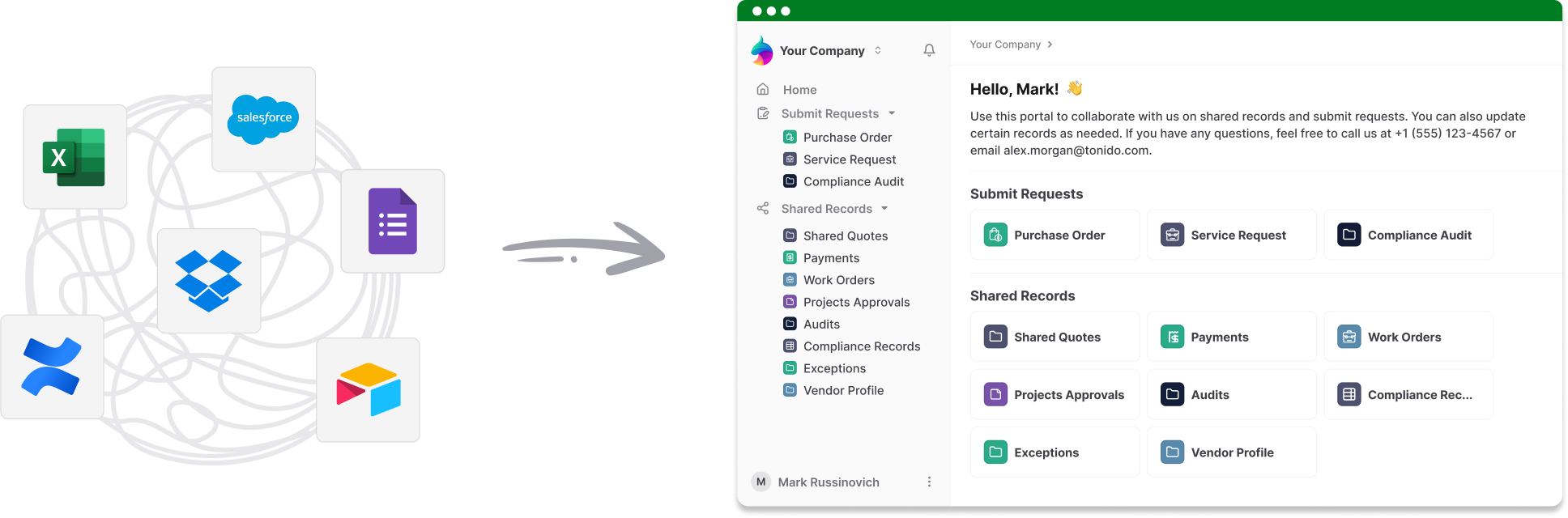
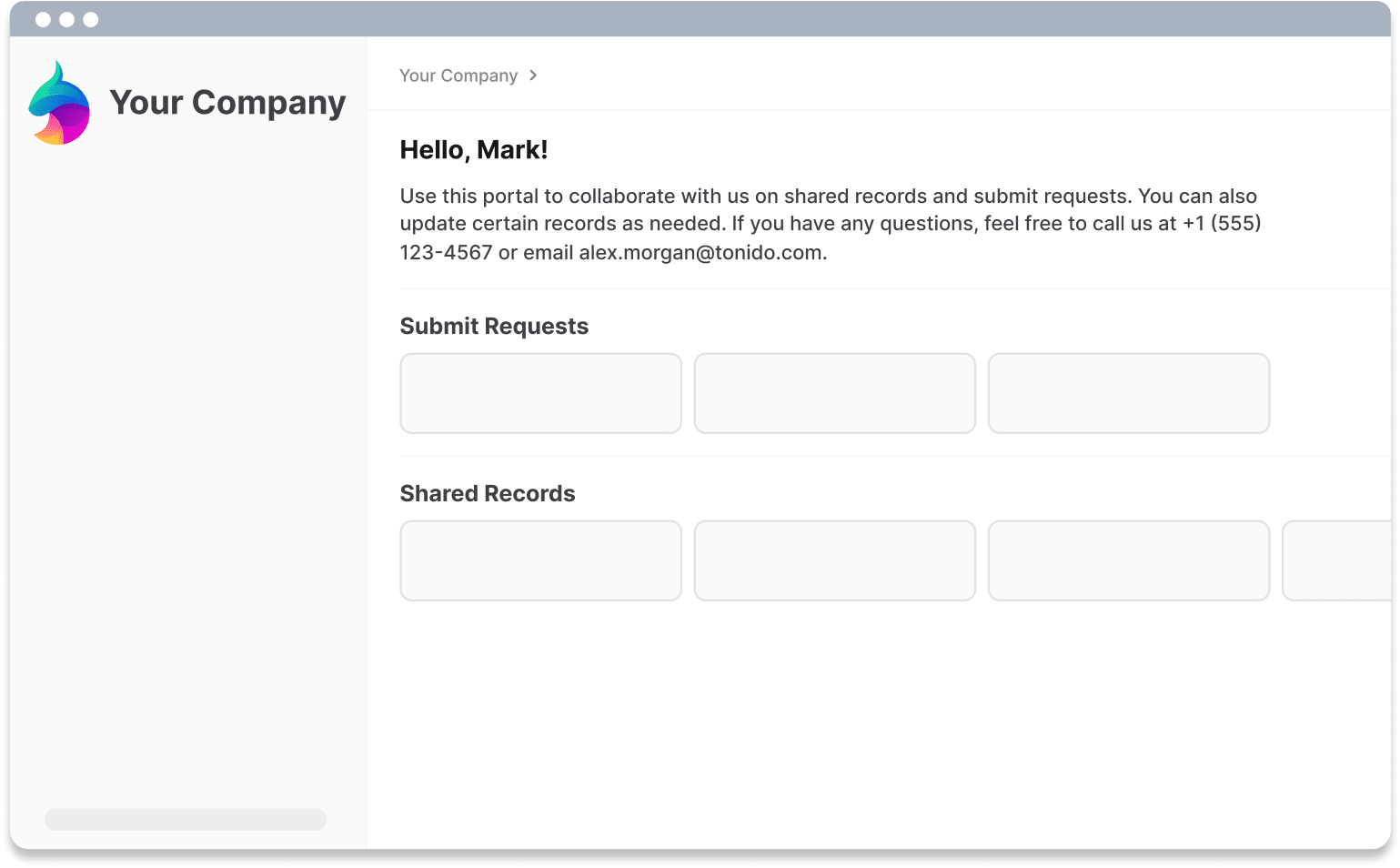
A portal can bring together the information surrounding an order, project, service request, or partner relationship. Your team manages the work in AnyDB while collaborators use the items you share.
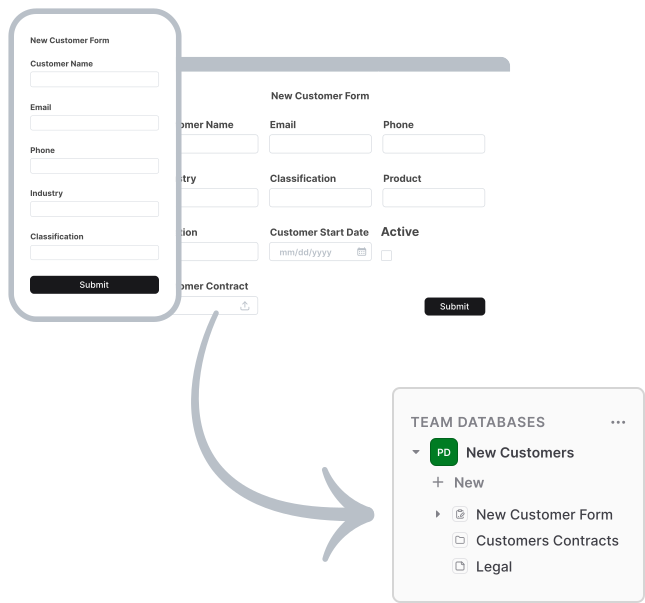
Create a form from a record template and choose where submissions belong: a folder or a parent record. Use it for customer requests, vendor onboarding, partner applications, or supporting documents.
Public form respondents do not need an account and cannot browse previous submissions.
Use a public form for first contact, such as an inquiry or application. Choose a private form when you want to collect information from invited collaborators.

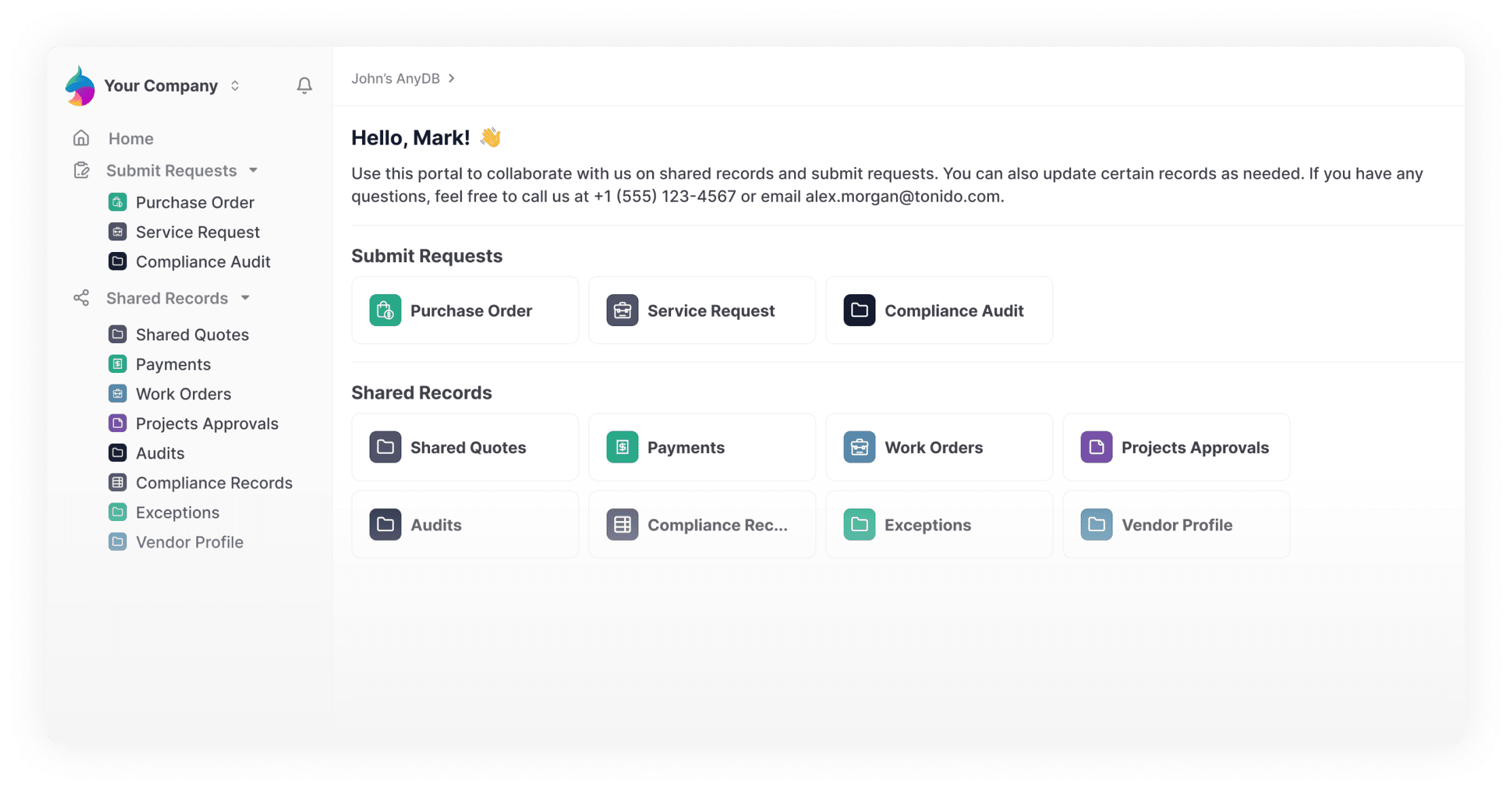
Start with one workflow, such as a service request, vendor application, or partner onboarding process, then expand what you share as your operation grows.
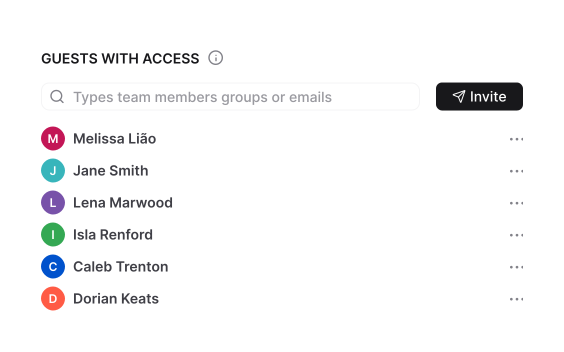
Invite guests by email and give them Viewer or Editor access. Guests sign in to access shared content without receiving access to your full database.
After signing in, guests can find the records you shared and the forms available to them in their portal. They can review information, edit shared items when permitted, or submit a new request through a form.
Guest access and public links serve different purposes. Use authenticated sharing for a private portal; a public item link can be opened without signing in.
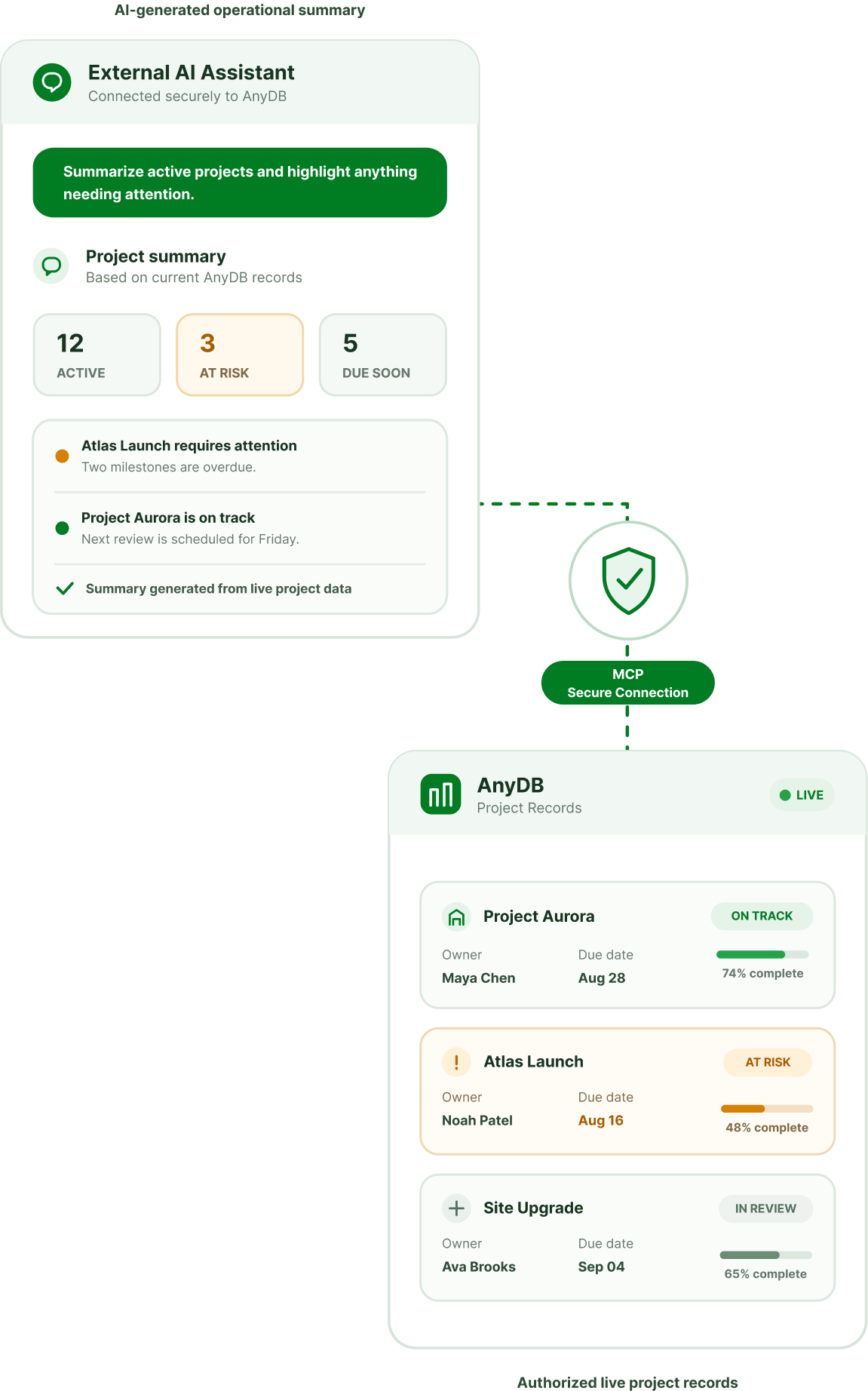
AnyDB MCP lets compatible assistants help organize customer information, create forms, and configure record sharing through natural-language requests. The connection uses the access available to the signed-in AnyDB account.
Connect through https://mcp.anydb.com and authorize your AnyDB account. Your team can then use AI to support portal workflows while controlling the records and actions it can access.

Customize your portal through team settings, with branding options determined by your plan.
Every plan, including Free, supports unlimited guest users without using team licenses.
Guests can view or edit shared items according to their access. They cannot reshare records or freely create items in your database. Use shared forms when you want them to submit new requests.