
Scattered Production Status
Keep active jobs, stages, owners, dependencies, and deadlines visible.
Connect production, inventory, quality, and costs in one manufacturing system. Start with the workflows you need and expand as you grow.
Need help getting started? We can set up your manufacturing system at no cost.
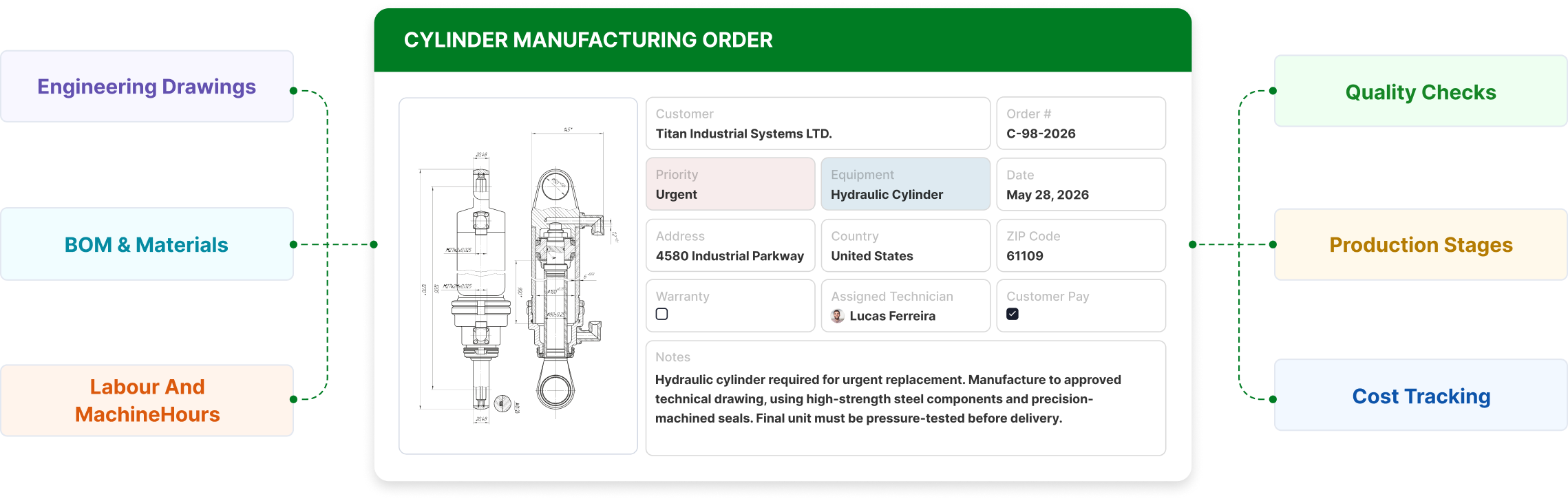





Replace scattered production status, inconsistent time tracking, unclear material readiness, disconnected instructions, and delayed cost visibility.
Keep active jobs, stages, owners, dependencies, and deadlines visible.
Record planned and actual labor and machine hours by job and stage.
See required, available, allocated, purchased, and consumed materials before work begins.
Keep current approved technical information with the manufacturing order.
Track capacity, delays, usage, and real costs while production is moving.
Explore AnyDB for free, build your own manufacturing system, or have our team build and manage it with you.
Explore connected manufacturing execution.
Start Free PlanCustomize and run your own manufacturing system.
View PlansHave your system built and managed for you.
Schedule DemoUse the included manufacturing structure or customize it around your production, repair, material, quality, time, and costing workflows.
Keep specifications, drawings, stages, owners, deadlines, and status together.
2Compare planned and actual hours by job, stage, person, and machine.
3Track readiness, consumption, purchasing, and real job-level cost.
4Keep approved instructions, evidence, verification, and history connected.
5Adapt records, workflows, formulas, permissions, and dashboards.
Manage each manufacturing or repair job as a connected operational record with current specifications, resources, progress, evidence, and costs.
Keep specifications, drawings, deadlines, stages, owners, and status together.
Track dependencies, assignments, progress, delays, and actual completion.
Compare estimated and actual time by job, stage, person, and machine.
Connect requirements, readiness, consumption, purchasing, and real costs.
Maintain approved information, verification evidence, decisions, and history.
Connect product, customer, specifications, drawings, quantities, deadlines, stages, owners, approvals, files, dependencies, and complete execution history.
Track product, quantity, requirements, drawings, instructions, versions, files, and approvals.
Define the production route, responsible team, sequence, dependencies, targets, and status.
Use the same structure for diagnosis, repair steps, parts, labor, machine time, testing, and completion.
Record estimated and actual labor hours, machine hours, setup time, cycle time, downtime, completion dates, operators, work centers, and stage-level variance.
Track people, roles, shifts, stage assignments, planned hours, actual hours, and labor cost.
Record machines, work centers, setup, run time, downtime, reason, capacity, and cost.
Compare plans with actual results to identify bottlenecks and improve scheduling and pricing.
Manage required materials, quantities, inventory availability, allocations, shortages, purchasing, receipts, substitutions, consumption, scrap, labor, machine, and indirect costs.
Connect each item, quantity, specification, availability, allocation, shortage, and alternative to the job.
Track suppliers, purchase orders, approvals, lead times, receipts, inspection, and material release.
Combine material consumption, labor, machine time, scrap, services, and indirect costs by stage and job.
Maintain drawing revisions, instructions, approvals, inspection requirements, measurements, evidence, nonconformances, decisions, rework, and release status with each job.
Keep current drawings, procedures, specifications, approvals, and prior versions tied to operational records.
Capture checkpoints, measurements, results, evidence, reviewers, timestamps, and acceptance status.
Track nonconformances, causes, containment, rework, corrective actions, verification, and closure.
Customize manufacturing orders, repair workflows, routes, stages, time entries, material records, cost formulas, quality checks, permissions, documents, and dashboards.
Add portals, supplier workflows, automations, alerts, integrations, or reporting as your operation evolves.
Model orders, products, stages, machines, materials, labor, services, quality, and terminology.
Calculate costs and trigger assignments, approvals, reminders, escalations, and notifications.
Give engineering, purchasing, production, quality, service, and management the right context.
Each production or repair job becomes the central record for specifications, materials, stages, time, resources, quality, costs, decisions, and history.
Keep jobs, stages, owners, dependencies, progress, deadlines, and delays visible.
Review planned and actual time, completion dates, material use, and cost.
Connect labor, machine time, material consumption, services, and scrap to each job.
Give engineering, purchasing, production, quality, and service shared records.
Add routes, records, fields, rules, portals, views, and dashboards as requirements change.
Use connected records across production, repair, quality, resource, and cost workflows.
Product, quantity, specifications, stages, deadlines, owners, materials, costs, and status.
Sequence, dependency, team, target, actual completion, progress, evidence, and history.
Job, stage, person, machine, planned hours, actual hours, date, notes, and cost.
Item, required quantity, availability, allocation, consumption, scrap, source, and cost.
Requirement, measurement, result, evidence, reviewer, decision, approval, and release.
Asset, issue, diagnosis, repair steps, parts, labor, testing, outcome, and history.
Turn AnyDB records into professional PDFs, DOCX files, and XLSX exports with fields, linked data, tables, terms, and other relevant information included automatically.
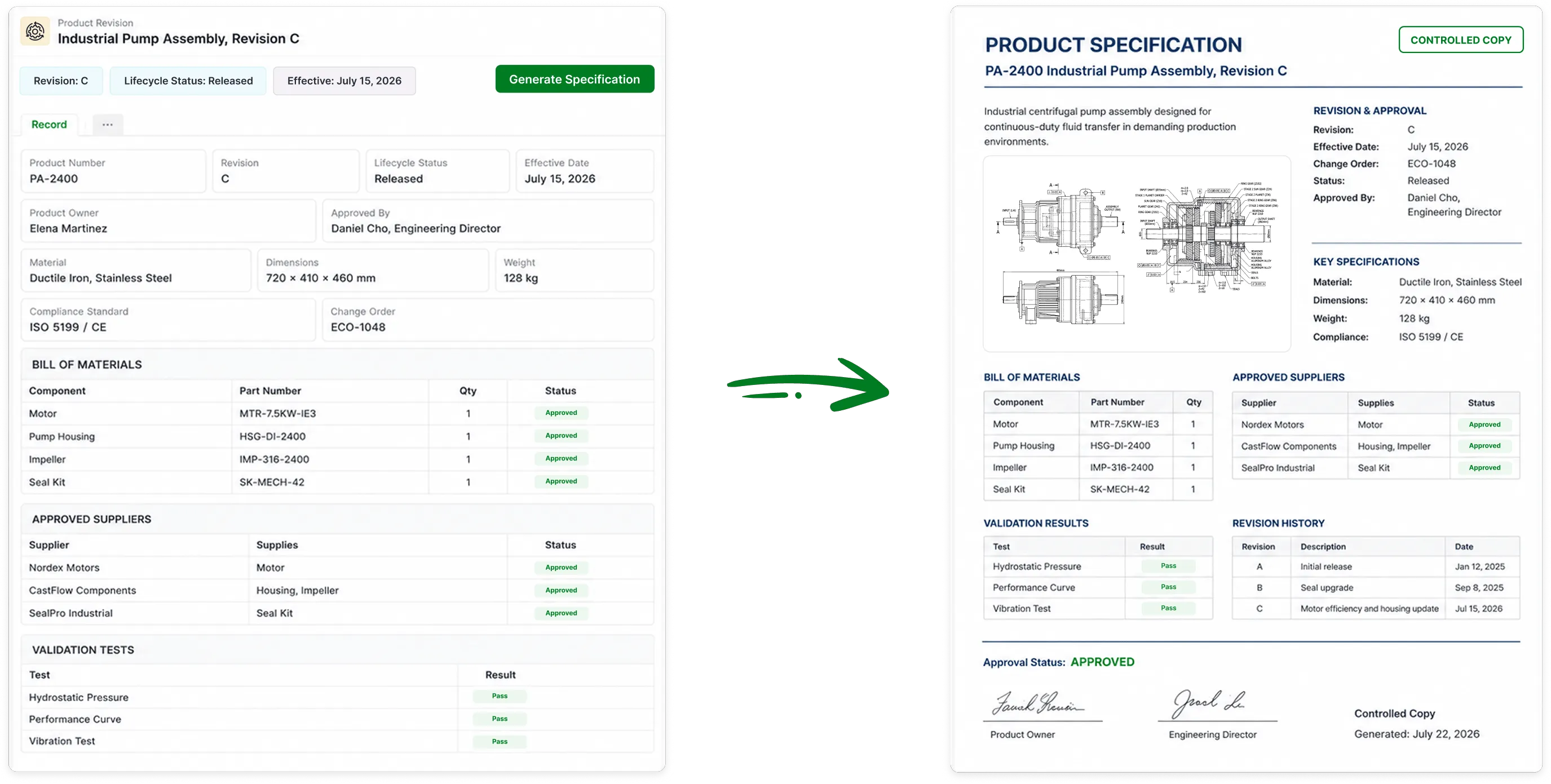
Improve production visibility, compare planned and actual performance, track job-level usage, align teams, and support better capacity and pricing decisions.
Keep active jobs, stages, owners, dependencies, progress, and deadlines visible.
Compare estimated and actual time, completion, usage, and cost.
Tie labor, machines, materials, services, and scrap to each job.
Maintain approved instructions, checks, results, issues, decisions, and release history.
Use real production data to improve scheduling, costing, quoting, and planning.


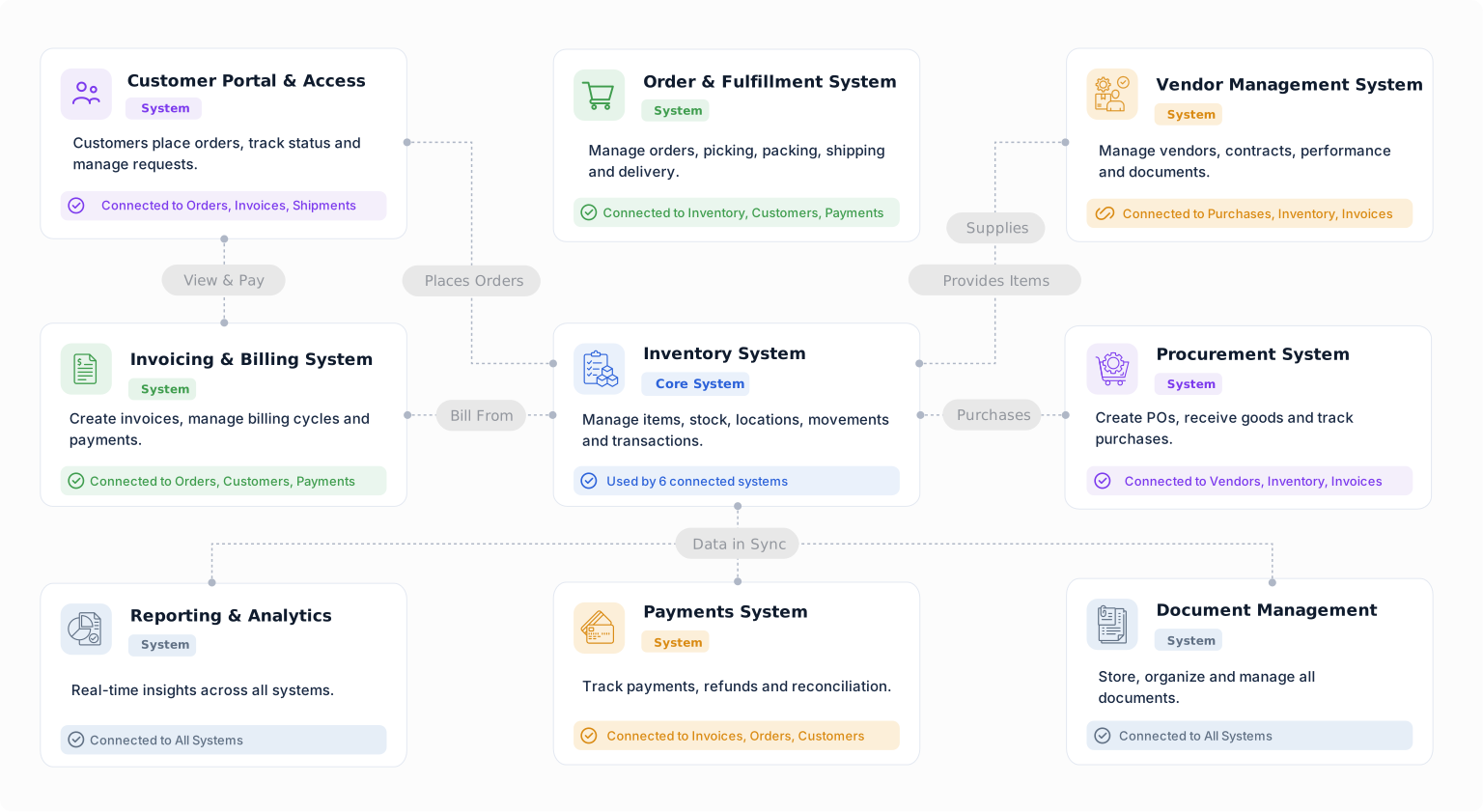
Build a starting point for manufacturing operations with objects from the Business Object Library. Customize their fields, relationships, forms, views, and workflows around the way your team works.
Define the components needed to make an item and connect them to planning.
Coordinate planned or active manufacturing work with its requirements.
Define the goods or services your business buys, sells, stocks, or uses.
Track an item at a location, warehouse, bin, or condition.
Record goods leaving inventory and connect them to the work or order they support.
Record inspection findings and connect them to assets, items, or work.
Run production control, repair workflows, costing, labor tracking, machine usage, and operational dashboards from one connected foundation.


