
How a SaaS Company Is
Replacing HubSpot with AnyDB
Moving CRM, partner management, support, and customer operations from an expensive HubSpot setup into AnyDB.
SaaS company
51–200 employees
Software
80 internal users and 200 external users
Keywords: HubSpot replacement, CRM migration, SaaS CRM, partner management, customer portals, ticketing, data migration
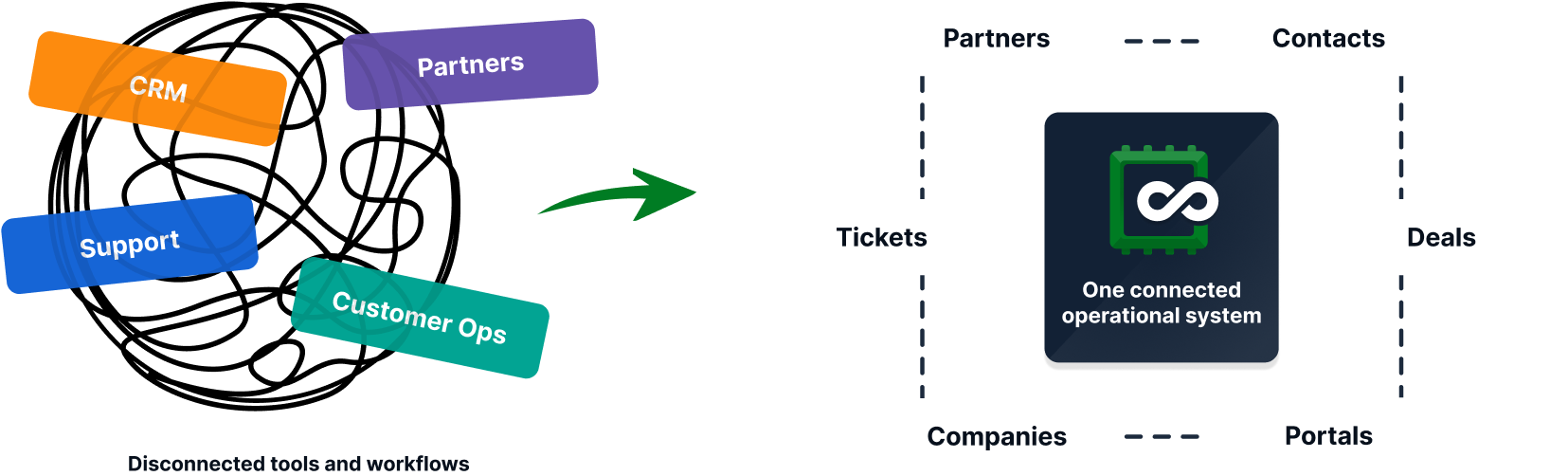
HubSpot had become central to sales, partnerships, marketing, customer success, support, and leadership. Over time, unreliable CRM data, loosely governed workflows, and rising costs made the setup harder to maintain and trust.
With the HubSpot Enterprise renewal approaching, the company decided to move away from the platform. The project started with CRM and partner operations, with AnyDB becoming the system of record for the business data used across teams.
Result: A phased HubSpot replacement covering CRM, partner management, ticketing, portals, data migration, and integrations, with additional workflows planned as the rollout continues.
In practice, that meant:
The company also set a target of reducing total HubSpot-related spend by at least 50%, while improving data quality and simplifying its software setup.


The team had spent several years trying to improve its HubSpot data. Confidence remained low, with CRM data quality rated around 3/10, workflows growing without consistent governance, and large amounts of unstructured information complicating reporting and migration.
HubSpot was also expensive to maintain across CRM, Marketing, and CMS licensing, plus the internal work required to keep its data and workflows running. The company decided to use the upcoming renewal as an opportunity to rebuild the setup around cleaner data and clearer ownership.
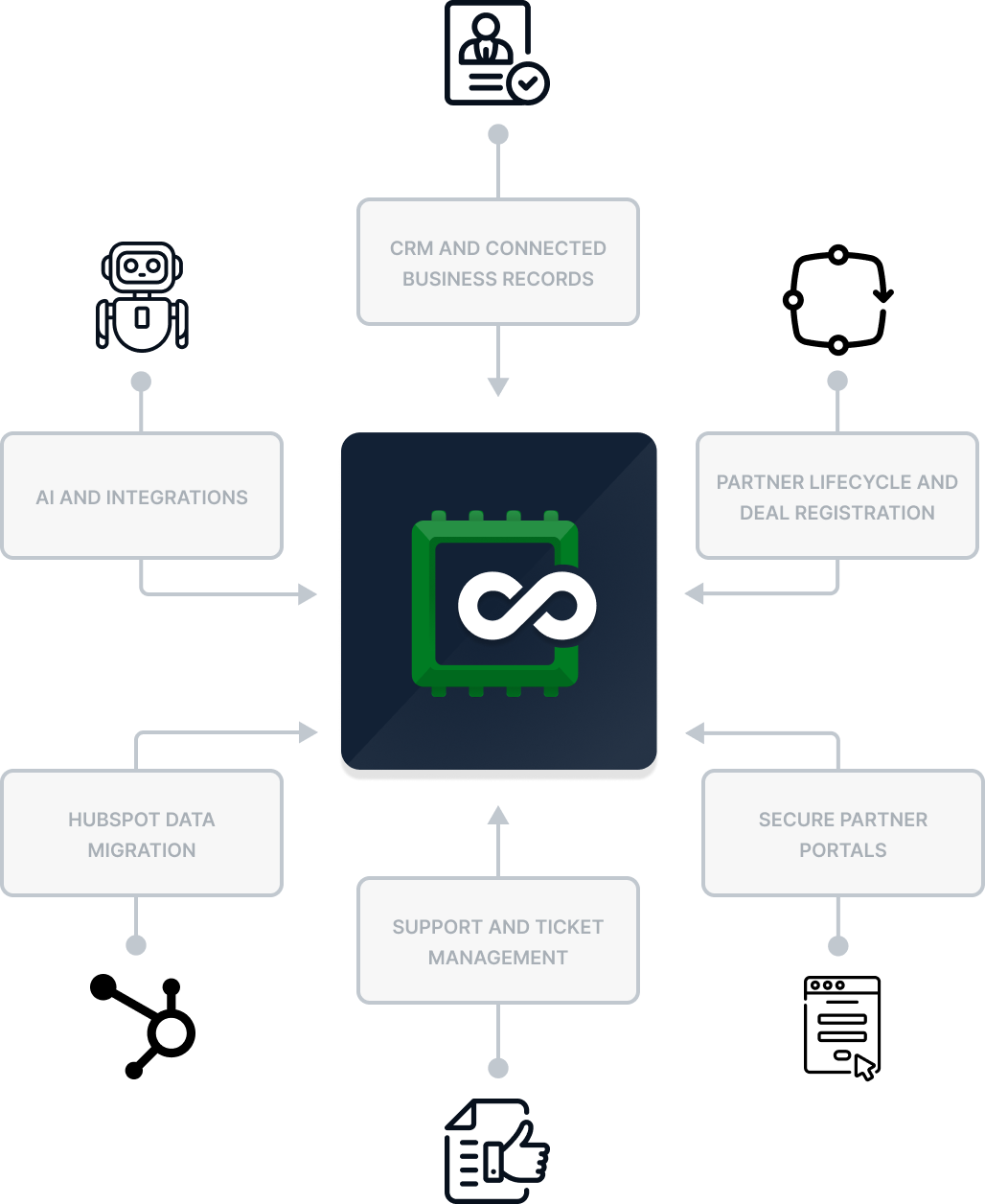
Companies, contacts, deals, and partners are brought into one CRM structure with ownership, pipelines, relationships, permissions, and reporting defined around how the teams work.
Partner applications move through review, approval, registration, onboarding, and active stages. Approved partners can then register deals, access resources, and follow their deal status from the same process.
Partners receive controlled portal access to onboarding resources and their own records, with permissions preventing them from seeing information that belongs to other partners.
Support tickets, queues, assignments, replies, and essential history are included in the rollout, keeping support activity closer to the customer and company records used by the rest of the business.
The migration includes field mapping, cleanup rules, trial imports, relationship checks, and reconciliation before cutover, giving the team a controlled way to move useful data without carrying every problem from the old setup into AnyDB.
The company’s internal intelligence layer connects to AnyDB for enrichment, scoring, and recommended actions, while AnyDB remains the source of master data. APIs, MCP, webhooks, forms, Microsoft 365, and other tools can connect around those records.
The proof of concept focused on the partner lifecycle, giving the company a practical way to test whether AnyDB could support one of its important HubSpot workflows before moving into the broader migration.
It demonstrated:
The POC also tested HubSpot data import with an initial subset of records, while the larger migration was reserved for the implementation phase.
More reliable CRM and reporting data
Clearer ownership of records and workflows
Fewer disconnected tools across core operations
Better coordination between partnerships, sales, and support
Secure self-service access for external partners
Lower software costs compared with the previous HubSpot setup
The broader goal is to give sales, partnerships, support, and leadership a more reliable source for customer and partner data while reducing the effort required to maintain the previous setup.

The first phase focuses on CRM, ticketing, the partner portal, migration, and the initial connection to the company’s intelligence layer. Later phases can extend into marketing intake, additional portals, reporting, purchasing approvals, projects, tasks, and document generation.
Marketing communications can remain in a dedicated tool, with AnyDB holding the customer and operational data that other systems use. This lets the company replace the parts of HubSpot that no longer fit without forcing every business function into a single application.
The result is a path away from HubSpot that starts with the workflows the company needs now and leaves room to consolidate more operations over time.


