Managing Solar Installation Operations
Without Disconnected Workflows

Replacing spreadsheets, manual coordination, and fragmented project tracking with a scalable operational system for projects, partners, vendors, inventory, financials, and customer communication.
  • Company

    Residential solar energy company

  • Team

    1–10 employees

  • Industry

    Energy and utilities

  • Scale

    Residential solar projects across multiple provinces, supported by installation partners and vendors

Keywords: Solar project management, installation coordination, vendor management, inventory tracking, purchase orders, customer portals

Location: Canada

The company manages residential solar installations across Canada through partnerships with retail chains and external installation companies.

Operations include customer onboarding, site inspections, permitting, installation scheduling, vendor coordination, purchase orders, logistics management, inventory validation, and project financial tracking.

Each installation partner follows its own execution processes, approval requirements, and reporting structure. Project coordination depends on keeping installers, vendors, logistics teams, and customers aligned throughout the installation lifecycle.

The business also needed a structure that could support its expansion into inventory management, logistics coordination, vendor operations, and product sales.

Result: A centralized operational environment where projects, vendors, financials, inventory, and customer updates stay aligned throughout execution.

Operational Objective

Create a scalable operational foundation capable of managing solar projects, partner coordination, logistics, inventory, vendor management, and financial tracking from one system.

In practice, that meant:

  • Track projects from sales through installation completion
  • Coordinate multiple installation partners and workflows
  • Manage vendors and external partners through shared portals
  • Share live project updates with customers and vendors
  • Generate purchase orders and operational documents automatically
  • Connect inventory and logistics to project execution
  • Track profitability and financial performance per project
  • Support customer, installer, vendor, and logistics portals
  • Standardize operational workflows across provinces
  • Expand workflows over time as the business evolves
  • Integrate operational data with accounting and inventory platforms

What They Tried at First

The team managed operations through spreadsheets, disconnected tracking tools, and manual coordination between internal teams and external partners.

Project updates, purchase orders, financial models, installer communication, vendor coordination, and logistics tracking lived across separate systems and files.

The company also explored tools like Airtable while evaluating different operational models. The structure still depended heavily on manual updates and cross-checking information between systems.

As the business expanded into inventory and logistics operations, maintaining accurate project data and partner coordination required more operational effort.

Where the Operation Broke Down

Operations relied heavily on disconnected workflows between project management, vendor coordination, purchasing, inventory, and financial tracking.

What broke:

  • Project information existed across multiple systems and spreadsheets
  • Installation partners followed different reporting structures
  • Vendor communication depended on manual follow-up
  • Purchase orders required manual preparation and validation
  • Customer updates depended on manual communication
  • Inventory tracking was disconnected from installation workflows
  • Financial visibility required cross-checking multiple files
  • Teams lacked a reliable operational view across projects

Operational impact:

  • Time lost reconciling project updates across teams, vendors, and partners
  • Delays in tracking installation progress and approvals
  • Inconsistent project information between departments
  • Manual effort increased as project volume expanded
  • Financial tracking became harder to maintain reliably
  • Operational coordination slowed as new partners and workflows were added

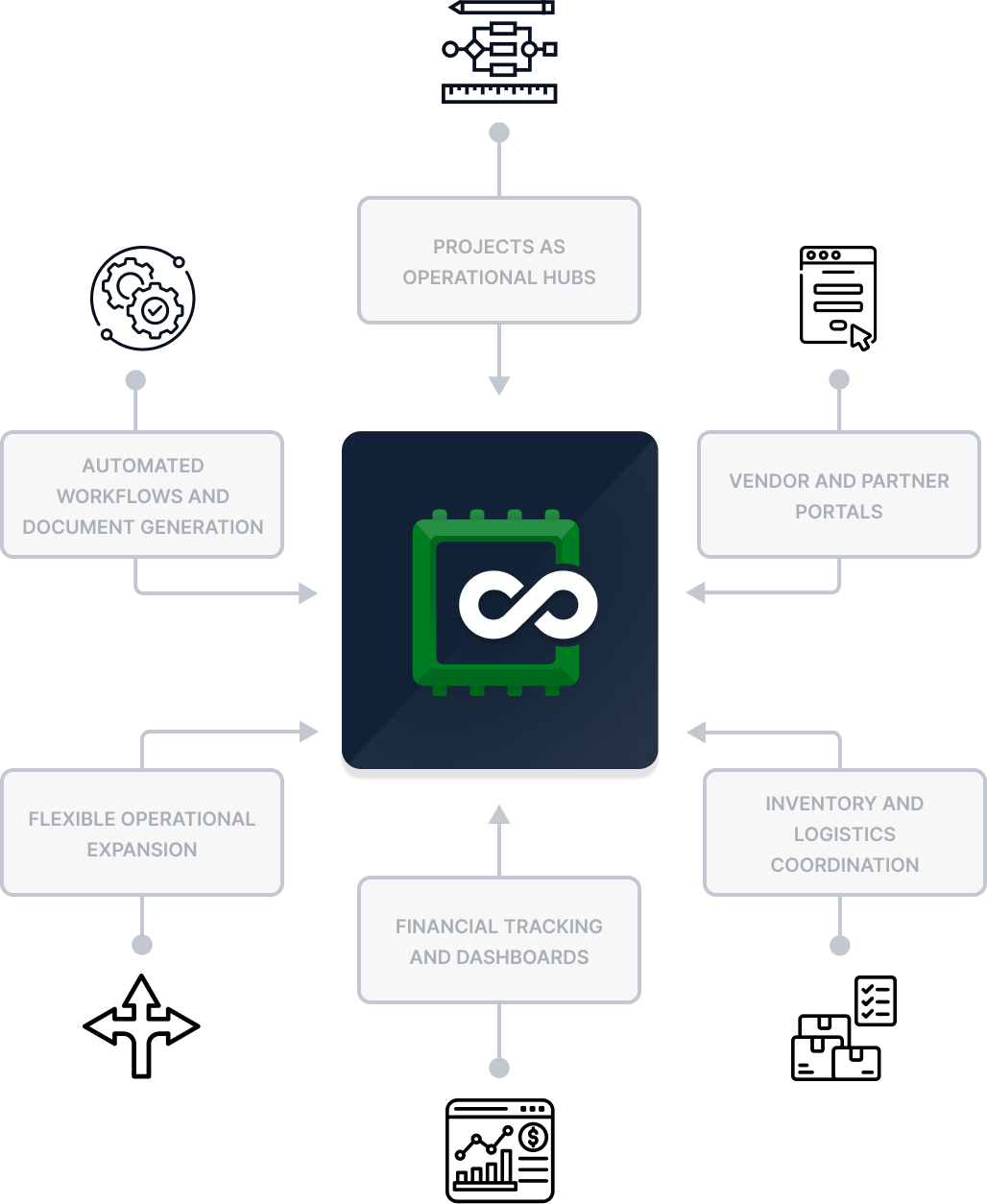
The Operating Model After AnyDB

A custom operational system where projects, installations, purchasing, inventory, financials, vendor coordination, and partner communication use the same connected structure and source of truth.

Projects as operational hubs

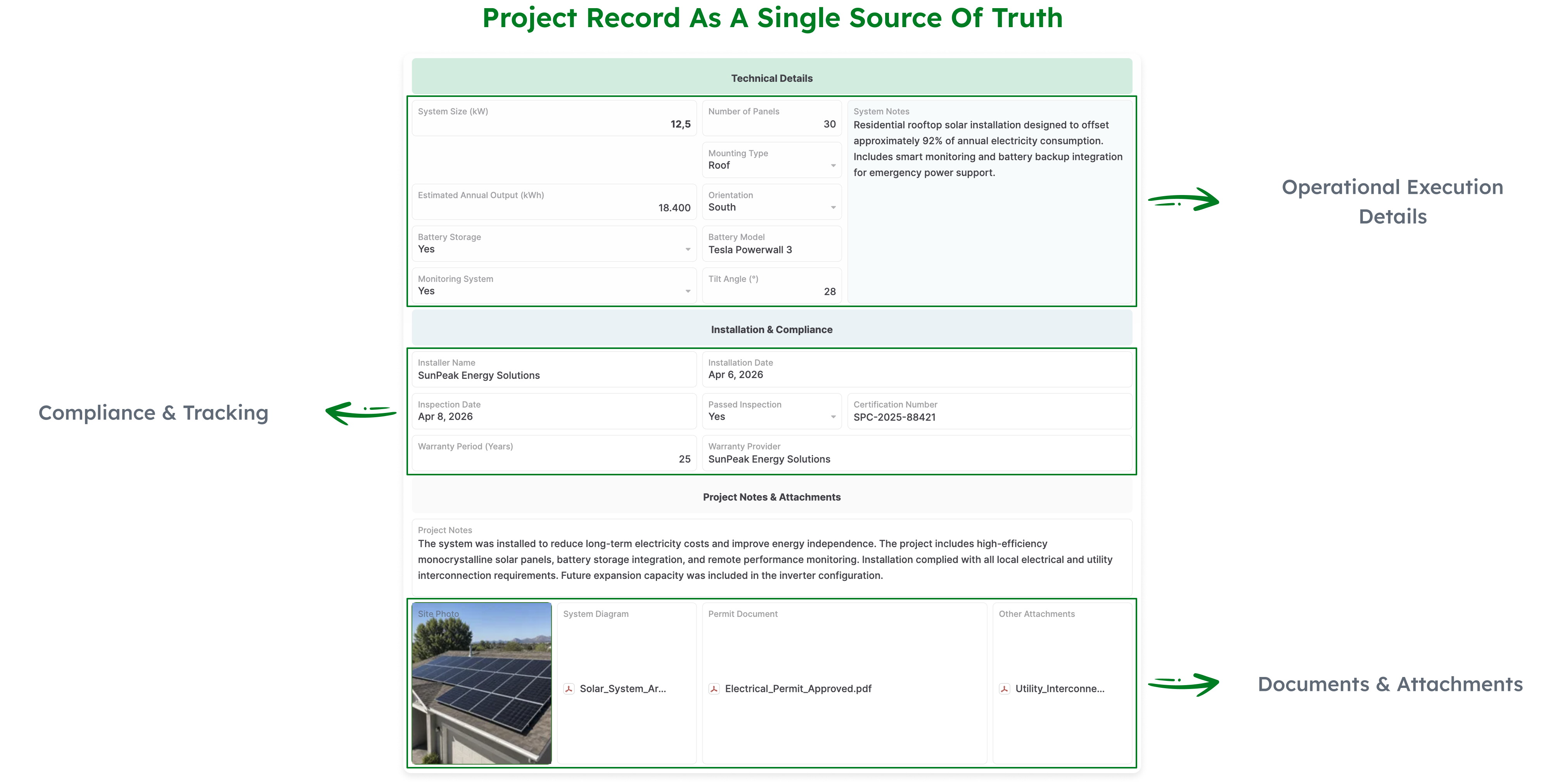
Each project acts as the central record for customer information, installation progress, permits, financial tracking, purchase orders, documents, vendor coordination, and partner assignments.

Teams work from the same live project data throughout the installation lifecycle.

Vendor and partner portals

Installation partners, vendors, logistics providers, and customers can access operational updates through filtered views and portals tied directly to project records.

Vendors can receive purchase order information, update operational statuses, collaborate on project activity, and access only the records relevant to their responsibilities.

This removes the need for manual vendor coordination across emails, spreadsheets, and disconnected project trackers.

Automated workflows and document generation

The system generates purchase orders, operational documents, reminders, and workflow updates based on project conditions and operational stages.

Templates and child records standardize project execution across different installation partners and operational models.

Inventory and logistics coordination

Inventory validation, vendor purchasing, hardware movement, and logistics updates stay tied directly to project execution.

Operational teams can track material availability, purchasing status, and delivery coordination from the same system.

Financial tracking and dashboards

Project profitability, operational KPIs, and vendor costs stay linked to live operational data.

Dashboards, formulas, and filtered reporting provide visibility across projects, partners, vendors, and provinces without requiring spreadsheet consolidation.

Flexible operational expansion

The operational structure can evolve as the company expands into logistics, product sales, and additional service models.

New workflows, portals, automations, and reporting structures can be added incrementally without rebuilding the system foundation.

What Changed in Daily Work?

  • Teams update project progress directly inside the project record
  • Installation partners and vendors receive live operational updates through shared portals
  • Purchase orders generate automatically from project data
  • Vendor coordination happens directly inside operational workflows
  • Customer communication stays connected to project-linked portals
  • Inventory and logistics teams work from the same operational information
  • Financial tracking updates alongside operational progress
  • Teams spend less time reconciling spreadsheets and status updates
  • New workflows can be added without restructuring existing operations

Operational Outcomes

Centralized project data across sales, installation, vendors, inventory, logistics, and financials

Clearer visibility into project status and financial performance across multiple provinces

Less manual coordination and easier collaboration with external partners

More consistent execution connected to inventory needs and logistics updates

Reduced reliance on spreadsheets and a scalable foundation for future workflows

Result: Solar installation operations can run through a connected system where project execution, partner coordination, inventory, purchase orders, financials, and customer communication stay aligned.

Why This Works and Scales

Solar installation operations involve more than task tracking. Each project connects customer information, site activity, permits, installers, vendors, hardware, logistics, purchase orders, financials, and communication.

AnyDB works for this structure because each project becomes the operational hub. The surrounding records, workflows, documents, partner updates, and financial data stay connected to the same source of truth.

This gives teams a clearer way to manage execution across provinces, partners, vendors, and service models.

The system can start with project tracking and partner coordination, then expand into inventory validation, logistics, vendor operations, purchase orders, financial dashboards, product sales, and customer portals.

As the company adds new partners, workflows, and operational requirements, the same structure evolves with them, keeping work out of spreadsheets and disconnected tools.

Run Solar Installation Operations From One Connected System.

Build your operational system with AnyDB.