Managing Multi-Stage Project Operations
with AnyDB
Display installation and digital signage services provider
Commercial, procurement, warehouse, operations, and installation teams
Engineering services and commercial installations
Multi-stage projects involving customer approvals, procurement coordination, logistics, and field execution
Keywords: Project operations, installation workflows, material planning, field operations, execution management
Location: Dubai, UAE
The company manages LED screens and digital signage projects involving commercial planning, technical configurations, material coordination, procurement, installation scheduling, and field execution.
Each project includes multiple stages, vendors, technical requirements, approvals, and installation teams working simultaneously throughout delivery.
As project volume increased, coordination across departments became harder to maintain consistently.
Teams needed a reliable way to track project readiness, procurement progress, installation requirements, material availability, and delivery timelines without relying on spreadsheets and manual follow-up.
Result: A connected system where commercial operations, material planning, project execution, installation workflows, and project visibility operate from the same structure.
In practice, that meant:
The company managed operations through spreadsheets, disconnected files, manual updates, and isolated tracking across departments.
Commercial data, procurement planning, inventory tracking, installation scheduling, and reporting were managed separately by different teams.
Project updates often required manual coordination between departments, making progress harder to track consistently.
As operational complexity increased, coordinating procurement, warehouse operations, installation scheduling, and project delivery became increasingly difficult.
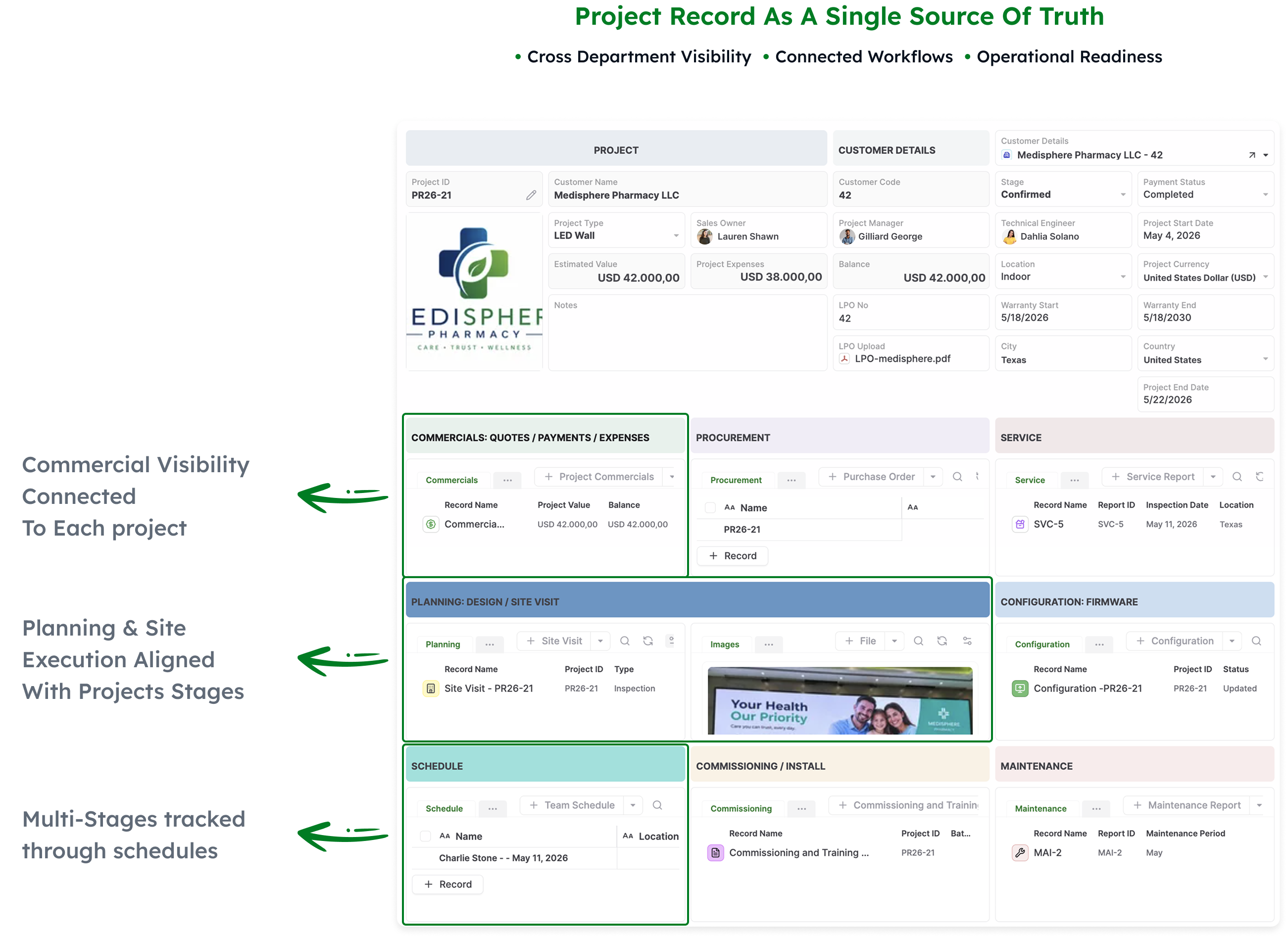
Projects operate as structured records containing technical requirements, materials, workflow stages, status, execution history, documentation, and project activity.
Departments work from the same project structure throughout the delivery process.
Material requirements, procurement activity, vendor coordination, and inventory availability remain connected directly to project workflows.
Teams can validate material readiness before installation begins, reducing delays caused by missing inventory or incomplete purchasing activity.
Managers maintain visibility across commercial approvals, material planning, warehouse preparation, scheduling, installation progress, testing, and project completion.
Dashboards provide real-time visibility into project status, dependencies, bottlenecks, and workflow progression across departments.
Installation teams receive structured workflows containing technical specifications, project documentation, checklists, testing requirements, and execution instructions.
Field updates, completion reports, and technician notes remain connected to the same project record.
Project files, operational documents, technical requirements, approvals, and workflow history remain centralized in the system.
Teams no longer spend time searching through disconnected folders and scattered project files.
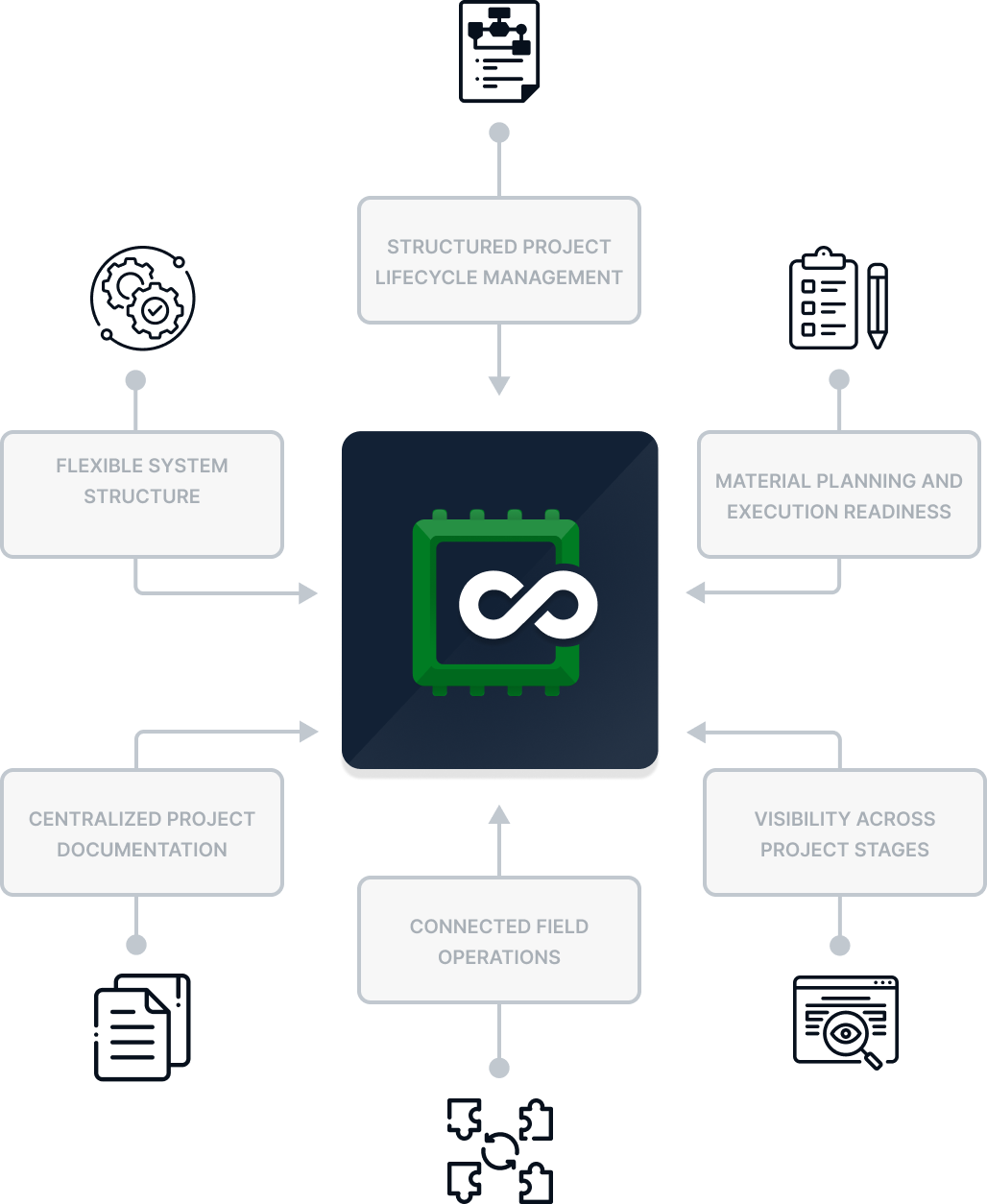
The system adapts as operational requirements evolve.
New workflows, project stages, dashboards, approvals, execution processes, and departmental structures can be added incrementally without rebuilding the system foundation.
AnyDB gives the company a flexible system that can evolve as workflows and operational requirements expand.

Improved coordination across commercial, warehouse, procurement, installation, and field operations
Faster, more consistent execution across project stages
Better visibility into material readiness and project dependencies
Reduced delays and time spent consolidating information manually
Clearer visibility across active projects and stronger operational scalability
Projects, materials, approvals, vendor activity, installation stages, and field updates remain connected through structured records instead of isolated trackers.
Departments work from the same project context, improving visibility and reducing coordination gaps throughout delivery.
Because the structure remains flexible, the business can continue extending workflows, dashboards, approvals, operational rules, and execution processes as requirements evolve.
This allows the company to scale operational complexity without rebuilding systems or increasing workflow fragmentation.