
Published on July 21, 2026


A contract gets signed and the project gets underway, but it isn’t long before a scope changes, a delivery arrives late, or a client asks for something outside the original agreement.
None of this is unusual, and none of it has to become a real problem. What usually causes the trouble is simpler than it sounds: nobody wrote it down, or they wrote it down in five places that don’t talk to each other.
That’s why claims management actually begins weeks before a dispute becomes urgent, in the habit of recording events, tracking changes, and holding onto evidence while the work is still moving.
Some companies have a dedicated claims specialist, while in many others the job is shared across project managers, commercial teams, and legal. Either way, a reliable claims process depends on a reliable operational record.
In this article, you’ll learn:
- how operational events turn into claims
- practical ways to build a more disciplined claims management process
- how a custom operational system keeps the information, evidence, people, and workflows connected as a situation develops
The Claim Starts Long Before Anyone Calls It a Claim
By the time a claim shows up as a formal notice or a request for compensation, it has usually already been building quietly for weeks.
A scope changes in a hallway conversation and never makes it into writing. A decision gets made in a meeting and lives only in someone’s memory of that meeting. A schedule slips a little, then slips again, and nobody updates the one place that matters.
None of these moments feel significant when they happen, which is exactly why claims management depends on what a company does before anyone is calling something a claim at all.
By the time someone actually needs to reconstruct what happened, the relevant details are scattered across an email thread, a project schedule, a set of meeting minutes, and a folder of shared files nobody has opened in months.
Each piece holds part of the story, but stitching them back together, sometimes a year later, wastes time most teams don’t have to spare.
A dependable operational record should hold onto the elements that give an event its meaning:
- Chronology: What happened and when.
- Responsibility: Who made, received, or acted on a decision.
- Impact: How the event affected cost, scope, schedule, or delivery.
- Communication: What was notified, discussed, agreed upon, or left unanswered.
- Evidence: Which documents or records support each point.
- Follow-up: What still needs to be done and by whom.
Most companies aren’t short on information. They have it all somewhere.
What they’re short on is a way to find the right pieces quickly, understand the context around them, and line up the sequence of events without a week of digging.

4 Best Practices for Managing Claims Before They Become Bigger Problems
Good claims management follows the natural life of an issue. It starts with understanding what actually happened, builds into a clear position backed by evidence, and continues through the follow-ups that keep the matter moving while the rest of the operation carries on around it.
It also benefits from the right mix of people in the room.
1. Study the Claim Before Building Your Position
Before drafting a response, take the time to actually understand what the other party is requesting, the events they’re pointing to, and the consequences they believe those events created.
This gets stronger when the right perspectives sit together early. A technical team can clarify what happened on site. The project team can lay out the sequence of events and how it hit the schedule. Commercial can assess the financial impact, while procurement and legal add the contractual context, rights, and deadlines that shape what the company can actually say.
This kind of multidisciplinary view heads off a familiar trap: a position gets locked in before the facts are understood, and the organization ends up revising its own argument as new information turns up.
The more complicated the issue, the more that early legwork pays off.
2. Make Your Position Official
Email is fine for day-to-day coordination. Significant claims, counterclaims, notifications, and defenses deserve more than a reply buried three messages deep in someone’s inbox.
A formal notification gives the organization a clear reference point. Depending on the situation, it should lay out what happened, when it happened, what impact it created, and what’s still under review.
None of this calls for aggressive language or a document dense with legal jargon. A clear, plainly written position usually lands harder than a theatrical one.
It’s also possible to formalize a position while the full consequences are still being worked out. The organization can document what it knows, note the impact already observed, and reserve the right to add more as the picture develops.
3. Build the Evidence While the Context Is Still Fresh
Evidence is far easier to organize when it stays connected to the event it supports, rather than getting gathered months later from a pile of folders nobody labeled properly.
Depending on the situation, the relevant records might include:
- Emails and formal notifications
- Photos and videos
- Incident reports
- Meeting minutes
- Change requests
- Approvals and follow-up communications
Each piece should have a clear place in the story. For example:
- Annex 1: Email exchange on March 14th about the revised date.
- Annex 2: Site photograph recorded on March 18th showing the affected area.
- Annex 3: Meeting minutes confirming the agreed corrective action.
This kind of organization does more than prepare a company for a future dispute. When evidence stays connected to the event as the issue develops, teams can actually discuss the situation with better information while there’s still a chance to resolve it before it escalates further.
4. Track Follow-Ups and Important Deadlines
Claims can stay open for months while the project, contract, or wider operation keeps moving. New decisions get made, costs pile up, evidence surfaces, and the people who were closest to the issue sometimes move on to other responsibilities.
A disciplined claims process keeps the next steps visible. That usually means tracking follow-up dates, response deadlines, contractual notification periods, key decision points, pending evidence, and escalation requirements.
A simple reminder, set at the right moment, is often the difference between a manageable issue and a much larger one.
One legal point deserves particular attention here.
Ongoing correspondence does not automatically preserve limitation periods or prevent prescription.
When an issue could affect legal rights or statutory deadlines, qualified legal counsel needs to be involved so the organization takes the necessary steps within the applicable timeframe.
Claims management works best when the operational team can keep the facts, responsibilities, evidence, and next actions moving together.
How AnyDB Helps Connect the Claims Management Process
AnyDB isn’t legal claims software, and it doesn’t need to be.
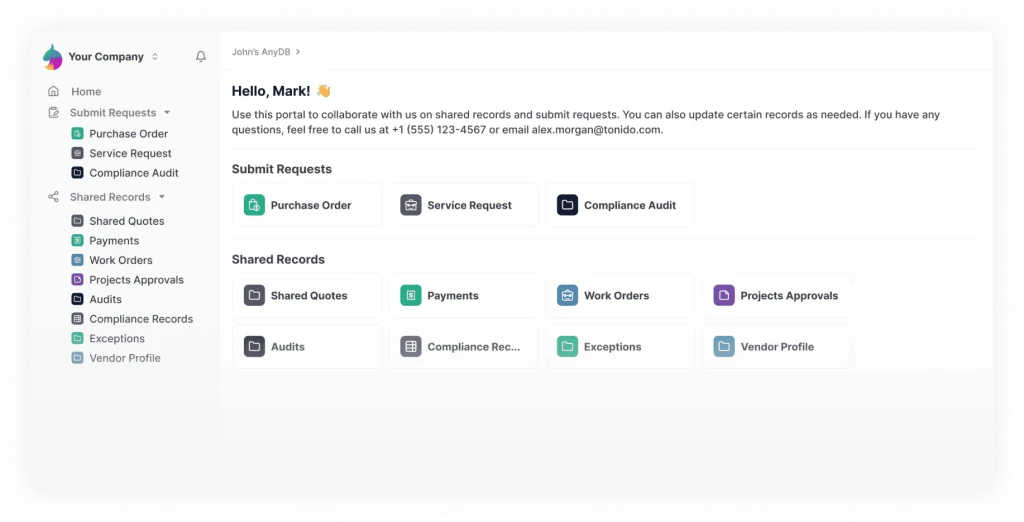
It’s a custom operational system that can be configured around the processes that generate and resolve claims, giving teams a structured way to connect the information surrounding an issue.
| Claims Management Challenge | How AnyDB Can Help |
| Information is spread across emails, spreadsheets, and folders. | Centralize claim-related records, documents, communications, and activities. |
| Reconstructing what happened takes significant time. | Connect events, dates, files, decisions, and related records in one operational context. |
| Various teams are involved in the same issue. | Create workflows that coordinate technical, commercial, operational, and legal participants. |
| External parties need to contribute information. | Use secure portals and controlled access for clients, suppliers, contractors, and other collaborators. |
| Important follow-ups are forgotten. | Assign work, set reminders, and track deadlines. |
| Different users need different levels of access. | Apply role-based permissions across the operational process. |
| Evidence is difficult to organize. | Connect documents and files directly to the relevant operational record. |
| Managers lack visibility into open issues. | Use views, dashboards, and real-time operational data. |
A custom operational system earns its keep for claims management precisely because it skips a predefined workflow.
AnyDB lets organizations configure the records, relationships, permissions, and workflows around the way their operations work.
Make Every Operational Record Count
As we’ve seen, claim is usually shaped long before anyone calls it one. The way a company records events, manages changes, communicates decisions, and preserves evidence determines how it can respond once the situation gets more complicated.
A connected operational record gives teams the context they need to act with clarity while helping the business learn from the events that shape its work.
Explore how AnyDB helps organizations organize workflows, assign work, set reminders, and keep the information behind important operations connected.
Schedule a free call with the AnyDB team to see how we can support your claims process.
Frequently Asked Questions About Claims Management
Building a stronger claims management process involves more than reacting faster when a dispute comes up. Here are some of the most common questions organizations ask when working toward a more disciplined process.
What is claims management?
Claims management is the process of identifying, documenting, evaluating, and resolving claims that arise from disputes over cost, schedule, quality, or contractual obligations. It covers everything from the first undocumented change on a project to the formal notice, evidence, and negotiation that follow.
Who is responsible for claims management on a project?
It depends on the organization. Some companies have a dedicated claims specialist. In many others, the responsibility is shared across project managers, procurement, and legal, with each group contributing the piece of the picture closest to their role.
When should a company start documenting a potential claim?
As early as possible, ideally before anyone is calling it a claim at all. The strongest claims processes are built on records created continuously as events unfold.
What makes claims management difficult for growing companies?
Information tends to spread across emails, spreadsheets, shared drives, and individual inboxes as a company grows. Reconstructing a timeline from scattered sources takes far longer than working from a single connected operational record.

The End-to-End Operations System that Finally Fits Your Reality.
No more scattered spreadsheets or rigid, disconnected tools.
AnyDB is a modern, customizable platform for managing business records and operations across teams, clients, and partners.
Learn More


Phone: (512)-761-7979
© 2024 Humanly Inc. All rights reserved.
What is AnyDB?
AnyDB is a unified, customizable data store designed to streamline and empower your entire organization. Effortlessly store, organize, and share custom business data to drive both internal and external operations across teams. Think of it as spreadsheets on steroids.Perfect for Sales, Marketing, Operations, HR, and beyond. Discover AnyDB