
Business Operations
Running a business involves far more than great ideas. It’s about how well you execute them day to day. The Business Operations category brings you practical strategies, automation tools, and actionable insights to help you streamline processes, boost collaboration, and make smarter, faster decisions.
Whether you’re managing a growing team, refining internal workflows, or searching for cost-efficient tech, this is where you’ll find content that meets your needs — without the fluff.
What Are Business Operations?
Business operations refer to the core activities, systems, and workflows that keep your company running efficiently. From task management and communication to data tracking and reporting, these operations support everything from delivering your product or service to managing internal teams.
They include both strategic and operational components, and when optimized, they reduce overhead, increase transparency, and drive better results across the board.
Key Aspects of Business Operations
The scope of business operations is wide, but some of the most critical aspects include:
- Workflow automation: Automating repetitive tasks to save time and reduce errors.
- Cross-functional collaboration: Creating systems that connect teams, tools, and data.
- Process optimization: Streamlining daily tasks for more efficient output.
- Data-informed decision-making: Using dashboards and reporting tools to guide strategy.
- Scalable systems: Implementing tools and processes that grow with your business.
Each of these areas contributes to building a more resilient, agile, and efficient business, especially in fast-paced, remote or hybrid work environments.
Why Business Operations Are Important
Solid operations don’t just keep the lights on. They unlock real growth. When your workflows are aligned, your data is centralized, and your team has the right tools, your company becomes more adaptable, more productive, and better equipped to deliver on its goals.
Without proper operations, businesses face miscommunication, wasted time, poor decision-making, and rising costs — all of which limit potential and scalability.
What You’ll Find in This Category
The category features content designed to help you run your business smarter, not harder. You’ll find articles on:
- Reducing SaaS costs with no-code solutions
- Optimizing workflows for growing teams
- Automating project tracking for real-time visibility
- Improving collaboration across departments
- Leveraging data for faster, more confident decision-making
Each piece is built to be practical, easy to apply, and aligned with the real challenges modern teams face. Whether you’re a startup founder, team lead, or operations manager, you’ll leave with tools and ideas to improve how your business runs — today and as it scales.

Business Operations
Excel-to-Web Portal Conversion: Turn Your Spreadsheet Into a Real Business System
September 1, 2026
Excel-to-web portal conversion turns spreadsheet data, formulas, and workflows into a structured web-based business system.
Read More
Business Operations
How to Move from Spreadsheets to a Real Operations Platform (Without Disrupting Your Business)
August 31, 2026
You can move from spreadsheets to software by transferring business data, rules, and workflows into a structured operational system.
Read More
Business Operations
E-commerce Order Management: A Complete Guide for Growing Operations
August 31, 2026
E-commerce order management connects the entire order lifecycle, from purchase and inventory allocation to fulfillment, shipping, and returns.
Read More
Business Operations
Barcode Asset Tracking Software: A Practical Guide for Operations Teams
August 30, 2026
A barcode is a practical starting point for knowing where an asset is, who has it, and what condition it’s in. Barcode asset tracking software makes that information worth having. Each scan becomes a reliable operational event instead of a simple lookup.
Read More
Business Operations
Construction Asset Tracking Software: How to Keep Equipment, Tools, and Materials Accounted For
August 28, 2026
Modern asset management platforms connect tracking with maintenance, inspections, and reporting. The value comes from bringing those pieces together so the record stays useful after the asset moves.
Read More
Business Operations
Custom Enterprise Mobile App Development For Field Ops: A Guide To Building Solutions That Match How Your Business Works
August 26, 2026
Custom enterprise mobile app development helps companies build mobile workflows around specific field operations, users, data, security needs, and business systems.
Read More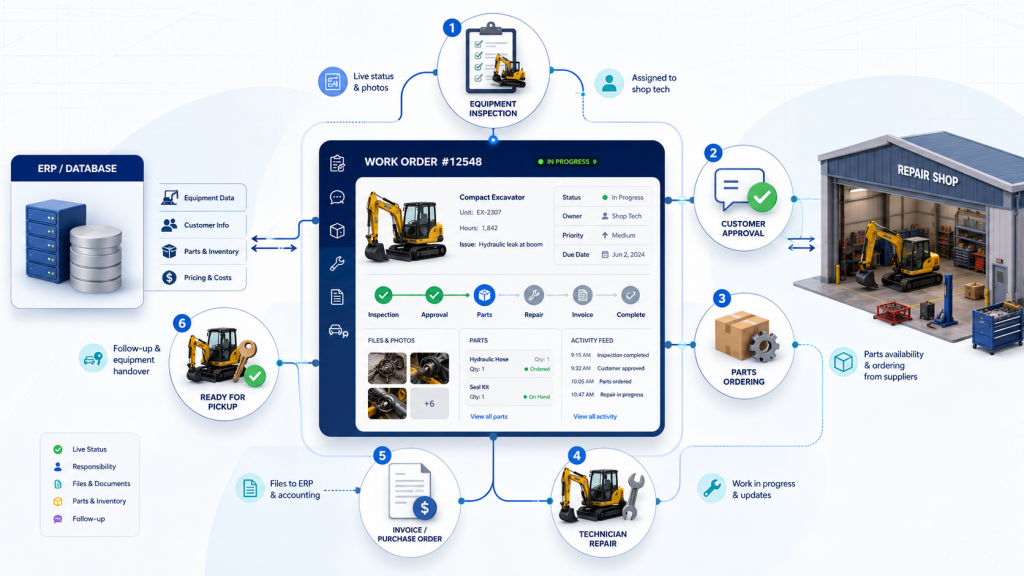
Business Operations
Filling the Gaps in ERP Work Order Management: Using AnyDB as a Practical Workflow Layer for Equipment Repair Shops
August 26, 2026
In an equipment repair business, a work order is more than a transaction. It is a live operational process that moves through inspection, estimating, customer approval, parts ordering, technician repair, invoicing, and final pickup. For a company like TexPro Equipment, where construction equipment comes in for service, parts may need to be ordered, technicians must […]
Read More
Business Operations
Hospital Asset Tracking: How Healthcare Teams Track Equipment, Devices, and Supplies
August 25, 2026
Hospital asset tracking is the process of monitoring equipment, devices, and supplies as they move through a healthcare organization, covering their location, availability, and condition. It can use barcodes, RFID, BLE, or RTLS, alongside records that support maintenance and day to day operations.
Read More
Business Operations
Enterprise App Development in 2026: Build vs Buy vs Custom Platform
August 24, 2026
Enterprise app development is the process of designing, building, and managing large-scale software for complex workflows, high data volume, integrations, security, governance, and multi-department operations.
Read More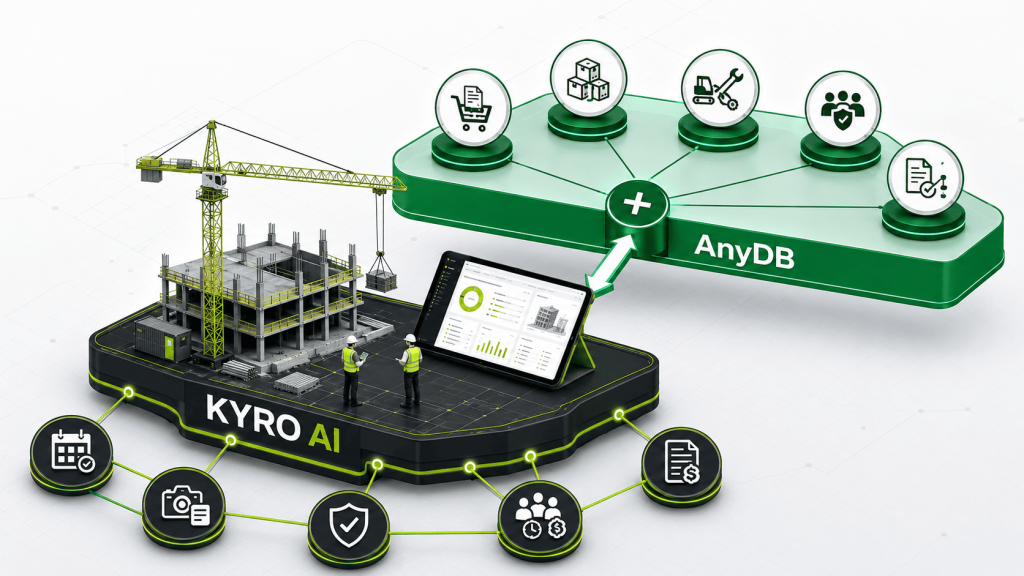
Business Operations
How Connected Systems Strengthen Storm Restoration Operations
August 21, 2026
Storm restoration involves utilities, prime contractors, subcontractors, linemen, and working capital providers.
Read More
The End-to-End Operations System that Finally Fits Your Reality.
No more scattered spreadsheets or rigid, disconnected tools.
AnyDB is a modern, customizable platform for managing business records and operations across teams, clients, and partners.
Learn More


Phone: (512)-761-7979
© 2024 Humanly Inc. All rights reserved.
What is AnyDB?
AnyDB is a unified, customizable data store designed to streamline and empower your entire organization. Effortlessly store, organize, and share custom business data to drive both internal and external operations across teams. Think of it as spreadsheets on steroids.Perfect for Sales, Marketing, Operations, HR, and beyond. Discover AnyDB