
Published on July 29, 2026


Returns management looks like a post-sale process, but it quickly reveals how connected the company’s operations really are.
A customer return is rarely just a refund request. It can trigger authorization rules, a return label, reverse logistics, warehouse receiving, product inspection, condition grading, inventory management, customer communication, replacement orders, vendor claims, quality reviews, and financial reconciliation.
When those steps live in separate tools, the return workflow becomes difficult to control.
That is why returns management should be treated as an operational process, not only a customer service task. It connects customer returns from the first request to the final decision: refund, replacement, restock, repair, recycle, disposal, or supplier follow-up.
What Is Returns Management?
Returns management is the end-to-end process of handling products customers send back, from return request and authorization to shipping, inspection, resolution, and final disposition.
A complete return process connects several operational decisions that affect customer service, warehouse work, inventory management, finance, quality control, and reporting.
The process usually depends on three core components:
- Reverse logistics: Moving goods back from the customer to a warehouse, store, repair center, supplier, or disposal location;
- Inventory reintegration: Deciding whether returned goods can be restocked, refurbished, repaired, recycled, or disposed of;
- Customer communication: Keeping the customer informed about approval, shipping, inspection, refund, replacement, or store credit.
Returns management only works well when the return record stays connected to the original order, customer, product, inventory status, inspection result, and financial resolution.
Without that connection, teams may process the return, but lose visibility into what happened, why it happened, and what should happen next.
Read Also: Warehouse Inventory Management System: Processes, Tools, and Best Practices
How The Returns Management Process Works
The returns management process should keep the customer request, physical product, warehouse action, and financial outcome connected from start to finish.
- Initiation
The customer starts the return through a client portal, support team, ecommerce account, email, or store interaction. The return request should capture the order number, product, reason for return, photos when needed, customer details, and requested resolution. If this is handled manually, support may approve customer returns without checking the return policy, order history, product type, or return window.
- Authorization
Authorization checks return rules and confirms whether the item qualifies for return, exchange, replacement, refund, repair, or rejection. This is where the Return Merchandise Authorization (RMA) becomes the approval record used to track the return. Poor return authorization creates inconsistent customer experiences and can lead to avoidable refunds, fraud, or warehouse confusion.
- Transit
During transit, the item moves back through reverse logistics using a return label, carrier, store drop-off, pickup, or 3PL process. If return tracking is disconnected, support cannot tell the customer where the item is, and the warehouse may not be prepared to receive it. AnyDB can connect carrier details, shipment tracking, expected arrival dates, and receiving tasks.
- Inspection
Warehouse or store teams inspect the item for damage, usage, missing parts, packaging condition, expiry, serial numbers, batch, or resale eligibility. Refunds issued before return inspection can create losses, while weak inspection records can hurt quality control and supplier claims.
- Resolution
The company then issues the final outcome: refund, store credit, exchange, replacement, repair, partial refund, or rejection. If return resolution is disconnected from inspection and finance, the customer may receive the wrong outcome or inventory may be updated incorrectly.
Final Outcomes For Returned Goods
After inspection, returned products need a clear disposition decision. This is where many returns management workflows break, because the item has physically arrived back, but inventory, finance, quality, and customer support still need to agree on what happens next.
Restock
Clean, unused, or resellable items can return to available inventory, but only after inspection confirms resale eligibility. A sealed product returned within policy may be restocked quickly, while an opened box, missing accessory, damaged label, or incomplete kit may need a different route.
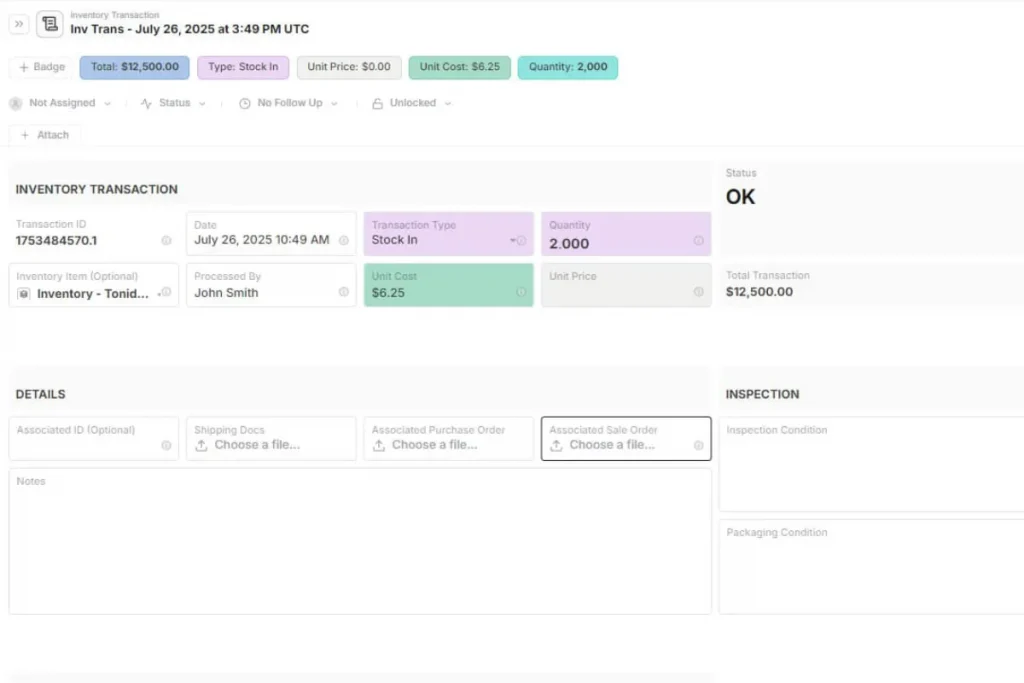
The system should trigger the stock update only after the product is approved as resellable inventory. Otherwise, the business may accidentally sell an item that is still waiting for inspection, missing parts, or unsuitable for resale.
Refurbish Or Repair
Some returned goods are not lost inventory. They may need cleaning, repackaging, repair, parts replacement, testing, or quality review before they can be sold again.
For example, an electronics item may need a functionality check, a furniture item may need part replacement, and a returned equipment component may require inspection before it can be assigned to another customer order.
In these cases, the return should create a repair workflow with ownership, status, notes, parts used, and final product condition.
This helps the team avoid two common mistakes: writing off items that could be recovered or restocking items before they are actually ready.
Recycle, Dispose, Or Write Off
Broken, expired, contaminated, unsafe, or unsellable items may need to be recycled, disposed of, returned to vendor, donated, or written off.
This decision is especially sensitive for regulated products, perishables, medical items, cosmetics, batteries, chemicals, or products with compliance requirements.
The business may need disposal approvals, photos, vendor claim records, write-off reasons, and audit history.
Good reverse logistics does not end when the product comes back. It ends when the final disposition is documented and inventory, finance, quality, and customer records all reflect the same outcome.
Returns Management Best Practices
Returns management best practices should reduce friction for the customer without creating blind spots for support, warehouse, inventory, finance, and quality teams.
Create A Clear Return Policy
A clear return policy should define return windows, product conditions, required proof, refund methods, exchange rules, and exceptions.
It should be simple enough for customers to understand and specific enough for internal teams to apply consistently.
For example, “30-day returns” is not enough if the warehouse also needs to know whether opened, used, damaged, expired, or final-sale items follow different rules.
Use Structured Return Authorization
RMA records help teams control what was approved, why it was approved, which product is being returned, and what outcome is expected.
Without structured return authorization, one support agent may approve a refund, another may offer store credit, and the warehouse may receive the item without knowing what decision was already made.
Connect Returns To Original Orders
Each return should link to the original order, customer, SKU, quantity, payment, shipment, and delivery record.
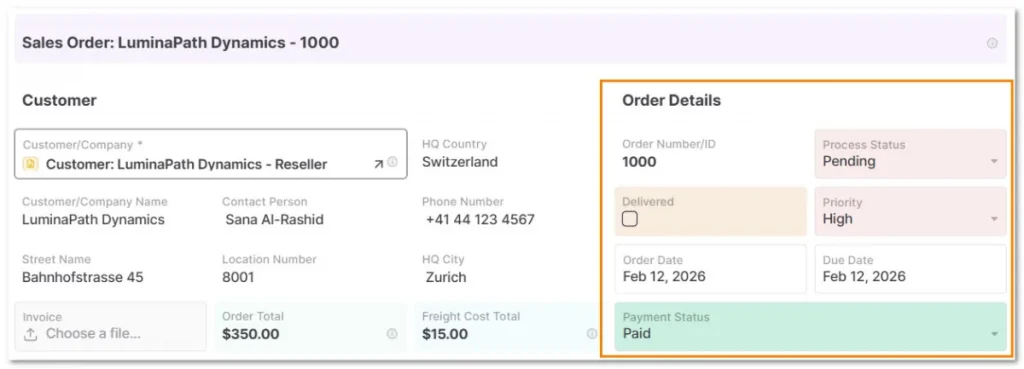
This reduces errors and improves reporting because the team can see the full context behind the return. It also prevents avoidable mistakes, such as refunding the wrong item, replacing the wrong variant, or restocking a product that was part of a bundle.
Inspect Before Restocking Or Refunding When Needed
Businesses should define which returns require inspection before refund, restock, repair, write-off, or vendor claim.
A sealed apparel item may return to inventory quickly, while an electronics product, medical item, food product, or damaged shipment may need photos, condition grading, serial number checks, or quality approval before any financial or inventory action happens.
Keep Customers Updated
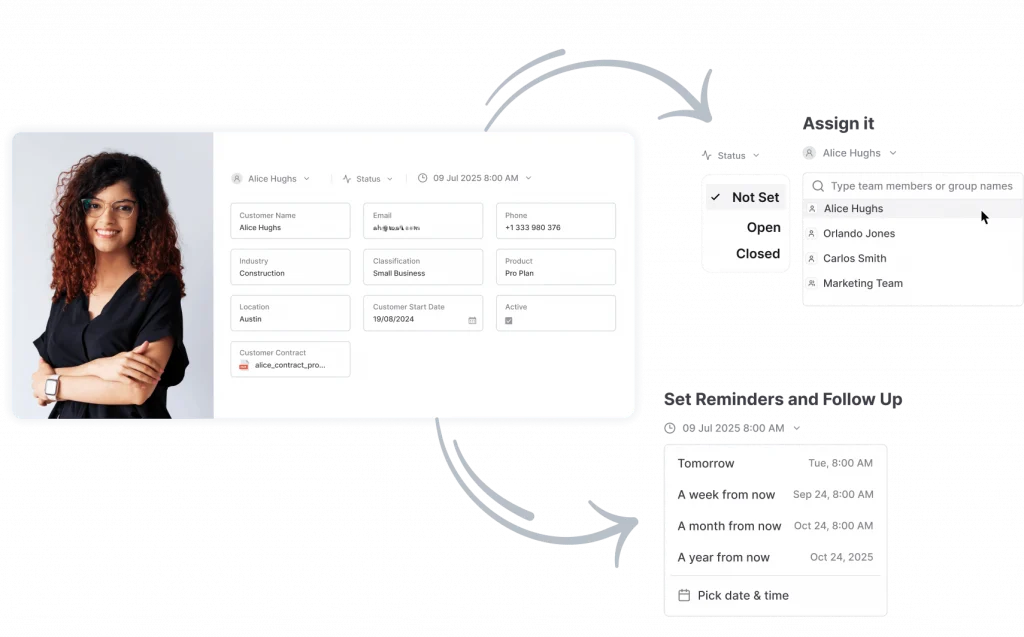
Customer communication should cover each important status:
- Request received;
- Return approved;
- Item in transit;
- Item received;
- Inspection complete; and
- Refund or replacement issued.
When customers do not know where the return stands, support volume increases and the return process feels less trustworthy.
Track Return Reasons And Root Causes
Return reasons should help the business improve, not only close tickets.
Teams should be able to identify product issues, inaccurate descriptions, supplier defects, fulfillment errors, sizing problems, damage in transit, or customer expectation gaps.
A high return rate for one SKU may point to a quality issue, while repeated “wrong item received” reasons may expose a warehouse picking problem.
Measure Operational Impact
Return metrics should show how returns affect cost, speed, inventory, and customer experience. Useful metrics include return rate, refund cycle time, inspection time, restock rate, replacement rate, return reason trends, disposition outcomes, and cost per return.
AnyDB supports these best practices by keeping return requests, RMA approvals, inspection forms, inventory actions, customer communications, files, and reporting connected in one operational system.
Using AnyDB For Returns Management
Standard ecommerce return tools can work well for simple refunds, labels, and status updates.
The challenge starts when returns become operationally complex: the item needs to move back through reverse logistics, pass inspection, update inventory, trigger a refund or replacement, and sometimes create a vendor claim, quality review, write-off, or compliance record.
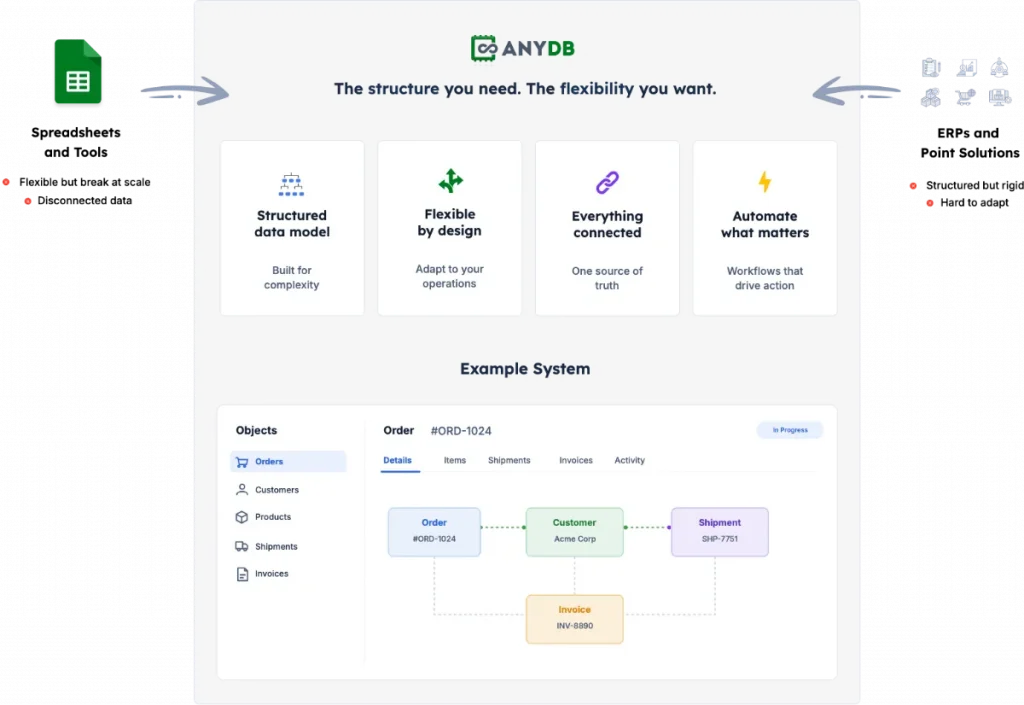
AnyDB helps businesses manage returns as connected operational records, instead of scattering the process across inboxes, support tickets, spreadsheets, shipping tools, and warehouse notes.
Unify Your Reverse Logistics Workflow
In AnyDB, each return can stay connected to the original customer, order, product, SKU, shipment, RMA approval, and inventory record.
That gives support, warehouse, finance, and operations teams the same view of what was requested, what was approved, where the item is, and what needs to happen next.
As the return moves through the process, teams can link:
- Customer records and original orders;
- Return requests and RMA approvals;
- Products, SKUs, and inventory items;
- Stock transactions and return labels;
- Shipment tracking and warehouse receiving;
- Inspection forms, photos, and condition notes;
- Refund tasks, replacement orders, and store credit records;
- Vendor claims, quality issues, and write-off approvals;
- Customer communications and reporting dashboards.
This keeps the return workflow intact from customer request to inventory decision and financial resolution.
Platform Capabilities Built For Scale
AnyDB supports this connected returns management process through an object-based record model and flexible operational workflows.
Teams can use:
- Templates and forms to standardize return intake, inspection steps, RMA requests, and disposition decisions;
- Secure portals to let customers, vendors, and partners submit information or upload documents with unlimited free guest access;
- Role-based access control to manage who can view, approve, or update return records;
- Field-level control to protect sensitive information, such as refund values, internal notes, or supplier terms;
- Files, comments, and history to keep photos, documents, approvals, and communication attached to the return record;
- Version history and audit logs to preserve traceability over status changes, inspections, approvals, and inventory actions;
- Workflow automation to route approvals, trigger follow-ups, notify teams, and keep returns moving;
- Cloud, GovCloud, or On-Prem deployment to match security, IT, or regulatory requirements;
- Free starting access to build focused return workflows and scale as the process grows.
AnyDB gives teams a flexible way to manage returns as connected operational records, from customer request to reverse logistics, inspection, inventory decision, and financial resolution.
Book a free demo call with AnyDB and see how your team can manage returns with connected records, flexible workflows, and real operational visibility.
Frequently Asked Questions About Returns Management
Before improving returns management, it helps to clarify how returns, reverse logistics, inventory decisions, and customer refunds work together.
What Is The Returns Management Process?
The returns management process includes initiation, authorization, transit, inspection, resolution, and final disposition of the returned product. It covers the full return journey from the customer’s request to refund, replacement, restock, repair, disposal, or write-off.
What Is RMA In Returns Management?
RMA means Return Merchandise Authorization. It is the approval or tracking record used to manage a product return, including what was approved, which item is coming back, why it is being returned, and what resolution is expected.
What Is The Difference Between Returns Management And Reverse Logistics?
Reverse logistics focuses on moving goods back through the supply chain. Returns management is broader because it also includes authorization, inspection, refund, restock, repair, disposal, customer communication, and final inventory decisions.
How Can Companies Improve Returns Management?
Companies can improve returns management with clear return policies, structured RMA workflows, connected order and inventory records, inspection rules, customer updates, and reporting on return reasons and costs. The goal is to keep the customer, product, warehouse, inventory, and financial outcome connected.

The End-to-End Operations System that Finally Fits Your Reality.
No more scattered spreadsheets or rigid, disconnected tools.
AnyDB is a modern, customizable platform for managing business records and operations across teams, clients, and partners.
Learn More


Phone: (512)-761-7979
© 2024 Humanly Inc. All rights reserved.
What is AnyDB?
AnyDB is a unified, customizable data store designed to streamline and empower your entire organization. Effortlessly store, organize, and share custom business data to drive both internal and external operations across teams. Think of it as spreadsheets on steroids.Perfect for Sales, Marketing, Operations, HR, and beyond. Discover AnyDB