
Published on June 29, 2026


A compliance management system should answer one question with confidence: can the organization prove how compliance was handled?
That question is harder than it sounds. Many companies have policies, controls, training records, approval flows, audit files, and corrective actions.
In that environment, compliance work may be happening every day, but traceability remains weak.For operations leaders, compliance managers, finance teams, and directors, this creates a practical risk.
During an audit or internal review, the challenge is to show the full chain behind it:
- Who owned the requirement;
- Which control applied;
- What evidence was collected;
- Who reviewed it; and
- Whether the corrective action was completed.
That is why regulatory compliance, audit management, and compliance tracking should operate as connected records. Requirements, policies, controls, owners, evidence, approvals, incidents, training, and corrective actions need to stay linked throughout daily work, instead of being reconstructed when someone asks for proof.
What Is A Compliance Management System?
A compliance management system (CMS) is a structured framework used to manage policies, procedures, controls, responsibilities, audits, documentation, and corrective actions. Its purpose is to help an organization follow legal, regulatory, industry, and internal requirements with consistency.
In software terms, a CMS should centralize the operational records behind compliance. That includes:
- Requirements;
- Policies;
- Controls;
- Risk assessments;
- Responsible owners;
- Evidence;
- Audit findings;
- Approvals;
- Training records;
- Corrective actions.
Each record has value on its own, but compliance depends on how those records relate to one another. A requirement has limited value if it is not connected to the control that satisfies it, the owner responsible for it, and the evidence that proves it was followed.
The same applies to audit findings.
A finding should connect to the corrective action assigned, the person responsible, the approval trail, the deadline, and the final proof of completion. Without those relationships, teams may complete compliance work while still struggling to prove the full history behind it.
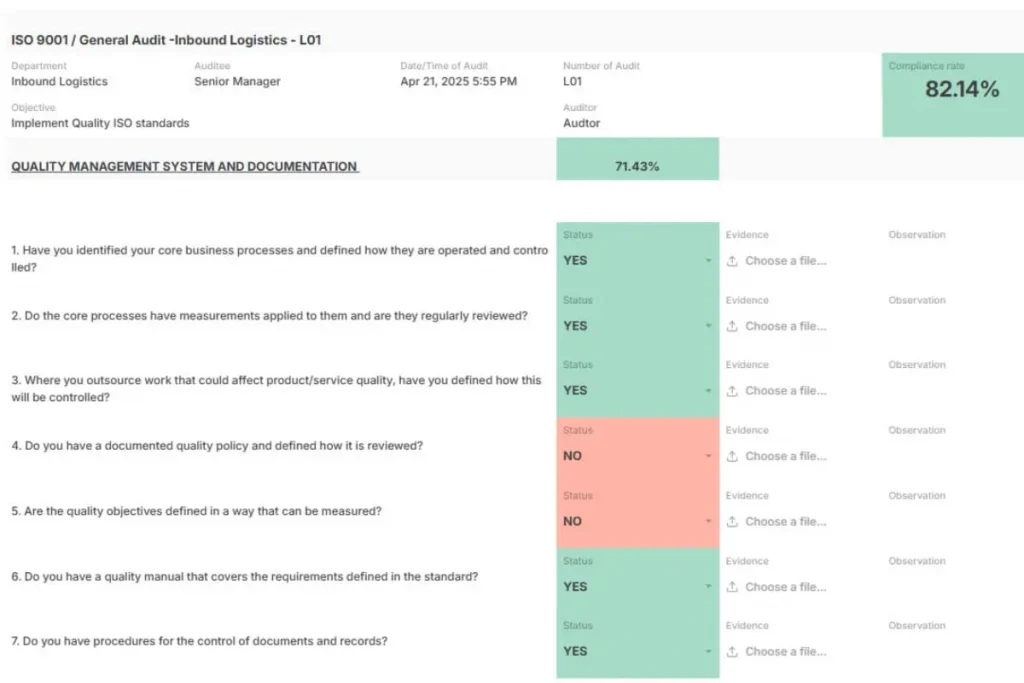
Also, it is important to notice that compliance frameworks vary by industry, region, and operating model.
Some organizations follow formal standards and regulatory structures. Others need internal governance systems to manage audits, approvals, policy updates, risk tracking, and documentation.
A strong compliance management system gives both groups the same foundation: a reliable way to connect obligations, decisions, evidence, and accountability throughout daily operations.
Core Elements Of A CMS
A compliance management system works when it turns requirements into managed operational records. Each element should create visibility into ownership, evidence, review history, and follow-up actions.
Compliance Culture
Compliance culture starts with leadership expectations, but it becomes measurable through records.
A company can say it values corporate compliance, internal policies, and governance. During an audit or internal review, the stronger proof is operational:
- Who acknowledged the policy;
- Who completed training;
- Who approved exceptions;
- Which violations were reported; and
- How leadership responded.
This is where many organizations lose traceability. Expectations are communicated in meetings or emails, but the evidence of responsibility sits across HR files, shared drives, and approval threads.
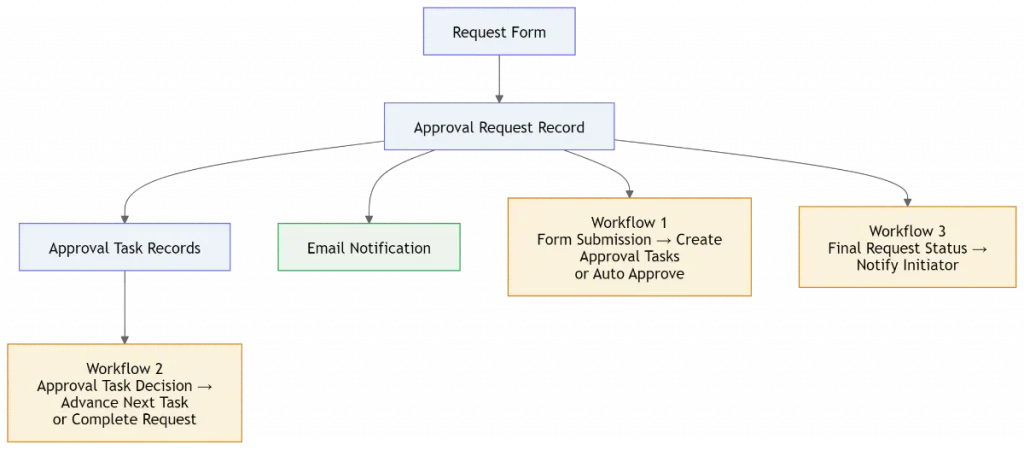
In AnyDB, policy acknowledgments, employee records, training completion, document approval histories, and reported violations can stay connected. This gives compliance leaders a clearer way to show how expectations move from leadership into daily work.
Risk Assessment
Risk assessment identifies where the business is exposed to legal, financial, operational, reputational, or process-related risk.
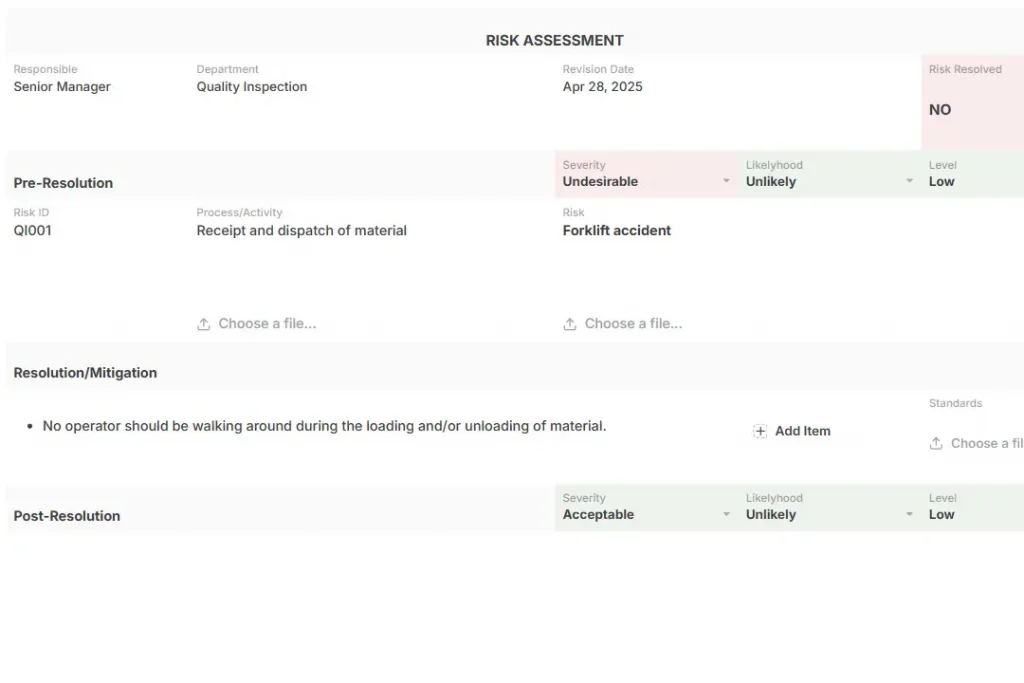
A mature compliance management system should connect each risk to the:
- Control designed to reduce it;
- Owner responsible for monitoring it;
- Evidence required;
- Review cycle; and
- Corrective actions created when issues appear.
For example, a pharma company may need to track supplier compliance, employee certifications, safety documentation, and audit evidence across multiple departments.
With AnyDB, risk records can operate as connected objects linked to policies, controls, owners, evidence, audit findings, and remediation workflows. This helps teams prioritize compliance work according to operational impact.
Want to see how connected compliance, inventory, and operational records work in a real business? Read the AnyDB pharmacy operations case study to see how an independent compounding pharmacy replaced manual tracking with real-time, scan-based workflows.
Policies & Procedures
Policies define expected behavior. Procedures translate those expectations into repeatable steps.
Policy management breaks down when documents live separately from approvals, training records, version history, and audit evidence. A policy document may exist, yet the organization may still struggle to answer practical questions:
- Who approved the policy;
- Which version is active;
- Who received it;
- Who acknowledged it;
- Which regulatory requirements it supports;
- When it needs to be reviewed again.
A useful compliance management system keeps those answers attached to the policy record itself.
Organization
Compliance requires clear ownership. A requirement without an owner quickly turns into unmanaged risk.
This element is not about maintaining an org chart. It is about mapping compliance responsibility to specific obligations, controls, approvals, evidence, and corrective actions.
When those responsibilities are unclear, compliance work depends on follow-ups and individual memory. When they are recorded, the organization can see who is accountable for each part of the process.
AnyDB can assign owners, follow-up dates, approval stages, status fields, and supporting documents to each compliance record. This gives teams a practical responsibility matrix inside the system where work is actually managed.
Training & Education
Training is how compliance requirements reach daily operations.
It should be managed as an ongoing record of employee readiness, especially in industries with recurring certifications, safety obligations, role-specific procedures, or policy renewal cycles.
A strong compliance management system should show who completed training, when it expires, which policy or requirement it supports, and whether the employee acknowledged the related obligation.
These records matter because they prove that employees received the information needed to perform their responsibilities correctly.
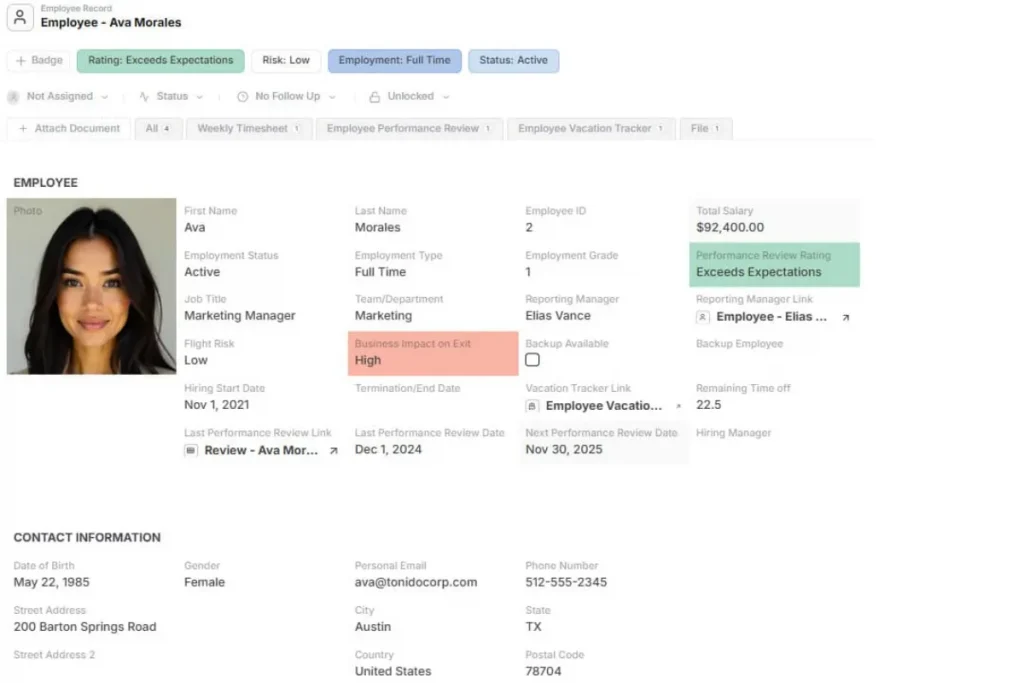
In AnyDB, employee records can connect to training completion, certifications, renewal reminders, policy acknowledgments, and compliance requirements. This allows compliance and HR teams to manage workforce compliance without relying on separate spreadsheets or calendar reminders.
Controls & Whistleblowing
Controls help organizations prevent, detect, and report violations. Whistleblowing channels give employees and external stakeholders a protected way to raise concerns.
The operational challenge starts after a concern is reported. A message alone does not create traceability. The organization needs a secure way to connect the compliance report to an investigation, assigned reviewers, supporting evidence, status updates, corrective actions, and final decisions.
Confidentiality also matters. Sensitive reports should be accessible only to the right people while remaining structured enough for follow-up and audit trails.
Correction & Improvement
A compliance system has limited value if it identifies issues and loses control of the resolution process.
Findings, incidents, failed controls, and policy gaps should generate corrective actions with owners, deadlines, evidence, approval steps, and completion status.
Some cases may also require disciplinary actions, policy revisions, process updates, or new training requirements.
Compliance maturity depends on whether the organization learns from findings and updates the system accordingly.
Implementing A Compliance Management System
Implementing a CMS is a data-structure project before it is a compliance software rollout. If requirements, policies, training records, audit evidence, and corrective actions remain disconnected, the system will reproduce the same visibility problem in a new interface.
- Start With One Compliance Area Or Workflow
Begin with one high-value workflow, such as audit tracking, policy approvals, supplier compliance, employee certifications, or corrective actions. This keeps the CMS implementation focused and easier to validate.
- Map The Records That Need To Be Managed
List the records behind the workflow: requirements, policies, risks, controls, owners, review cycles, evidence, approvals, training obligations, and corrective action processes.
- Connect Requirements To Controls And Evidence
Each requirement should link to the control that satisfies it, the owner responsible for it, and the evidence that proves completion. This creates the foundation for audit readiness.
- Add Approval And Review Workflows
Define how policies, evidence, exceptions, incidents, and corrective actions move through review. Each approval should remain attached to the compliance record it supports.
- Build Reporting Around Operational Status
Track open requirements, overdue reviews, pending approvals, missing evidence, unresolved findings, and audit readiness. Reporting should show the health of the compliance program during daily work.
- Expand As The CMS Matures
Once the first workflow works well, expand into related areas. With AnyDB, teams can start with audit workflow or policy approvals, then add compliance documentation, training records, risk tracking, and corrective action workflows over time.
Compliance Management System As A Connected Operational Model
The value of a compliance management system is not the digital storage of policies. The real value is the ability to maintain the relationships behind compliance work.
When records live apart from one another, teams spend audits reconstructing the story. They search for files, check emails, confirm approvals, validate spreadsheets, and try to prove that the process happened correctly.
A connected operational model keeps that story available continuously.
AnyDB allows teams to build compliance workflows around connected business records rather than rigid modules. Requirements can link to policies, controls, evidence, responsible owners, training records, audit findings, incidents, and remediation tasks.
This gives operations leaders, compliance managers, and finance teams a clearer way to manage compliance during daily work, with stronger traceability when proof is needed.
Book a free demo call with AnyDB and see how your team can build a compliance management system with better traceability, audit readiness, and operational control.
Frequently Asked Questions About Compliance Management System
Before choosing a compliance management system, it helps to clarify a few concepts that influence software evaluation, audit readiness, and long-term governance.
What Is A Compliance Management System?
A compliance management system is a framework and software-supported process for managing laws, policies, controls, audits, responsibilities, evidence, and corrective actions.
What Is An Example Of A Compliance Management System?
An example is a system that links regulatory requirements to policies, controls, assigned owners, audit evidence, approvals, and corrective action workflows.
What Are The Four Pillars Of Compliance Management System?
The four pillars are commonly risk assessment, policies and procedures, controls and monitoring, and corrective action. Some frameworks also include culture, training, organization, and reporting.

The End-to-End Operations System that Finally Fits Your Reality.
No more scattered spreadsheets or rigid, disconnected tools.
AnyDB is a modern, customizable platform for managing business records and operations across teams, clients, and partners.
Learn More


Phone: (512)-761-7979
© 2024 Humanly Inc. All rights reserved.
What is AnyDB?
AnyDB is a unified, customizable data store designed to streamline and empower your entire organization. Effortlessly store, organize, and share custom business data to drive both internal and external operations across teams. Think of it as spreadsheets on steroids.Perfect for Sales, Marketing, Operations, HR, and beyond. Discover AnyDB