
Published on June 26, 2026


A maintenance management system is often evaluated by the number of maintenance features it offers. That’s usually the wrong buying criterion.
The biggest operational gains rarely come from scheduling preventive maintenance or creating work orders faster. They come from connecting maintenance with the rest of the business.
An equipment failure affects inventory, purchasing, production schedules, vendors, compliance, and sometimes customer delivery dates. If those systems don’t share the same operational data, maintenance becomes reactive regardless of how advanced the Computerized Maintenance Management System (CMMS) is.
The biggest question is: can your system connect maintenance work with the business data that shapes every maintenance decision?
A well-structured maintenance management system creates that connection. It gives teams a reliable way to manage assets, work orders, inventory, documentation, and operational history in one place, so maintenance becomes easier to plan, measure, and improve over time.
What Is A Maintenance Management System?
A maintenance management system is software that controls how maintenance work is requested, planned, assigned, completed, and reviewed across assets and teams.
Most buyers associate this category with computerized maintenance management system (CMMS) software. That definition is accurate, but incomplete.
A strong maintenance system should organize more than tasks. It should preserve the operational context behind every maintenance decision.
For example, a work order should not exist as a standalone ticket. It should be connected to the asset, maintenance history, spare parts, supplier information, warranties, manuals, inspections, and preventive schedules.
This connected structure changes how teams manage reliability. Instead of checking multiple sources before acting, managers can see the full asset record in one place and make decisions based on real operational history.
The best systems turn maintenance activity into usable business data. Every repair, inspection, part replacement, and delay becomes part of the asset’s history, supporting better planning, budgeting, compliance, and long-term asset management.
Core Features Of A Maintenance Management System
Most maintenance management systems offer the same core capabilities: work orders, preventive maintenance, asset tracking, inventory management, and reporting.
The real difference isn’t whether these features exist. It’s how they’re connected.
In many traditional CMMS platforms, each module operates independently. Maintenance teams spend time moving information between work orders, asset records, inventory, and purchasing instead of working from a shared operational model.
AnyDB approaches maintenance differently. Instead of organizing operations around isolated modules, it structures maintenance around connected business records that evolve with every activity performed by the team.
Work Order Management
A work order should document more than the task itself. It should preserve the complete operational context behind the maintenance activity.
With AnyDB, a work order becomes a live business record connected to the asset, technician, maintenance history, spare parts consumed, supporting documents, supplier information, and completion status.
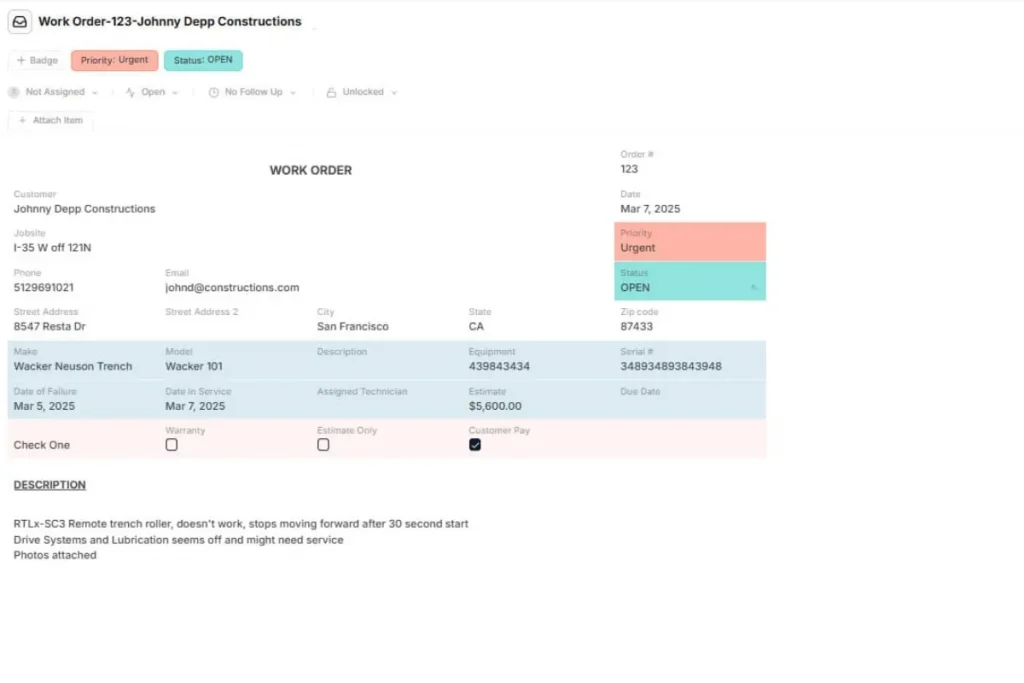
For example, a technician can scan a QR code attached to a machine using the mobile application, immediately open the corresponding work order, upload site photos, collect digital signatures, update the repair status, and complete the job without switching between systems.
Every action automatically becomes part of the asset’s operational history, creating full traceability from the initial request to completion.
Preventive Maintenance
Preventive maintenance only works when scheduled activities become part of daily operations instead of depending on individual memory.
Many organizations still manage inspections using spreadsheets or calendar reminders. The schedule exists, but execution depends entirely on someone remembering to create the next work order.
AnyDB allows you to keep preventive maintenance attached directly to the asset itself. Follow-up dates, recurring inspections, and maintenance schedules remain part of the asset record, allowing new inspection records or maintenance workflows to be generated automatically as deadlines approach.
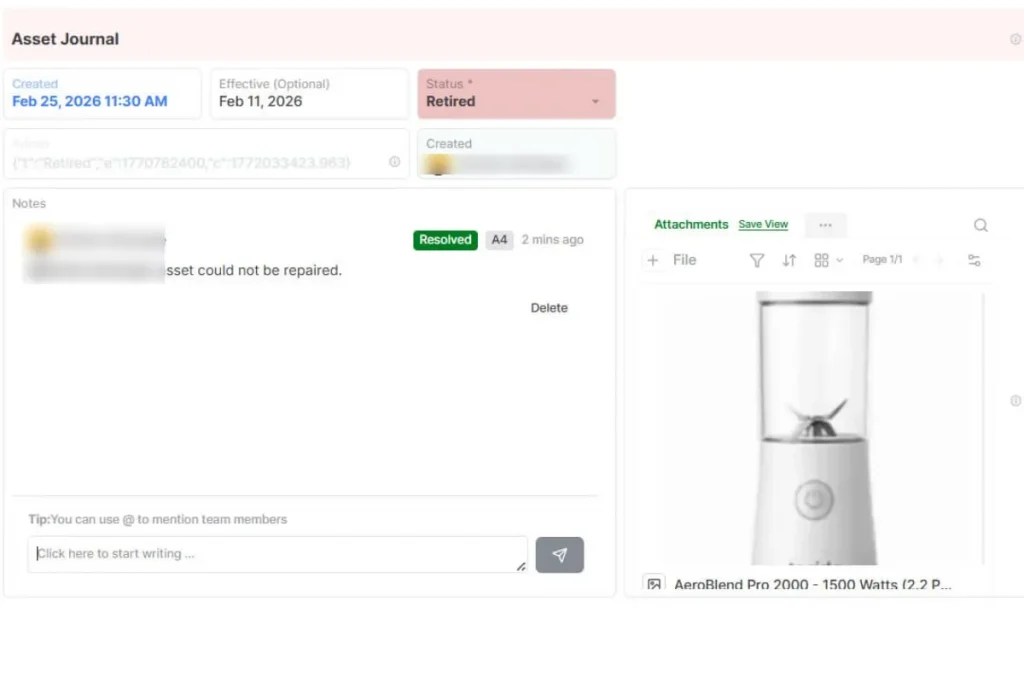
This creates a repeatable process that supports operational consistency and simplifies compliance in regulated environments.
Asset Tracking
An asset record should answer every operational question without requiring multiple searches.
Instead of storing equipment information across separate modules, AnyDB allows organizations to build a complete digital record for every asset.
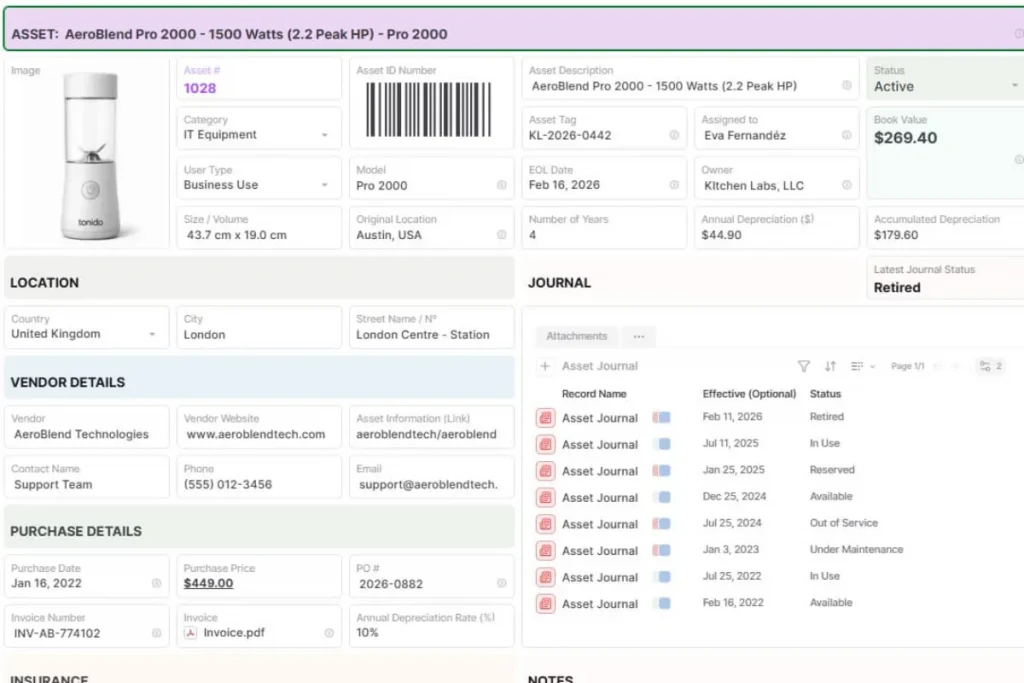
Maintenance history, inspection reports, warranties, manuals, supplier contracts, replacement parts, and related work orders remain attached to the same operational object.
This “digital thread” makes troubleshooting significantly faster because technicians work from the complete maintenance history instead of isolated records.
The same structure also enables secure collaboration with external contractors by providing controlled access only to the assets and records relevant to their work.
Inventory Management
Maintenance depends on inventory accuracy as much as technician expertise.
Most inventory systems simply update current stock levels. What they fail to capture is the operational context behind every inventory movement.
AnyDB records inventory as a sequence of transactions rather than overwritten quantities.
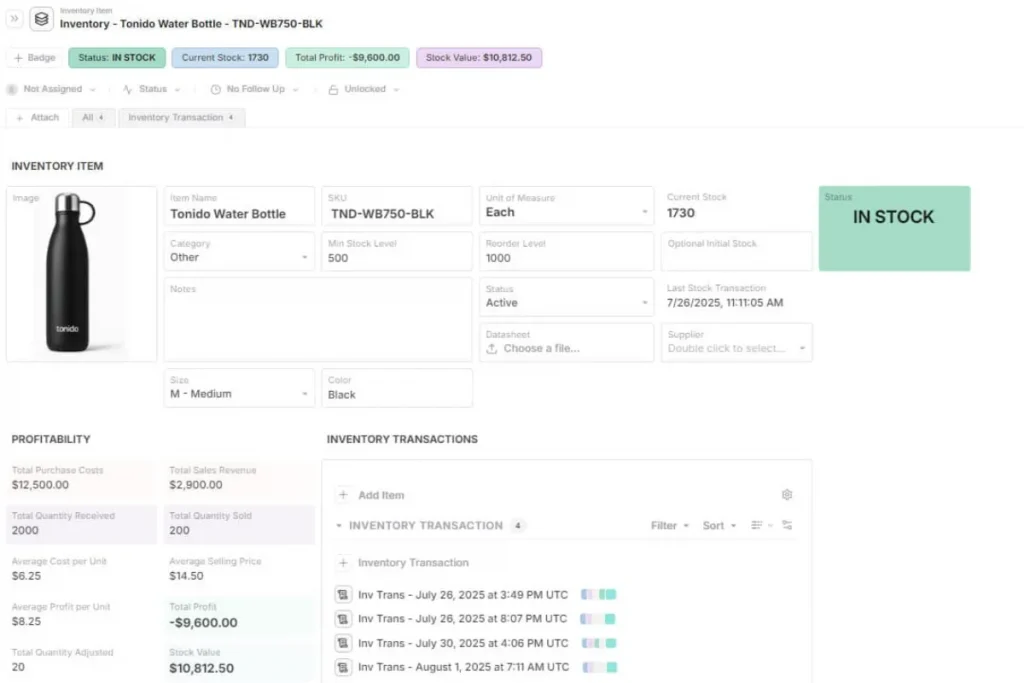
When a spare part is consumed during a repair, the inventory movement becomes linked directly to the corresponding work order. Material costs, stock levels, and asset history update together, creating complete traceability for every maintenance activity.
Also, low-stock thresholds can trigger replenishment workflows before shortages affect operations.
Reporting & Analytics
Maintenance reporting should explain operational performance, not simply summarize completed work.
Traditional reporting often depends on exporting information from multiple systems before managers can analyze costs, downtime, or technician productivity.
Because operational records remain connected inside AnyDB, dashboards reflect live business activity instead of periodic data consolidation.
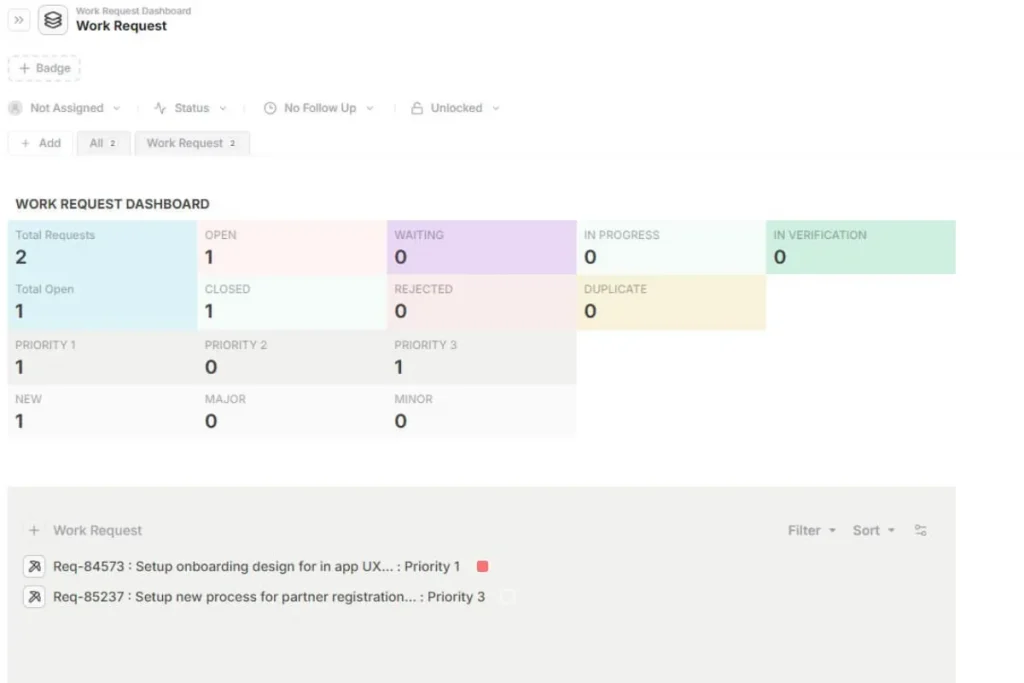
Maintenance managers can combine labor hours, spare parts consumption, vendor performance, asset reliability, and purchasing costs into a single operational view.
So, rather than producing reports after work is complete, the organization gains continuous visibility into maintenance performance while operations are still underway.
How To Choose The Right Maintenance Management System
Choosing a maintenance management system is ultimately a decision about operational architecture.
Most products offer work orders, preventive maintenance, asset records, and reporting. Those features are expected. The real question is whether the system can support the way your maintenance operation evolves over time.
When evaluating a solution, consider how it performs in these areas:
- Work order flexibility;
- Asset relationships and maintenance history;
- Inventory integration;
- Workflow customization;
- Reporting capabilities;
- Ease of adoption by technicians;
- Ability to connect maintenance with broader business operations.
These criteria become increasingly important as maintenance grows in complexity. More assets generate more inspections, more work orders, more inventory movements, more documentation, and more operational dependencies.
The Trade-Off Most Companies Don’t Expect
Many organizations believe they have only two realistic options.
The first is to continue using spreadsheets.
Spreadsheets offer flexibility. Teams can create new columns, modify workflows, and adapt processes as maintenance evolves. The problem is that spreadsheets have no operational memory. A work order cannot naturally relate to an asset, a spare part, a supplier contract, or an inspection history. As the operation grows, maintaining those relationships becomes an impossible manual exercise.
The second option is implementing a traditional ERP or enterprise CMMS.
These platforms solve the relationship problem by introducing structure. Assets, work orders, inventory, purchasing, and maintenance schedules become connected.
However, that structure often comes with rigidity. Small workflow changes require configuration projects, specialist consultants, or IT involvement. Over time, maintenance teams begin creating spreadsheets outside the system simply to regain flexibility.
This creates an interesting paradox: the systems designed to eliminate spreadsheets often encourage their return.
The Right System Preserves Both Structure And Flexibility
The strongest maintenance management systems don’t force organizations to choose between flexibility and operational control.
They combine the reliability of connected operational records with the adaptability needed for day-to-day maintenance work.
After all, maintenance processes are rarely static.
Equipment changes. Inspection procedures evolve. Regulatory requirements shift. New asset types are introduced. The software should evolve at the same pace without requiring the maintenance team to redesign the system every time operations change.
This is the design principle behind AnyDB.
Instead of organizing maintenance through rigid modules, AnyDB allows organizations to build maintenance operations around connected business records.
Work orders, assets, spare parts, suppliers, inspections, documentation, and compliance remain permanently linked while workflows can evolve as the operation evolves.
The result is an operating model that delivers the visibility of an enterprise platform without sacrificing the flexibility that maintenance teams rely on every day.
Maintenance Management System As A Foundation For Operational Visibility
A maintenance management system becomes valuable when it gives leaders a complete view of asset performance, not just a cleaner list of tasks.
AnyDB extends this model beyond traditional CMMS software. Instead of forcing maintenance into rigid modules, it allows teams to build maintenance workflows around their own operational structure.
Book a free demo call with AnyDB experts and see how a connected operational platform can help your maintenance team scale with greater visibility, flexibility, and control.
Frequently Asked Questions About Maintenance Management System
If you’re comparing maintenance management systems, these answers can help clarify key concepts before making a decision.
What Are Maintenance Management Systems?
Maintenance management systems centralize work orders, assets, inventory, schedules, and maintenance history. They help teams improve reliability, reduce downtime, and manage maintenance operations with more control.
Is SAP A CMMS Or An ERP?
SAP is primarily an ERP platform with maintenance capabilities. A dedicated CMMS focuses specifically on maintenance operations, while SAP covers broader business functions such as finance, procurement, and supply chain.
What Are The 4 Types Of Maintenance?
The four main types of maintenance are corrective, preventive, predictive, and condition-based maintenance. Each strategy uses a different method to manage asset reliability, repair timing, and operational risk.

The End-to-End Operations System that Finally Fits Your Reality.
No more scattered spreadsheets or rigid, disconnected tools.
AnyDB is a modern, customizable platform for managing business records and operations across teams, clients, and partners.
Learn More


Phone: (512)-761-7979
© 2024 Humanly Inc. All rights reserved.
What is AnyDB?
AnyDB is a unified, customizable data store designed to streamline and empower your entire organization. Effortlessly store, organize, and share custom business data to drive both internal and external operations across teams. Think of it as spreadsheets on steroids.Perfect for Sales, Marketing, Operations, HR, and beyond. Discover AnyDB