
Published on June 26, 2026


Procurement management software becomes valuable before a purchase request is ever submitted.
Most procurement issues begin earlier, when supplier details, contract terms, budget limits, inventory needs, approval rules, and purchase requests live in separate places.
By the time someone creates an order, the decision has already been shaped by incomplete information.
That is where hidden procurement costs appear. Teams overorder because inventory data is outdated. Approvers delay decisions because they cannot see budget context. Finance questions invoices because purchase orders, receipts, and vendor terms do not match cleanly.
Procurement software should do more than digitize purchasing. It should connect the operational records behind every purchasing decision, so teams can understand what needs to be bought, who should approve it, which supplier should fulfill it, and how the decision affects budgets, inventory, and operations.
What Is Procurement Management Software?
Procurement management software is often described as a tool for managing purchasing. In reality, it manages something much more valuable: business decisions.
Every purchase depends on information owned by different parts of the organization.
Before a purchase order is approved, someone needs to verify the available budget, confirm inventory levels, review supplier terms, check existing contracts, identify the requester, complete the approval process, and eventually reconcile the invoice.
These are not isolated steps. They are connected business records that collectively determine whether a purchase is justified, compliant, and financially sound.
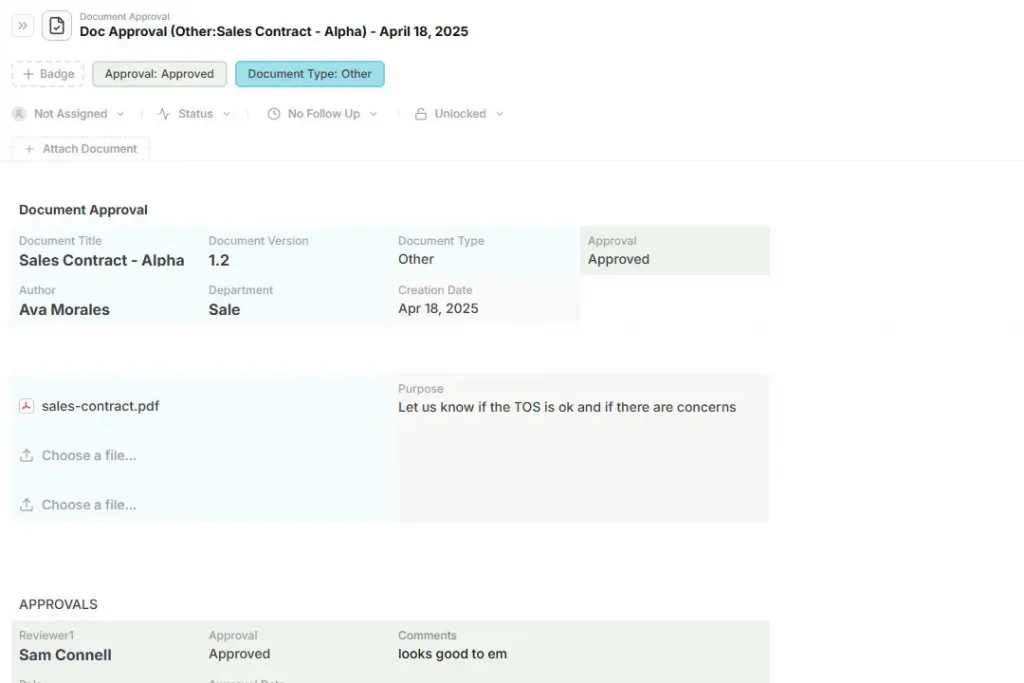
A procurement management system preserves those relationships. Instead of treating purchase requests, vendors, contracts, approvals, and invoices as separate transactions, it connects them into a single operational workflow. This gives procurement teams complete visibility into why a purchase was made, who approved it, which supplier fulfilled it, and how it affected the organization’s budget and inventory.
This shift changes the role of procurement. Rather than acting as an administrative function that processes requests, procurement becomes a source of operational intelligence that supports better purchasing decisions across the business.
Core Features Of Procurement Management Software
The most valuable procurement platforms do not simply automate purchasing activities. They improve how organizations make purchasing decisions by connecting the information those decisions depend on.
Workflow & Approval Management
An approval is only as good as the information available to the approver.
Many approval workflows slow down because managers receive a purchase request with very little context.
Before approving it, they need to check the supplier contract, confirm available budget, review previous purchases, and verify whether the vendor meets internal compliance requirements.
The approval itself takes seconds. Gathering the information takes much longer.
With AnyDB, approvals become part of a connected operational workflow. Approval records remain linked to purchase orders, vendor profiles, project budgets, contracts, and supporting documents, allowing managers to evaluate the complete business context from a single screen.
The result is faster approvals without sacrificing governance.
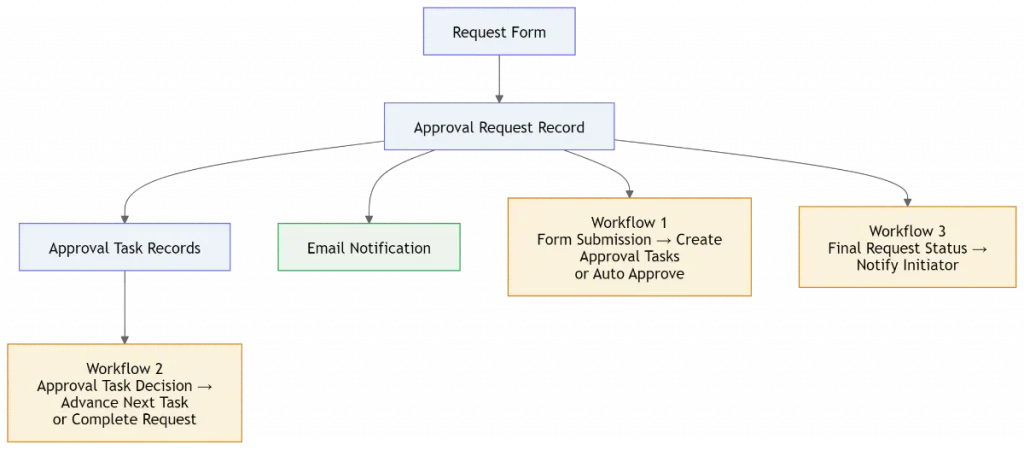
Budget Visibility
Budgets lose value when they are checked after spending occurs.
Many organizations discover budget overruns during financial reporting, long after purchase commitments have already been approved. At that stage, finance can explain what happened but cannot prevent it.
Effective procurement software brings budget validation into the purchasing workflow itself.
With AnyDB, procurement records remain connected to live budget data. As purchase requests move through the approval process, managers can immediately understand how each decision affects available budgets before financial commitments are made.
This transforms budgets from reporting tools into operational controls.
Vendor Management
Supplier relationships accumulate operational knowledge over time.
Most procurement systems treat vendors as contact records. Yet procurement teams evaluate suppliers using far richer information: delivery performance, contract history, pricing trends, quality issues, certifications, response times, and previous negotiations.
With AnyDB, vendors become connected operational records rather than static profiles.
Purchase orders, contracts, RFPs, invoices, compliance documents, and quality incidents remain attached to the supplier’s record, creating a complete operational history that supports future sourcing decisions.
Instead of asking Who is this supplier?, procurement teams can answer How has this supplier performed over the last three years?
Three-Way Matching
Financial control depends on traceability, not reconciliation.
Traditional three-way matching compares purchase orders, goods receipts, and supplier invoices after transactions have already occurred. The process exists because those records were created independently and must later be reconciled.
A connected operational model approaches the problem differently.
With AnyDB, purchase orders, receiving records, and invoices remain linked from the moment they are created. Finance teams no longer spend hours reconstructing purchasing history because every transaction already belongs to the same operational thread.
The objective shifts from correcting inconsistencies to preventing them.
Integrations
The purpose of integration is not to move data. It is to move work forward.
Many software integrations simply duplicate information between platforms. Records are synchronized, but employees still switch between systems to complete approvals, update suppliers, or trigger financial processes.
With AnyDB, integrations extend operational workflows rather than replicate databases.
Purchase approvals can automatically trigger downstream accounting actions, supplier updates, inventory movements, or ERP transactions through APIs, Zapier, Make, or existing enterprise systems.
Instead of creating another disconnected application, AnyDB becomes the operational layer connecting purchasing decisions to the rest of the business.
Choosing The Right Procurement Management Software
Procurement maturity rarely grows in a straight line.
Most companies do not move neatly from manual purchasing to a mature procurement operating model.
They move through layers of tools, each one introduced to solve the limitations of the last one.
First, supplier quotes, invoices, compliance documents, and approvals live in email. Then spreadsheets appear to organize the chaos.
Later, approval software is added to speed up decisions. Eventually, leadership invests in an ERP to centralize procurement control.
The problem is that each step often creates another system boundary:
- A standalone approval tool may accelerate approvals, but managers still need to check budget data somewhere else;
- A spreadsheet may track vendors, but contract terms and supplier performance remain buried in email;
- An ERP may centralize control, but daily procurement work often moves back into side spreadsheets because the system is too rigid for real vendor interactions.
This creates a pattern many operations leaders recognize: the more tools the company adds, the harder procurement becomes to understand.
The right procurement management software should prevent that fragmentation. It should allow procurement workflows to become more mature without forcing the team to rebuild the operating model every time the business grows.
AnyDB supports this by structuring procurement as connected business records. Purchase orders, vendors, contracts, budgets, RFPs, invoices, approvals, and compliance documents remain linked within the same operational environment.
As procurement expands, teams can add new workflows without separating the data. The result is procurement software that gives teams the structure of an enterprise system while preserving the flexibility needed to manage real purchasing work.
Procurement Management Software As A System For Better Purchasing Decisions
Procurement management software creates the most value when it connects purchasing decisions to the operational data behind them.
A purchase order should not sit apart from the vendor record, budget, contract, approval history, receiving log, invoice, or compliance documentation. When those records stay connected, procurement becomes easier to control, review, and improve.
This is where AnyDB gives growing teams a stronger model. Instead of forcing procurement into rigid modules, AnyDB lets organizations build purchasing workflows around connected business records. Teams can manage vendors, approvals, budgets, purchase orders, invoices, and supplier collaboration in one flexible operational system.
Book a free demo call with AnyDB and see how your procurement process can scale with more visibility, control, and adaptability!
Frequently Asked Questions About Procurement Management Software
Before choosing procurement management software, it helps to clarify a few concepts that often influence buying decisions and long-term operational fit.
Which Software Is Best For Procurement Management?
The best procurement management software depends on company size, workflow complexity, approval needs, and integration requirements. Growing teams should prioritize connected records, workflow flexibility, budget visibility, and vendor management.
What Is The Best ERP For Procurement?
The best ERP for procurement depends on the organization’s existing systems and operational maturity. Large enterprises may use SAP or similar platforms, while growing teams may prefer a lighter, more flexible system that adapts faster, like AnyDB.
What Software Is Best For PO Tracking?
The best PO tracking software connects purchase orders with vendors, budgets, approvals, receipts, and invoices. PO tracking becomes more reliable when each purchase order is part of a complete operational record.

The End-to-End Operations System that Finally Fits Your Reality.
No more scattered spreadsheets or rigid, disconnected tools.
AnyDB is a modern, customizable platform for managing business records and operations across teams, clients, and partners.
Learn More


Phone: (512)-761-7979
© 2024 Humanly Inc. All rights reserved.
What is AnyDB?
AnyDB is a unified, customizable data store designed to streamline and empower your entire organization. Effortlessly store, organize, and share custom business data to drive both internal and external operations across teams. Think of it as spreadsheets on steroids.Perfect for Sales, Marketing, Operations, HR, and beyond. Discover AnyDB