
Published on April 27, 2026


Supply chain management tools exist because modern supply chains are no longer linear operations. They are networks of operational records moving across organizations, systems, and physical locations.
A single product flow can involve supplier onboarding, purchase orders, warehouse receipts, inventory allocation, shipment coordination, quality inspections, and compliance documentation.
Each of these steps generates its own data: supplier contracts, batch numbers, stock movements, transport documents, inspection reports, and regulatory records.
In many organizations, this information lives across disconnected tools, and the result is fragmentation. Teams spend time reconciling records instead of managing the supply chain itself. Inventory counts drift, shipment status becomes unclear, and operational decisions rely on partial information.
Supply chain management tools are designed to address this problem by structuring and coordinating the operational records that drive supply chain activity.
Rather than treating procurement, inventory, logistics, and compliance as separate silos, these systems organize them into a traceable operational framework where suppliers, orders, shipments, and stock movements remain connected throughout the lifecycle of the supply chain.
What Are Supply Chain Management Tools?
Supply chain management tools are software systems used to plan, monitor, and control the operational processes that move goods from suppliers to customers.
Their role is not limited to tracking shipments or managing inventory; they coordinate the information that governs how materials, products, and orders flow across the supply chain.
In practical terms, these tools help organizations manage supplier relationships, track inventory levels across warehouses, control procurement and purchase orders, coordinate logistics and transportation, and support demand planning.
Each of these areas produces data that must remain accurate and synchronized as products move through the system.
What makes supply chain management particularly complex is that it involves two parallel flows:
- The first is the physical flow of goods: Materials arriving from suppliers, inventory moving between warehouses, and finished products shipped to customers.
- The second is the information flow: Orders, inventory records, transport documentation, inspection results, and financial transactions.
Supply chain management tools exist to keep these two flows aligned. When the information accurately reflects the movement of goods, organizations gain real operational visibility, making it possible to plan procurement, prevent stockouts, and respond quickly to disruptions.
Types of Supply Chain Management Tools
Supply chain operations involve several distinct processes, and most organizations rely on specialized tools to manage each one. While these systems address different operational layers, they all exist to structure the records that drive supply chain activity.
Inventory Management Tools
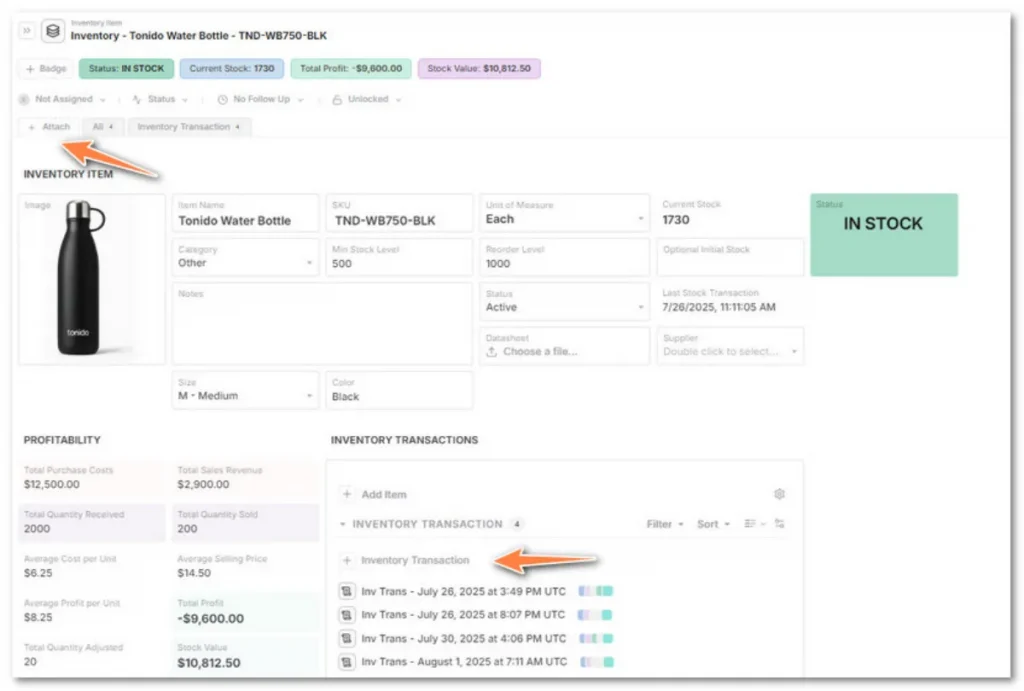
Inventory management tools track the quantity, location, and movement of products across warehouses and storage facilities.
They monitor stock levels, define reorder points, and record inbound and outbound movements to maintain accurate inventory balances. These systems are often used by operations and finance teams to ensure stock availability and control working capital.
Some examples include Katana, Zoho Inventory, and NetSuite Inventory.
Warehouse Management Systems (WMS)
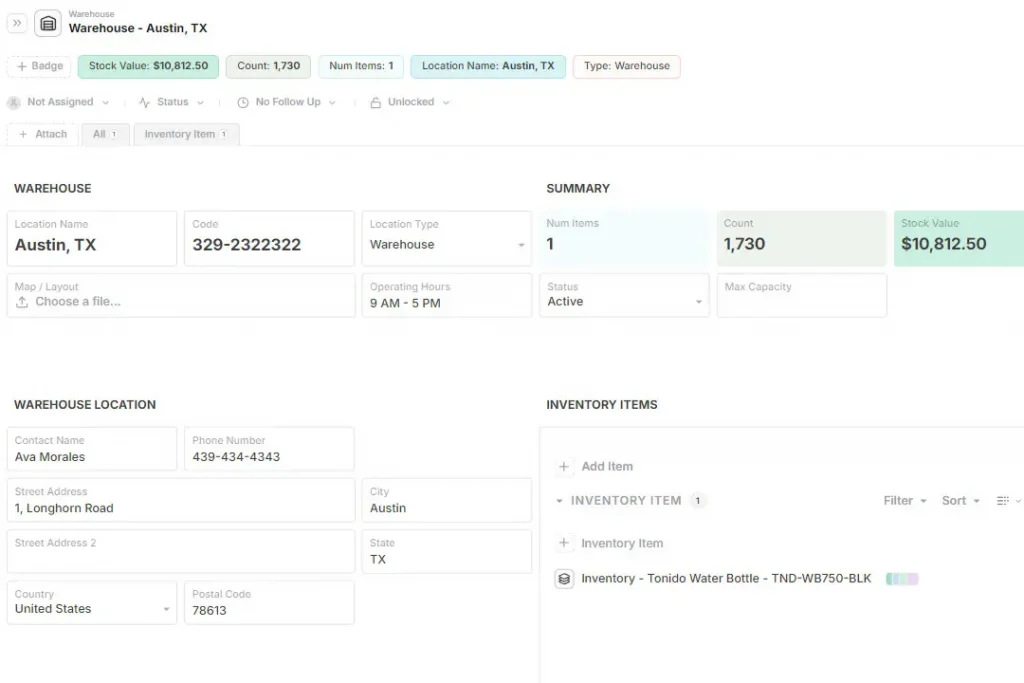
Warehouse management systems focus on operational control inside storage facilities. They coordinate receiving, stock placement, picking, packing, and internal stock movements while maintaining precise location tracking within the warehouse.
Examples include SAP Extended Warehouse Management and Manhattan WMS.
Transportation Management Systems (TMS)
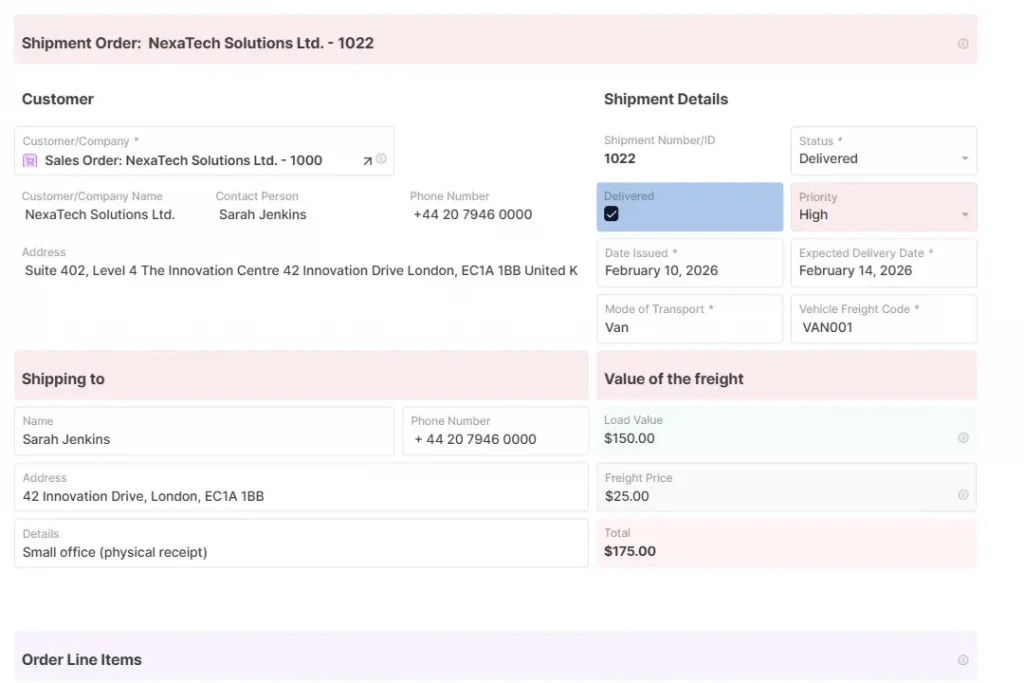
Transportation management systems optimize logistics and shipping operations. They help companies plan shipping routes, select carriers, manage freight costs, and monitor delivery performance across transportation networks.
Examples include Oracle Transportation Management and Descartes Transportation Management System.
Procurement and Supplier Management Tools
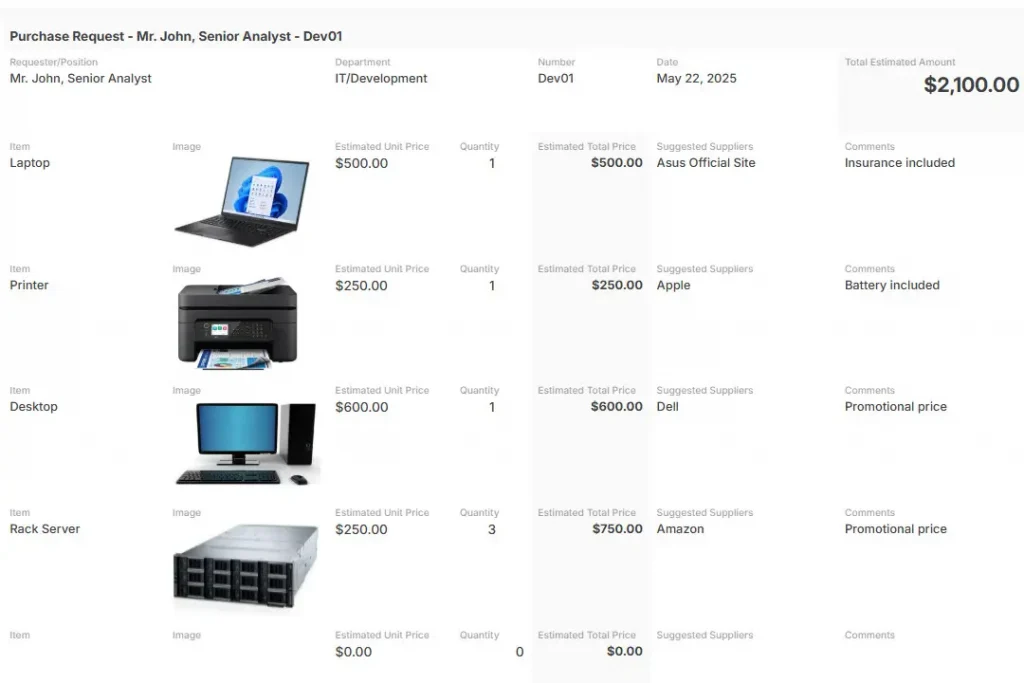
Procurement platforms manage supplier relationships and purchasing activity. They centralize supplier data, purchase orders, contract terms, and compliance documentation to control sourcing and procurement workflows.
Read also: What Is a Vendor List and How to Build an Effective One
Supply Chain Planning Tools
Planning systems analyze demand patterns and operational constraints to forecast demand and coordinate production and replenishment strategies.
Examples include SAP Integrated Business Planning, Blue Yonder, and Anaplan.
The Real Challenge: Connecting Supply Chain Data
Most supply chain environments are not limited by a lack of tools, but by how fragmented their data becomes across those tools. Supplier information often lives in procurement platforms, inventory balances in ERPs, shipment tracking in transportation systems, and operational adjustments in spreadsheets maintained by individual teams.
Because these systems rarely share the same data model, the same operational entity, such as a supplier or product, appears multiple times across different systems.
This leads to duplicate records, manual reconciliation between tools, and limited visibility into what is actually happening across the supply chain.
The underlying reason is structural. Supply chains operate through relationships between operational objects: a supplier fulfills a purchase order, which becomes a shipment, received into a warehouse, and eventually allocated to a customer order.
When these relationships are not in a unified system, organizations lose the ability to trace operations end-to-end, forcing teams to reconstruct the supply chain manually from disconnected records.
How AnyDB Structures Supply Chain Operations
Traditional ERPs force supply chains into rigid modules, while spreadsheets scatter critical data. AnyDB takes a different approach: it acts as a lightweight, object-based platform that mirrors your physical supply chain digitally through connected records.
Operational Objects Instead of Modules
In AnyDB, your business isn’t made of flat tables. Real-world entities, such as suppliers, products, warehouses, shipments, purchase orders, and inspections, become structured, self-contained objects.
Each object is an interactive record with its own custom fields, file attachments, and layouts.
Connected Records
Rather than relying on complex SQL joins, AnyDB uses direct attachments and dynamic references. You can seamlessly link a Supplier record to a Purchase Order, attach that to a Shipment, and connect it directly to a Warehouse and Inventory item.
This creates an unbroken, traceable chain of custody.
Workflow Automation
Keep your supply chain moving without manual follow-ups. Using status-driven workflows and automated follow-up date reminders, you can streamline supplier approvals, order tracking, QA inspections, and logistics updates directly within the connected records.
Adaptable Operational Models
Software should adapt to your operations, not the other way around. Instead of forcing your teams into expensive, rigid ERP modules, AnyDB’s spreadsheet-like interface allows you to build and modify custom templates so the system naturally evolves with your real-world workflows.
Structuring Supply Chain Operations for Real Visibility
Supply chains do not run on isolated tools. They run on the relationships between suppliers, products, purchase orders, shipments, warehouses, and customer demand.
When these records are scattered across multiple systems and spreadsheets, teams lose the ability to see how operations actually move from one step to the next.
The goal of modern supply chain management tools is not simply to add more software, but to structure these operational relationships so that data reflects reality.
This is the perspective behind AnyDB: modeling supply chain operations as connected business objects that mirror how work actually happens.
Want to see how this structure would apply to your own supply chain?
Schedule a call to walk through your workflow, review proven operational models, and understand how teams implement structured systems without the complexity of traditional ERPs.
Frequently Asked Questions About Supply Chain Management Tools
Here are the answers:
What are supply chain management tools?
Supply chain management tools are software systems used to plan, track, and coordinate operations such as procurement, inventory, logistics, and demand planning across the supply chain.
What are the 7 C’s of supply chain management?
The 7 C’s typically refer to Customer, Cost, Capacity, Capability, Cash, Communication, and Coordination, factors that ensure supply chains remain efficient, responsive, and aligned with demand.
What tools are used in supply chain management?
Common tools include inventory management systems, warehouse management systems (WMS), transportation management systems (TMS), procurement platforms, and demand planning software.

The End-to-End Operations System that Finally Fits Your Reality.
No more scattered spreadsheets or rigid, disconnected tools.
AnyDB is a modern, customizable platform for managing business records and operations across teams, clients, and partners.
Learn More


Phone: (512)-761-7979
© 2024 Humanly Inc. All rights reserved.
What is AnyDB?
AnyDB is a unified, customizable data store designed to streamline and empower your entire organization. Effortlessly store, organize, and share custom business data to drive both internal and external operations across teams. Think of it as spreadsheets on steroids.Perfect for Sales, Marketing, Operations, HR, and beyond. Discover AnyDB