Bill of Materials with AnyDB
Build and manage structured BOMs with components, subassemblies, cost rollups, documents, and assembly context in one connected workspace. AnyDB gives teams a flexible model for production planning without forcing them into rigid manufacturing tables.
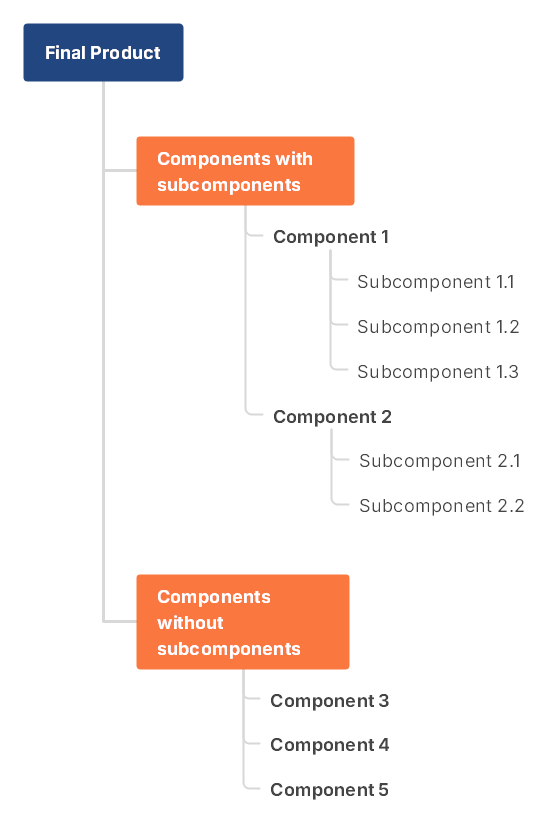
A structured BOM layout for finished products, components, and multi-level assemblies.
Structure plus flexibility
Model finished goods, components, and subassemblies without getting trapped in rigid schemas.
Cost rollups stay connected
Component updates can flow upward so the parent assembly reflects current cost more reliably.
More than a parts list
Keep drawings, manuals, supplier quotes, photos, and quality notes attached to the BOM itself.
Why teams move BOM workflows out of spreadsheets
A BOM is rarely just a static list of parts. Teams need to understand subassemblies, shared components, changing costs, and related documents, while keeping the structure readable for operations and manufacturing.
Business problem
Manufacturers need a clear and scalable way to list everything required to build a product. As the catalog grows, they also need to compare make-versus-buy decisions, manage component reuse, and keep cost information current without rebuilding their structure every time a design changes.
Solution summary
- +Know exactly how many components are needed to assemble a product.
- +Determine manufacturing cost per product to support pricing and profitability.
- +Provide clear instructions and component lists to the assembly team.
- +Share relevant BOM data with suppliers and business partners when needed.
A clean BOM model to start with
The strongest starting point is a simple multi-level structure that keeps the finished product separate from components and lets subassemblies become BOM items of their own when needed.
Finished Product BOM
Use one record for the final assembly with owner, product image, BOM level, and overall context.
Leaf Components
Track standalone parts with identifiers, quantity, cost, and component images when no further breakdown is needed.
Subassemblies
Represent components that require their own BOM level so structure can scale without duplication.
Keep the full setup walkthrough together
The instructional steps, screenshots, and videos stay together here so the BOM setup remains easy to follow end to end.
- Click on the three dots.
- +Select + new database.
- +Type a database name and click on add.
- Go to your new database and click on + New.
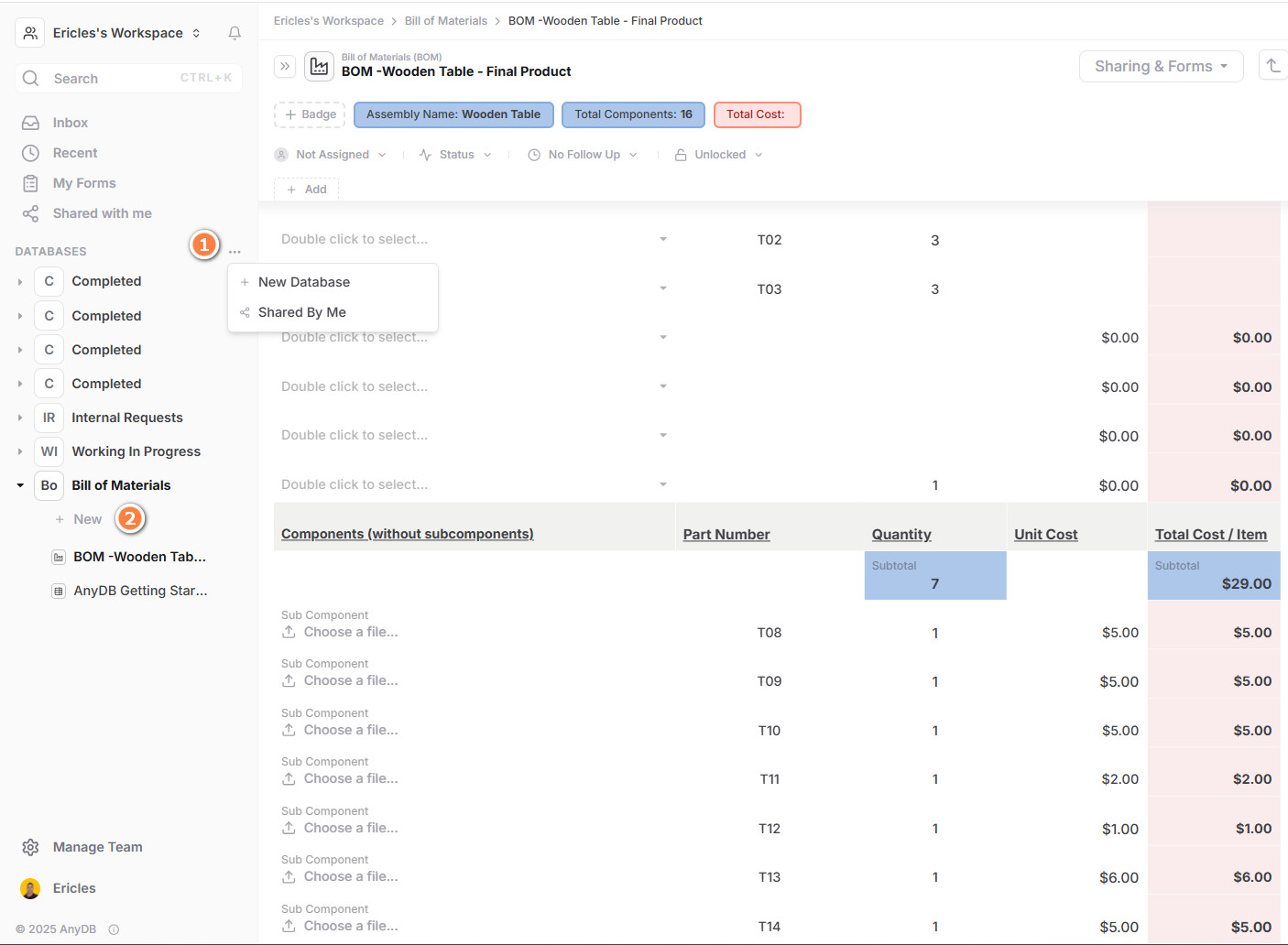
- Search for: "BOM" and click on it.
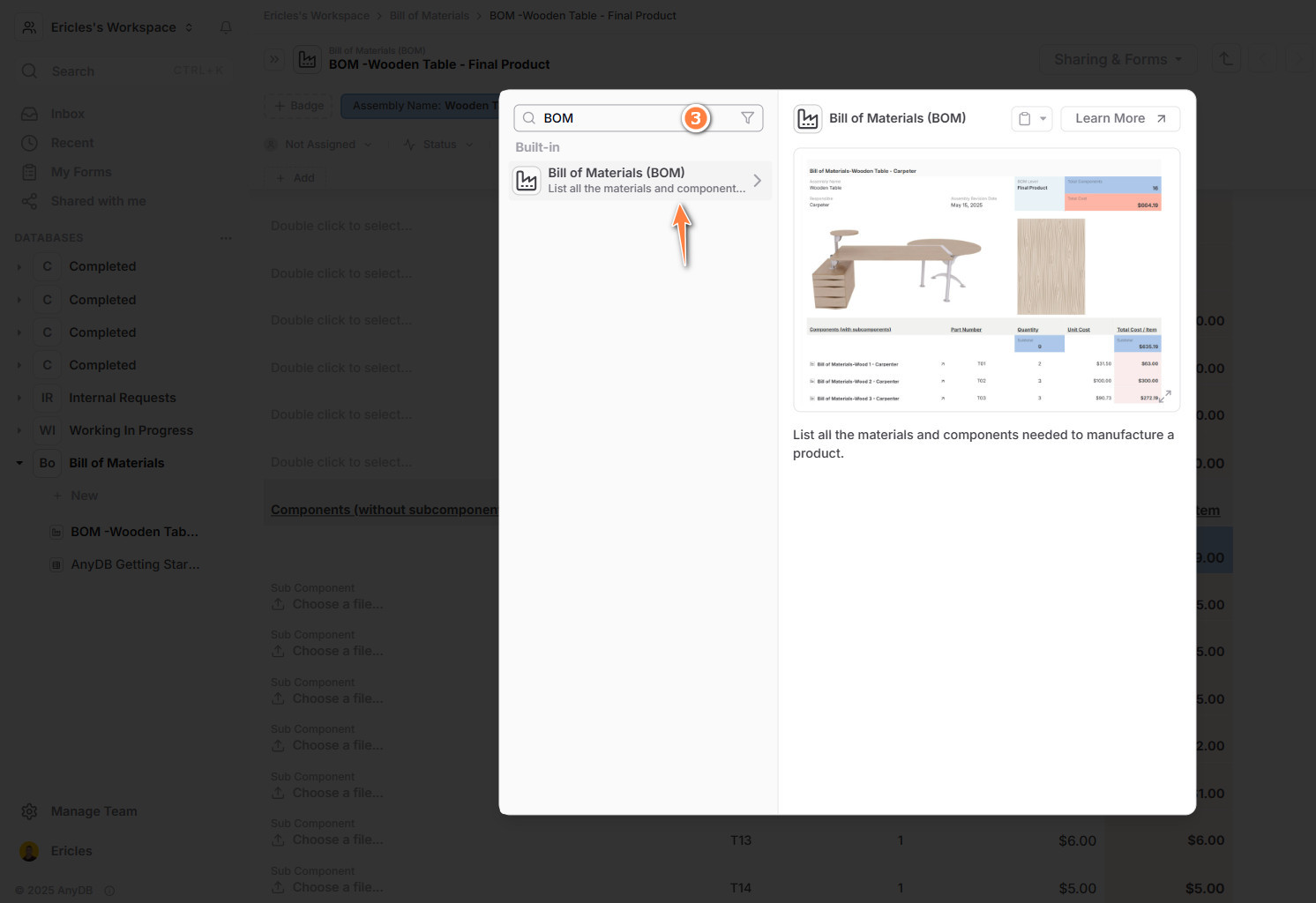
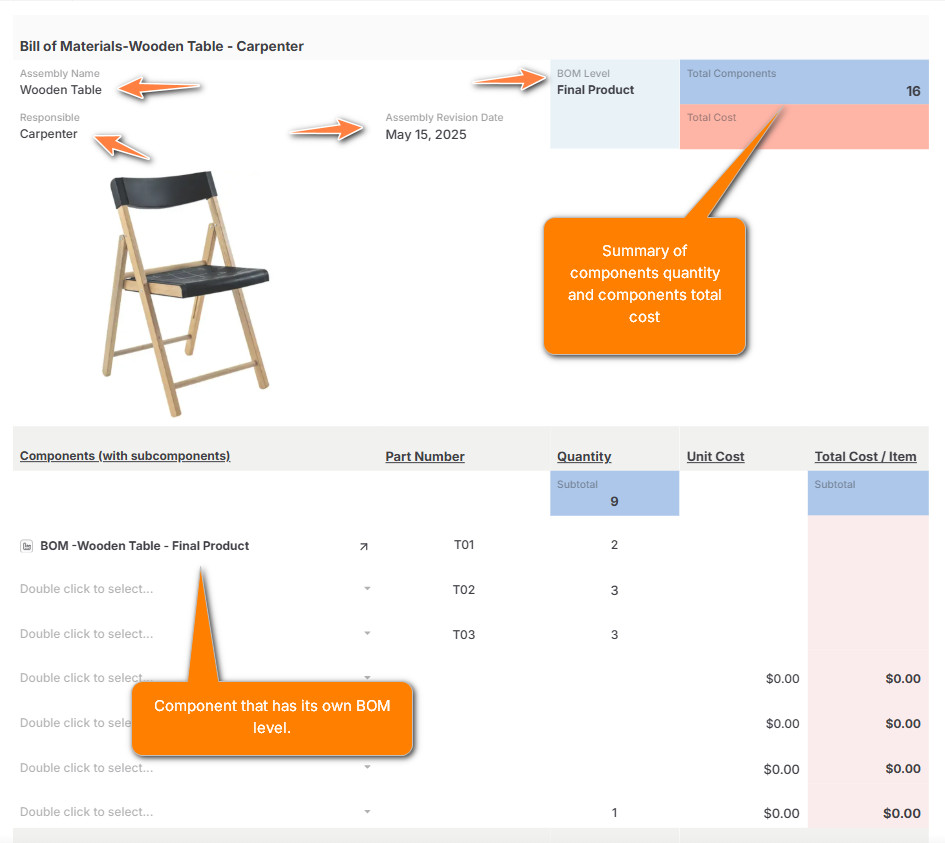
As shown in the next image, you can:
- +Add final product images.
- +Type the assembly name.
- +Type the responsible name.
- +Set up the BOM level which means final product or a component that needs subcomponents.
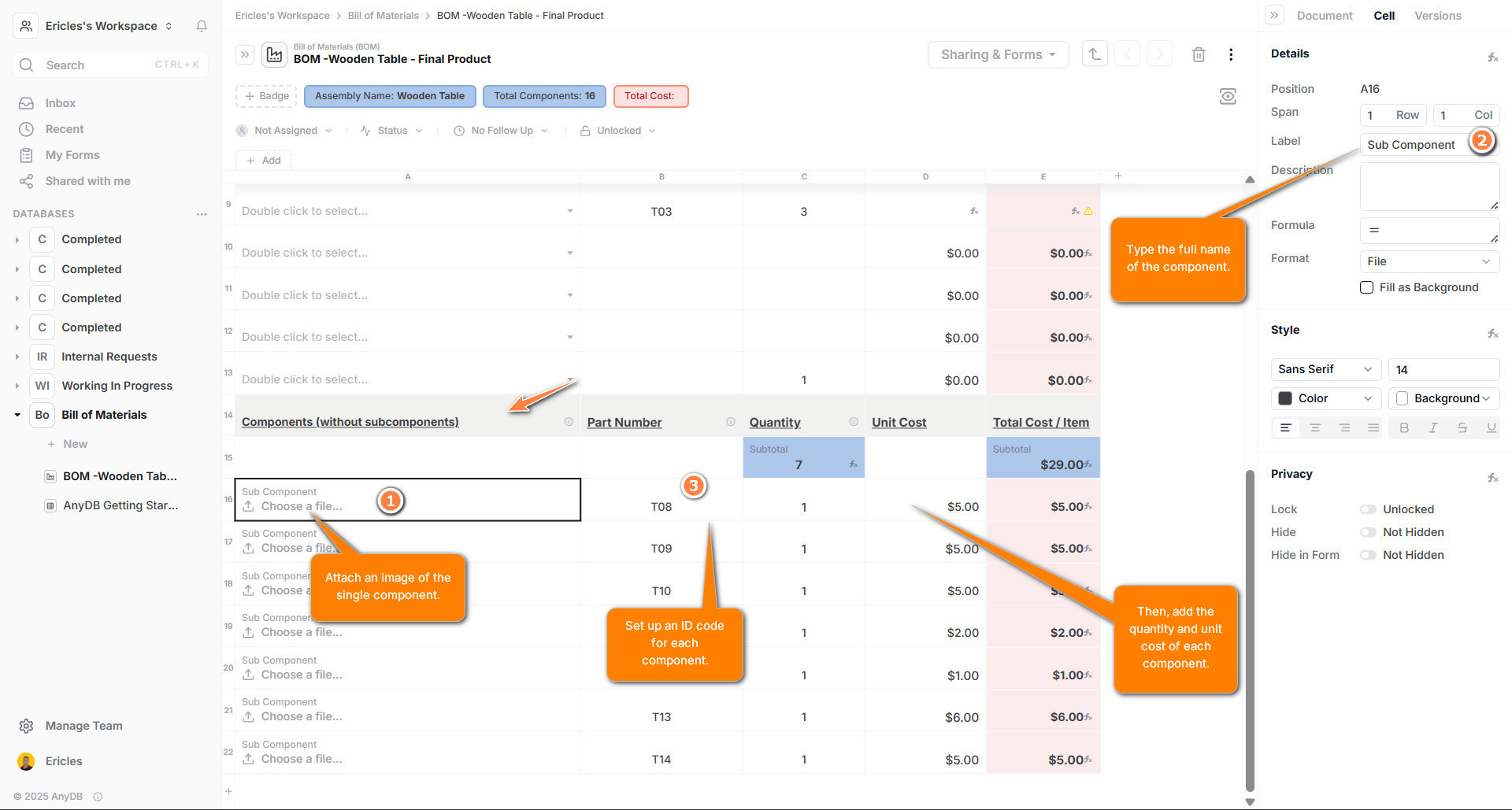
As shown in the image below, go to the part: components without subcomponents
- Click on the cell and attach an image of component.
- On label, type the component name.
- Type the ID code of each component.
- Type quantity and unit cost of each one.
If you have got components that need subcomponents to be assembled, than you:
- Go to + add and select BOM template.
- Click on the cell that informs: "double click to select".
- Select another BOM template item.
- Add components information.
If in your case, you only mount the final product and therefore, there is no need for subcomponent items, you can:
- Optionally delete the first table (components with subcomponents).
- Review the formula/functions (consult: AnyDB Formula Reference).
Sharing and collaboration
BOM workflows usually involve engineering, production, procurement, and sometimes external suppliers, so clarity of access matters.
- +Assign task ownership and task-level responsibility.
- +Collaborate in real time with team-based access and permissions.
Tips and best practices
- +Use color-coded priority fields to flag high-risk tasks.
- +Add follow-up dates for key milestones or reviews.
- +Use folders or tags to group projects by type or initiative.
- +Use Pages for unstructured notes, retrospectives, or planning docs.
A flexible BOM system that grows with the product catalog
Most BOM tools lock teams into rigid tables or predefined manufacturing modules. AnyDB gives a more flexible and scalable approach that fits real operational workflows.
Store complex BOMs
Model assemblies and subassemblies through object references without forcing everything into flat schemas.
Keep related information together
Store drawings, PDFs, manuals, compliance sheets, supplier quotes, QC notes, photos, and videos with the BOM.
Automate cost rollups
Update a component cost once and let parent assemblies reflect the current totals automatically.
Reuse shared components
Reference common parts across many products instead of duplicating them throughout the catalog.
Support many industries
Use the same model across manufacturing, electronics, furniture, packaging, construction, printing, and more.
Share with suppliers and teams
Share a full BOM or a filtered view with internal users or external guests while controlling access carefully.
Fit internal processes
Add approvals, automations, tasks, or QC checks around BOM updates without leaving the same system.
Scale without spreadsheet sprawl
Keep assemblies, alternates, revisions, and growing product catalogs organized as complexity increases.
Related guides that strengthen this solution
These guides help extend BOM workflows into broader operations, data modeling, and reporting practices.
Objects and Records
Understand the object-based model behind reusable components, products, and subassemblies.
Connecting Objects
Model product-to-component and assembly-to-subassembly relationships more clearly.
Formula Reference
Review the formulas and functions that support calculations and rollups in BOM workflows.
Files
Store manuals, drawings, compliance documents, and media directly alongside BOM records.
Search
Find components, assemblies, and related records quickly with filtered operational views.
Sharing
Share BOM data with internal teams or external collaborators without exposing the entire workspace.