
Published on April 27, 2026


A manufacturing inventory management system enables manufacturers to control raw materials, work in progress, and finished goods while maintaining production continuity and cost accuracy.
Unlike distribution or retail environments, manufacturing inventory moves through transformation stages. Materials are received, consumed, assembled, and converted into finished products.
When these movements are not connected to production workflows, shortages interrupt operations, excess inventory inflates costs, and traceability gaps create compliance risks.
On the other hand, with structured visibility across production stages, teams gain clarity over material availability, job progress, and true product costs.
What Is a Manufacturing Inventory Management System?
A manufacturing inventory management system is designed to track materials and products across production stages while aligning supply, manufacturing output, and demand.
Unlike basic inventory tools that simply count items, manufacturing systems must connect raw materials, work in progress, and finished goods to production orders and bills of materials.
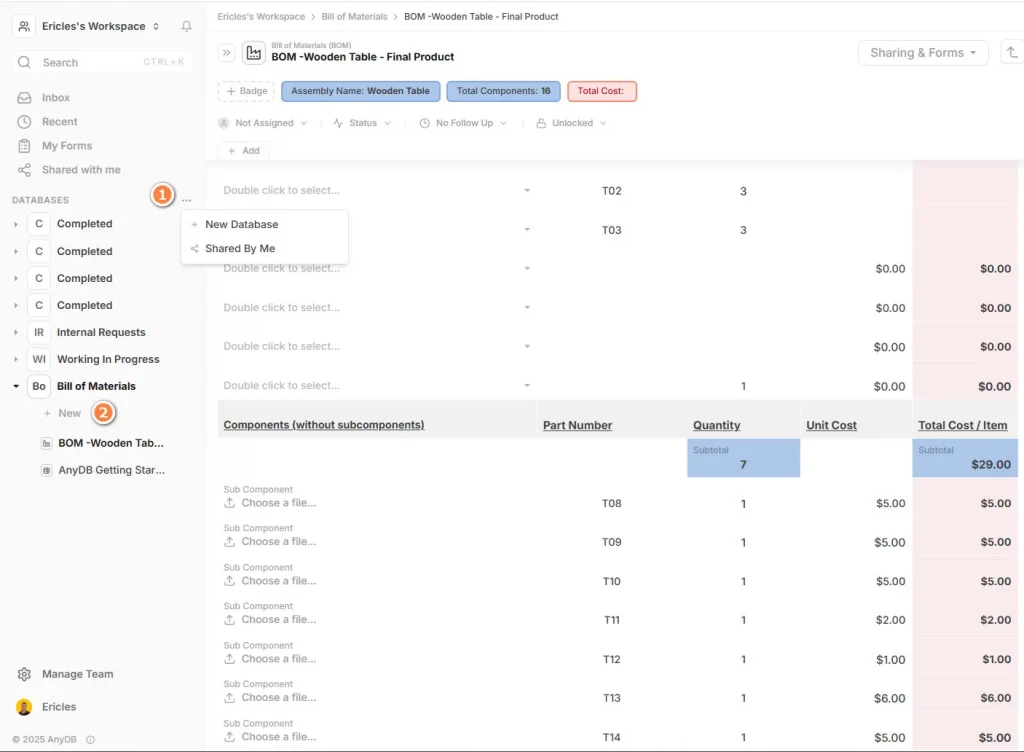
This coordination ensures production schedules remain feasible, materials arrive on time, and finished products can be delivered without delays.
Why Inventory Management Is More Complex in Manufacturing
Production continuity in manufacturing depends on tightly coordinated component availability across multiple production stages. Multiple inventory categories must be managed simultaneously, including:
- Raw materials used in production;
- Subassemblies and components;
- Work in progress (WIP) items;
- Finished goods ready for distribution.
A single missing part, even a low-cost fastener, can halt an entire production line because assemblies rely on complete bills of materials (BOMs) and sequential workflows.
At the same time, overproducing components to avoid shortages increases storage costs, ties up working capital, and creates excess work-in-progress inventory.
Manufacturers must therefore balance availability with efficiency while maintaining traceability for batches, components, and finished goods to meet quality standards and regulatory requirements.
Because inventory is directly tied to production planning, supplier reliability, and compliance obligations, forecasting, component tracking, and traceability become operational necessities rather than optional controls.
Key Components of a Manufacturing Inventory Management System
Effective manufacturing inventory control depends on synchronized data across production workflows. The components below ensure materials flow smoothly from receiving to finished goods.
Real-Time Inventory Tracking
Manufacturing inventory changes continuously as materials are consumed and finished goods are produced. Static spreadsheets cannot keep pace with these changes.
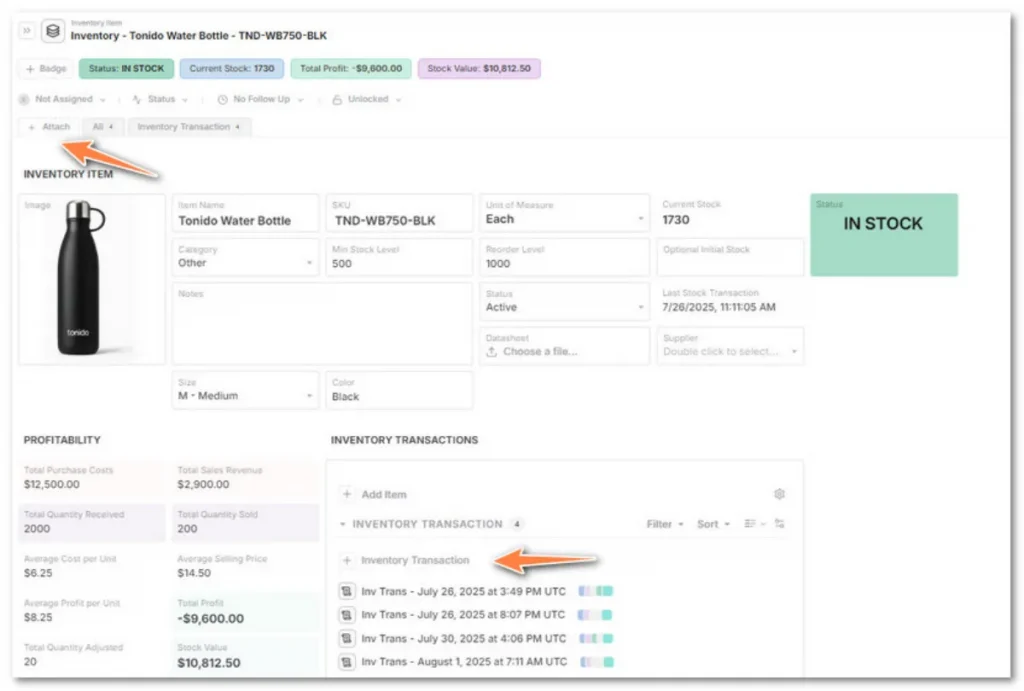
AnyDB, for instance, records inventory movements as transaction objects such as Stock In, Stock Out, and production consumption. Instead of overwriting a quantity, the system logs the reason for each change, such as materials consumed for Job #101.
This transaction-based inventory logic provides a live, audit-ready stock calculation that updates instantly across dashboards and reports, as shown in the Inventory Transaction template below:
Production and WIP Management
Work in progress inventory represents partially completed goods moving through production stages.
Without visibility into WIP, unfinished items accumulate, bottlenecks remain hidden, and scheduling decisions rely on guesswork. Tracking WIP allows supervisors to monitor job status, identify delays early, and maintain production flow.
Bill of Materials (BOM)
A Bill of Materials defines every component required to build a product, including subassemblies and raw materials. BOMs are rarely flat structures. A wooden chair, for example, includes a seat assembly and leg assemblies, each composed of additional components.
AnyDB supports multi-level BOM structures by allowing components to be attached to product records. Subcomponents can be nested deeper in the structure without complex configuration. Automated cost rollups ensure that a price change in a small component updates the total cost of the finished product, as shown in the Bill of Materials template below.
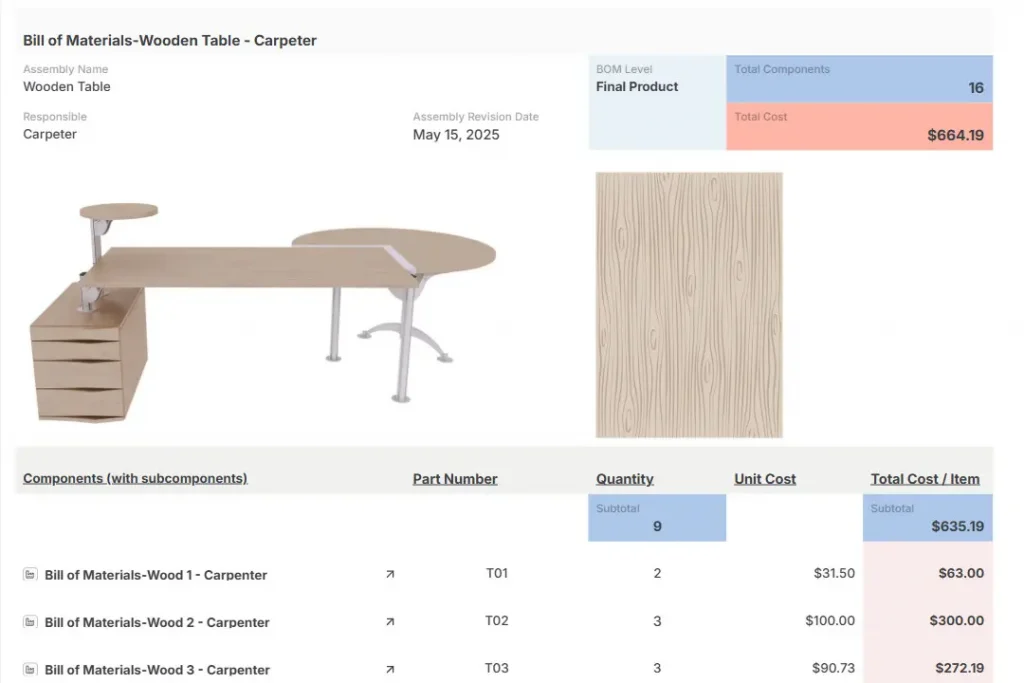
Teams can explore the BOM template to understand how components, costs, and assembly levels remain connected throughout production planning.
Purchasing and Replenishment Automation
Material availability determines whether production continues smoothly or stalls unexpectedly.
Replenishment workflows monitor stock thresholds and consumption rates, triggering purchasing actions before shortages occur. This approach reduces emergency procurement, stabilizes supplier relationships, and protects production schedules.
Traceability and Batch Control
Manufacturers must know exactly which materials were used in each production run.
AnyDB connects specific batch records to production runs, creating a digital genealogy of each finished product. If a defective batch is identified, teams can trace affected products instantly and execute targeted recalls.
This level of traceability supports ISO and FDA compliance while strengthening internal quality control.
Common Manufacturing Inventory Strategies
Manufacturers rely on structured planning methods to balance efficiency, cost control, and production reliability. Two widely adopted strategies include:
- Just-in-Time (JIT), which aligns material deliveries with production schedules to minimize on-hand inventory and reduce carrying costs.
- Materials Requirements Planning (MRP), which calculates material needs based on demand forecasts and BOM structures to ensure components are available when required.
Both approaches depend on accurate, real-time inventory data to function effectively.
Benefits of a Manufacturing Inventory Management System
When inventory is connected to production workflows, operational performance improves across multiple dimensions. Key benefits include:
- Reduced production bottlenecks, ensuring materials are available when needed.
- Lower carrying costs, achieved through optimized stock levels.
- Improved inventory turnover, reflecting better alignment between supply and demand.
- More accurate demand planning, supported by real consumption data.
- Compliance and audit readiness, enabled by complete traceability.
Together, these improvements strengthen operational predictability while protecting margins.
Manufacturing Inventory Management Software vs ERP Systems
Manufacturers often struggle to choose between spreadsheets and full ERP platforms. Spreadsheet-based tools, includinginventory management for manufacturing company Excel templates, offer flexibility but quickly lose accuracy as production complexity increases.
ERP systems provide comprehensive control but often require significant investment, long implementation cycles, and rigid workflows that may not align with real operations.
Modern and the best manufacturing inventory management software bridges this gap. Positioned between spreadsheets and ERP systems, AnyDB functions as flexible factory management software that adapts to operational workflows while maintaining relational data integrity.
This approach delivers the advantages of production and inventory management software without the rigidity typically associated with enterprise platforms.
How AnyDB Supports Manufacturing Inventory Management
AnyDB models manufacturing inventory as a connected data structure rather than isolated tables.
Inventory items exist as structured records linked to suppliers, batches, BOMs, production runs, and finished goods. Raw materials connect directly to assemblies and WIP stages, ensuring visibility across every phase of production.
Real-time updates reflect material consumption and production output immediately, providing accurate dashboards and reporting.
Custom workflows support JIT, MRP, or hybrid planning models without imposing rigid system constraints.
Instead of forcing manufacturers to adapt to predefined modules, AnyDB adapts to real operational processes, delivering clarity, traceability, and control as production scales.
Let us set up your first AnyDB workflow! Schedule a call here.
Frequently Asked Questions About Manufacturing Inventory Management
Still have questions? Check out more FAQs on the topic below.
What inventory should manufacturers track?
Manufacturers should track raw materials, components, WIP, finished goods, spare parts, and packaging to maintain production continuity and accurate costing.
Do small manufacturers need inventory management software?
Yes. Even small manufacturers benefit from inventory management software because it helps prevent stockouts, control costs, and maintain visibility across materials, components, and finished goods.
Can manufacturing inventory be managed without an ERP?
Yes, manufacturing inventory can be managed without a full ERP, especially in smaller operations or businesses with simpler workflows. Many teams use specialized inventory tools or customizable systems like AnyDB, that provide visibility and control without the complexity of an ERP.
How do manufacturers track WIP inventory?
WIP is tracked by linking materials and labor to production jobs, allowing teams to monitor progress, identify delays, and understand partial completion status.

The End-to-End Operations System that Finally Fits Your Reality.
No more scattered spreadsheets or rigid, disconnected tools.
AnyDB is a modern, customizable platform for managing business records and operations across teams, clients, and partners.
Learn More


Phone: (512)-761-7979
© 2024 Humanly Inc. All rights reserved.
What is AnyDB?
AnyDB is a unified, customizable data store designed to streamline and empower your entire organization. Effortlessly store, organize, and share custom business data to drive both internal and external operations across teams. Think of it as spreadsheets on steroids.Perfect for Sales, Marketing, Operations, HR, and beyond. Discover AnyDB