
Published on March 3, 2026


A warehouse inventory management system becomes indispensable the moment growth starts exposing operational cracks.
As order volume rises and SKU complexity increases, operational variance compounds. Manual reconciliations lag behind physical movements. Inventory adjustments become reactive instead of systemic.
What once appeared as minor mismatches evolve into recurring shrinkage, picking errors, and misallocated stock.
Without synchronized movement tracking, expanding to a second warehouse (or even reconfiguring bin locations) introduces measurable risk.
At that stage, warehouse control becomes a prerequisite for financial accuracy, fulfillment reliability, and scalable operations.
And that level of operational integrity requires a system built on disciplined process modeling, real-time movement tracking, and end-to-end traceability.
What Is a Warehouse Inventory Management System?
A warehouse inventory management system governs how goods move inside a warehouse. It defines how products are received, stored, picked, packed, and shipped.
Core capabilities typically include:
- Inbound receiving and verification;
- Structured putaway into defined storage locations;
- Bin, rack, and zone management;
- Order picking and packing workflows;
- Shipping confirmation and reconciliation.
The key distinction from a basic inventory tracker is location-level control. A simple system may show “800 units available”. A warehouse-focused system shows exactly where those 800 units sit and how many are already allocated.
That precision is what keeps operations predictable.
Why Warehouse Inventory Management Systems Matter
Warehouse operations are inherently volatile, with bulk receipts breaking into fractional picks, locations shifting, priorities changing, and labor reallocated throughout the day. In this environment, small control gaps don’t stay small.
Without structured movement tracking and enforced location discipline, operational friction becomes systemic inaccuracy, which is precisely why a warehouse inventory management system is not optional but foundational.
A single receiving misclassification can distort available stock and mislead replenishment decisions, while an incorrect bin assignment quietly cascades into picking delays and fulfillment errors.
Over time, manual overrides introduce data inconsistencies that ripple through purchasing, reporting, and financial reconciliation.
Strong warehouse management systems reinforce four operational fundamentals:
- Inventory accuracy across locations;
- Efficient picking and packing execution;
- Real-time visibility for decision-making;
- Scalable processes that support growth.
Core Functions of a Warehouse Inventory Management System
Warehouse performance depends on interconnected processes. Each stage influences the next.
Receiving and Putaway
If inbound quantities are logged incorrectly or assigned to the wrong location, downstream corrections become inevitable.
Leading warehouses rely on mobile scanning at the dock to eliminate delayed data entry. Staff scan product or bin codes immediately, tying physical inventory to digital records in real time.
In AnyDB, every inventory item is structured as a record that supports QR code integration. A scan pulls up the item profile, allowing the team to log a stock-in transaction and assign its bin on the spot.
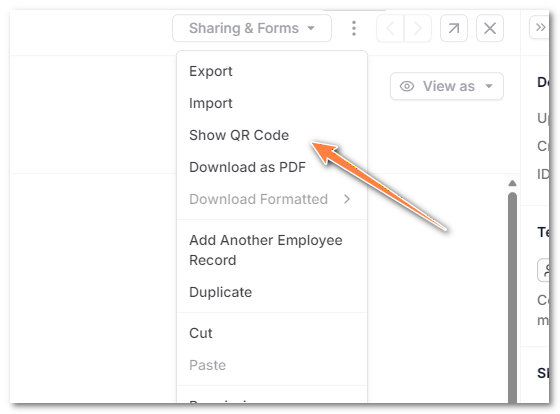
Integrated forms can also capture supplier packing details before arrival, reducing verification time and minimizing congestion at receiving.
Real-Time Inventory Tracking
Once products are in storage, maintaining clean movement history becomes essential.
Rather than adjusting a static quantity field, AnyDB records each movement as a discrete transaction. This creates a reliable audit trail that shows how stock levels evolve over time.
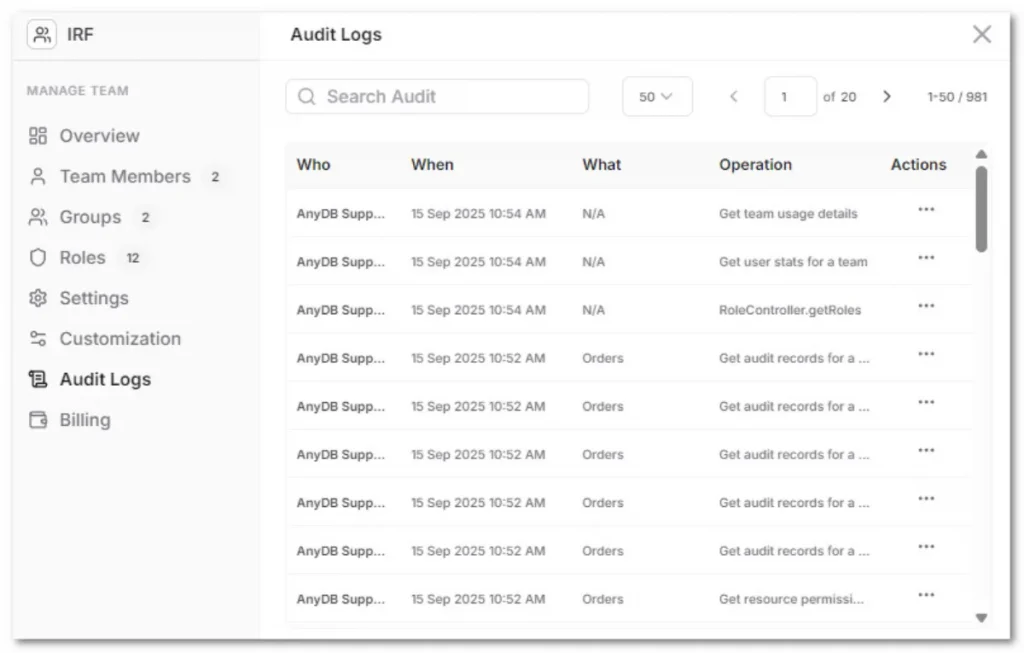
With structured transaction data, operations teams can analyze seasonal demand, identify slow-moving SKUs, and calculate sales velocity. Data exports to Excel or CSV support forecasting models, while dashboards provide a live operational view.
Storage and Location Management
In multi-location operations, knowing total stock is not enough. Managers need to understand distribution across facilities and internal zones.
AnyDB calculates current availability using formulas tied directly to transaction records. That means totals always reflect real activity rather than manual adjustments.
Teams can filter inventory based on criteria such as warehouse location, category, or current status, similar to what is displayed in the Warehouse Template below:
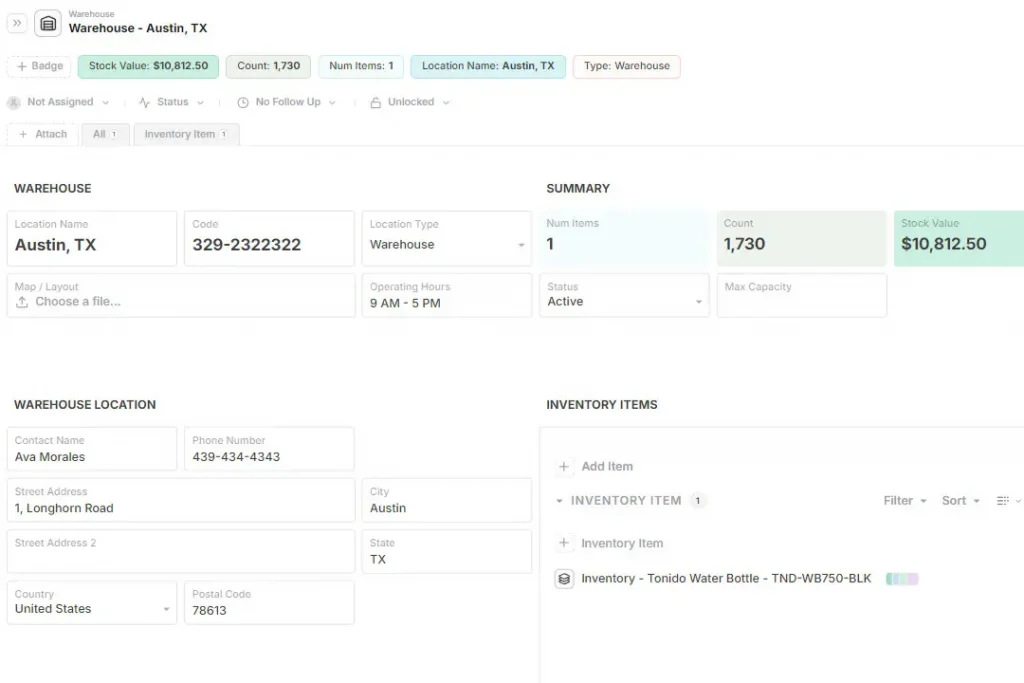
This makes it easier to rebalance stock, prioritize transfers, and optimize space utilization without waiting for consolidated reports.
Order Picking, Packing, and Shipping
Fulfillment quickly exposes process weaknesses. Inaccurate bin data forces pickers to search and correct errors on the floor.
When location data is reliable, picking routes improves and barcode verification during packing reduces shipping mistakes. Shipping confirmation updates availability automatically, keeping sales channels aligned with real stock levels.
Reporting and Analytics
Warehouse leaders need current operational insight. Live dashboards consolidate inbound receipts, outbound shipments, and turnover metrics in one place. Managers can monitor workload distribution and address bottlenecks before they disrupt service levels.
For a practical look at how real-time dashboards connect structured data to daily operations, watch:
Types of Warehouse Inventory Management Systems
The right warehouse structure depends on operational complexity, integration requirements, and growth stage. Not every company needs the same level of control or system depth. The goal is to match the architecture to the way the warehouse actually runs.
Common models include:
- Standalone Warehouse Management Systems built specifically for warehouse execution, often used in high-volume distribution centers;
- ERP-Integrated Systems, where warehouse functionality is embedded within a broader environment;
- Cloud-Based and Lightweight Systems designed for faster deployment and operational flexibility;
- Simple Warehouse Management Systems focused on core location tracking and transaction logging.
It is important to clarify terminology.SAP is not a WMS; it is an ERP platform that includes warehouse modules. ERP systems usually allow organizations to manage company-wide processes such as finance and procurement, while a WMS focuses specifically on storage control and fulfillment execution.
How To Choose The Best System
The distinction presented earlier often creates a dilemma for growing companies: a standalone WMS can create data silos, while a full-scale ERP like SAP brings high costs, rigid modules, and months of implementation.
This is where a flexible, object-based platform like AnyDB bridges the gap. AnyDB acts as a lightweight ERP alternative that can handle hundreds of thousands of records. It provides the focused execution of a Cloud-Based WMS, such as core location tracking, QR code scanning, and transaction logging, but naturally connects that data to company-wide processes.
Because AnyDB treats data as ‘connected objects’ rather than flat spreadsheet rows, your warehouse isn’t isolated. When a warehouse worker logs a ‘Stock Out’ transaction, that record can instantly update a connected Sales Order, adjust the live financial dashboard, and trigger a reorder alert to Procurement.
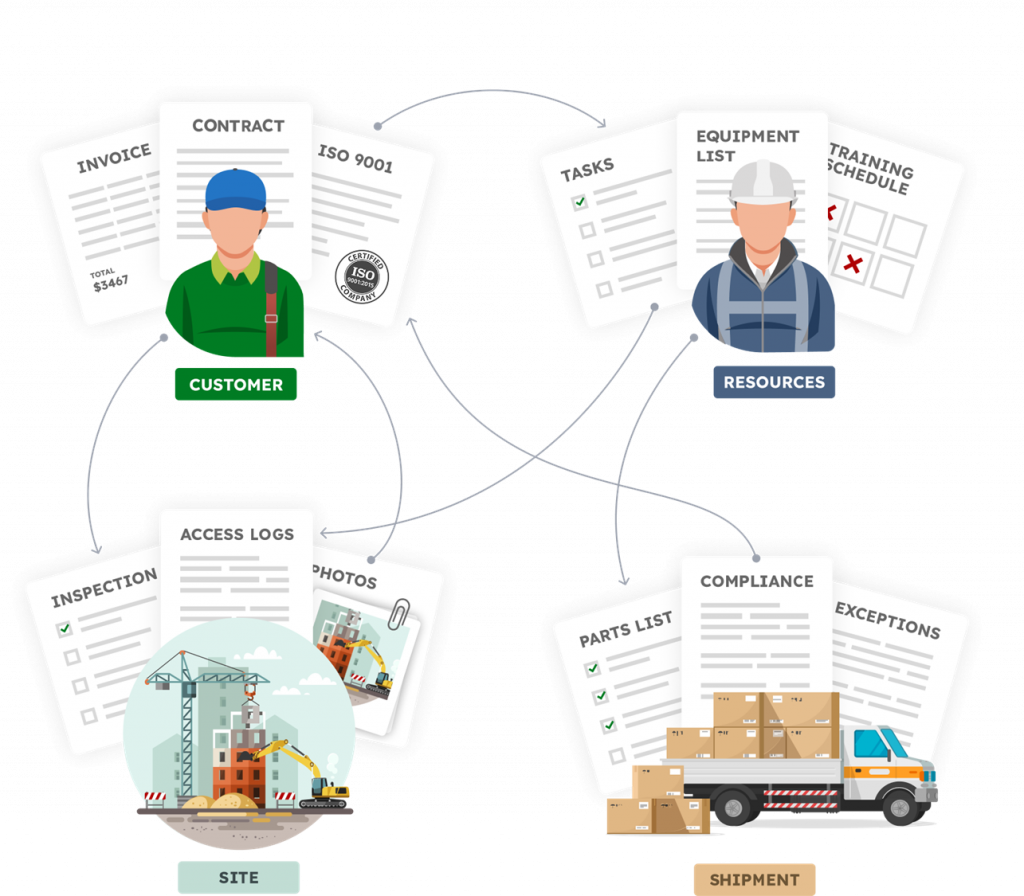
It gives teams the unified operational power of an ERP, but with the simplicity and flexibility of a spreadsheet, allowing you to adapt the system as your warehouse operations evolve.
Let Us Build Your First AnyDB Workflow With You
Skip the complexity. We’ll build your first operational workflow for you, at no extra cost.
In as little as two weeks, you’ll have a live system with custom business objects, structured permissions, and a workflow tailored to how your team actually operates. We’ll also train your team so they’re confident from day one.
See how it works:
- Phase 1 – Operational Scoping: We define your highest-impact workflow.
- Phase 2 – Structuring Your Objects: We model your real-world entities as connected records.
- Phase 3 – Data Migration & Go Live: We import your data and launch.
Guided Activation is included in Business and Enterprise Plans, focusing first on one core workflow for a fast, effective go-live.
Schedule a call to see how AnyDB fits your operations!
Warehouse Inventory Management Software for Small Businesses
Warehouse inventory management software for small businesses must provide control without unnecessary complexity.
Smaller teams benefit from structured location tracking, reliable stock visibility, and straightforward reporting. Overbuilt enterprise systems often increase cost and training demands without proportional value.
The best warehouse management system for small business is one that supports current operational needs while accommodating growth. Clean data architecture matters more than feature volume.
How AnyDB Supports Warehouse Inventory Management
AnyDB approaches warehouse operations as a structured data architecture rather than a rigid module.
Inventory items, storage locations, and movements are connected as relational records. Every adjustment is logged as a transaction, preserving a complete history instead of overwriting quantities. This structure gives operations teams confidence in their numbers:
- Barcode-ready fields support scanning at receiving, transfers, and shipping checkpoints;
- Custom workflows can be configured around actual warehouse processes, while role-based views ensure that teams see relevant information without unnecessary complexity.
The result is not a one-size-fits-all WMS, but a flexible platform to design a warehouse inventory management system aligned with your operations and adaptable as they evolve.
If your current setup is limiting growth, book a free demo call and see how AnyDB can help you build a warehouse operation that scales with clarity and control!
Frequently Asked Questions About Warehouse Inventory Management System
Still have questions? Check out the main FAQs below.
Is SAP the same as a WMS?
No. SAP is an ERP platform that includes warehouse modules. A WMS is focused specifically on warehouse execution and inventory movement.
What’s the best warehouse management system?
The right solution depends on operational scale, integration requirements, and growth strategy. Scalability and clean data structure are often decisive.
What is ERP vs WMS?
ERP systems manage company-wide functions. WMS platforms concentrate on storage control and fulfillment inside warehouse environments.
Can small businesses use warehouse inventory management systems?
Yes. Even smaller operations benefit from structured tracking and location-level visibility, particularly as order volume increases.

The End-to-End Operations System that Finally Fits Your Reality.
No more scattered spreadsheets or rigid, disconnected tools.
AnyDB is a modern, customizable platform for managing business records and operations across teams, clients, and partners.
Learn More


Phone: (512)-761-7979
© 2024 Humanly Inc. All rights reserved.
What is AnyDB?
AnyDB is a unified, customizable data store designed to streamline and empower your entire organization. Effortlessly store, organize, and share custom business data to drive both internal and external operations across teams. Think of it as spreadsheets on steroids.Perfect for Sales, Marketing, Operations, HR, and beyond. Discover AnyDB