
Published on February 28, 2026


Inventory in retail rarely lives in one neat place. It sits on store shelves, in backrooms, sometimes in vans, and often with partners you do not fully control.
To keep up, teams juggle spreadsheets, ERP modules, and even manual updates.
The real problem is not that items go missing. It’s that inventory loses its structures as soon as it spreads across locations. This is where the quiet chaos sets in.
A modern retail inventory system needs to reflect how inventory exists and moves in real operations.
In this article, we look at what a retail inventory system should support when stock spreads across multiple locations.
Why Multi-Location Inventory Can Break Down in Retail
Inventory management becomes harder the moment stock leaves a single room. Add a second store or a warehouse, and complexity rises fast.
Most retail operations still rely on systems that treat inventory as a total number. Stock is summarized, not understood. Before long, different teams are working from different versions of the truth, all of them confident and none of them aligned.
On the floor, the impact is human. Teams spend time chasing discrepancies rather than improving availability, flow, or customer experience.

What a Modern Retail Inventory System Must Support
Modern retail requires systems that understand structure, movement, and responsibility. The goal is not more information but clearerdata that matches operational reality.
Location-Aware Inventory
Inventory should always belong somewhere. The system must treat location as a first-class attribute. When items move, that movement should be recorded explicitly.
Item-Level History and Traceability
Every item needs a memory. Where it came from, when it moved, and why its status changed should remain visible over time.
This is what speeds up audits and explanations possible without detective work.
Controlled Adjustments and Accountability
Adjustments happen. Returns, damages, corrections, and write-offs are part of retail life. What matters is how they are handled. Adjustments should be recorded with clear ownership and timing.
Real-Time Operational Visibility
Managers need to see what is available, what is in transit, what is reserved, and what is blocked. Across all locations. In real time.
Object-based records, explicit movement, and preserved history turn inventory from a fragile number into a reliable operational asset.
How Does AnyDB Models Retail Inventory Across Locations?
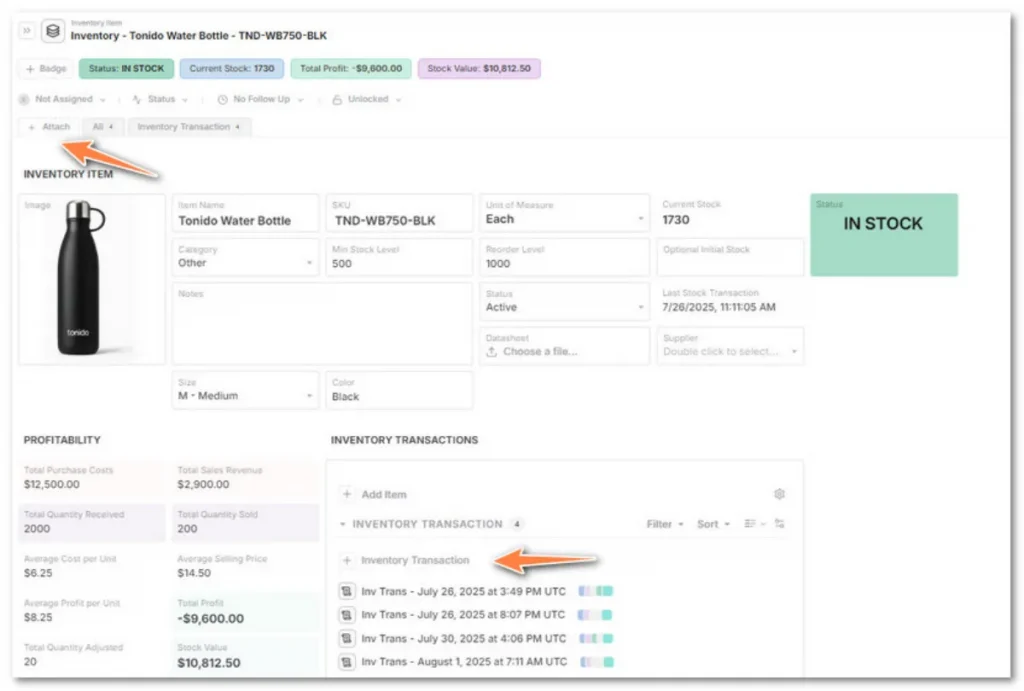
AnyDB uses an object-based model where each inventory item exists as a structured record. This makes a retail inventory system easier to trust as complexity grows.
Quantity, location, status, related documents, and linked transaction history are stored together in one place.
Location and Movement Relationships
Locations are objects too. Stores, vehicles, and partner sites all exist as real entities in the system. Inventory records link directly to these locations and to the movements between them.
Transfers, receipts, returns, and consumption are recorded as explicit actions.
Day-to-Day Operational Fit
Inventory rarely lives alone. In real operations, it connects to purchase orders, vendors, audits, and approvals.
AnyDB reflects this by linking inventory objects to the operational records around them.
That context saves time, reduces back-and-forth, and makes inventory data usable during daily decisions.
Co-Created Structure With AnyDB
Getting started with AnyDB does not mean rebuilding your entire operation. The platform is designed to be shaped around how your inventory already moves.
AnyDB teams work with customers to map real workflows, ownership rules, and tracking needs. Structures and views are co-created to reflect reality, not an idealized process diagram that only exists in theory.
External Collaboration Without Exposure
Retail inventory often involves people outside your organization. Suppliers, logistics partners, and auditors all need access to specific information.
AnyDB makes this possible through controlled portals and permissions. External users interact only with the data they need.
Why Use AnyDB for Retail Inventory Management
| Benefit | How AnyDB Supports It |
| Real-Time Visibility | Stock and value are auto-calculated from transactions. |
| Linked Structure | Connect stores, warehouses, and transactions seamlessly. |
| Profitability Tracking | View cost, revenue, and margin per item. |
| Flexible Layout | Add formulas, files, and child records to any item. |
| Shareable Workspaces | Collaborate with internal and external teams. |
| QR Code Bar | Add scannable QR codes to item records for quick access and real-time tracking. |
| Scalable Templates | Reuse for hundreds of SKUs or warehouses. |
Best Practices for Managing Retail Inventory Across Locations
Managing stock across multiple locations does not have to feel like a daily investigation.
Focus on a few fundamentals that scale:
- Define clear location ownership: Every location needs a clear owner. When responsibility is explicit, discrepancies surface faster and get resolved sooner.
- Standardize movement types and reasons: Receiving, transfers, returns, damage, shrinkage, and audits. Each movement should have a clear type and reason. This turns raw activity into insight and makes reviews far less painful.
- Avoid overwriting inventory data: Editing counts in place erases history and trust. A modern retail inventory system records changes as events, preserving context and accountability.
- Review history, not just balances: Balances show where you are. History shows how you got there. Item-level history helps teams identify recurring issues and process gaps across locations.
These practices lead to fewer discrepancies, faster audits, less manual reconciliation, and more confidence in the numbers. Teams stop chasing data and start improving operations.
See Inventory Clearly, Wherever It Lives
Most multi-location inventory breakdowns are not people problems. They are system problems. Teams do their best with the tools they have until those tools stop reflecting reality.
The good news is that AnyDB helps retail teams move beyond fragile spreadsheets and rigid tools.
If you are ready to see inventory clearly wherever it lives, take the next step.
Sign up for a free custom AnyDB workspace and experience how structured, location-aware inventory feels in real operations.
Our team works with you to design and launch your workflow in just two weeks, tailored to how your inventory actually moves.

The End-to-End Operations System that Finally Fits Your Reality.
No more scattered spreadsheets or rigid, disconnected tools.
AnyDB is a modern, customizable platform for managing business records and operations across teams, clients, and partners.
Learn More


Phone: (512)-761-7979
© 2024 Humanly Inc. All rights reserved.
What is AnyDB?
AnyDB is a unified, customizable data store designed to streamline and empower your entire organization. Effortlessly store, organize, and share custom business data to drive both internal and external operations across teams. Think of it as spreadsheets on steroids.Perfect for Sales, Marketing, Operations, HR, and beyond. Discover AnyDB