
Published on April 29, 2026


Maintenance management becomes a critical issue as soon as operations depend on equipment, assets, and physical infrastructure to deliver results. In early stages, teams often rely on informal processes, such as tracking requests in spreadsheets, handling issues as they arise, and coordinating work manually.
This approach works until complexity increases. More assets, more requests, and more dependencies create pressure on the operation. Work orders get delayed, asset history is lost, and teams spend more time reacting than planning.
The core problem is not maintenance itself. It is the lack of structure connecting work orders, assets, and execution.
Maintenance management introduces that structure.
It defines how work is requested, how tasks are prioritized, how assets are tracked, and how performance is measured over time. With a clear framework in place, teams move from reactive fixes to controlled, repeatable operations that improve reliability and reduce unnecessary costs.
What Is Maintenance Management?
Maintenance management is the structured approach used to plan, schedule, and control maintenance activities across assets and equipment. It ensures that operations run with consistency, safety, and predictable performance over time.
In practice, this goes beyond fixing issues. It defines how maintenance requests are created, how work is prioritized, how tasks are executed, and how asset history is recorded.
Every activity becomes part of a system, not an isolated action.
The main objective is to maintain reliability. When maintenance is properly managed, teams reduce unexpected failures, extend asset lifespan, and keep operations running without disruption. This requires connecting maintenance planning, asset data, and execution into a single operational flow.
Maintenance Management Key Components & Strategies
Key maintenance strategies include preventive, predictive, condition-based, and reliability-centered approaches, supported by CMMS software. Together, they structure how maintenance is planned, executed, and optimized to reduce downtime and improve asset performance.
Preventive Maintenance
Preventive maintenance is based on planned interventions. Tasks are scheduled at defined intervals to reduce the likelihood of failures and keep equipment operating within expected conditions.
This approach brings consistency to maintenance operations. Instead of waiting for breakdowns, teams follow a maintenance schedule that keeps assets under control and reduces unexpected downtime.
Predictive Maintenance (PdM)
Predictive maintenance uses data to anticipate when equipment is likely to fail. It relies on inputs such as sensor data, usage patterns, and historical performance to guide decisions.
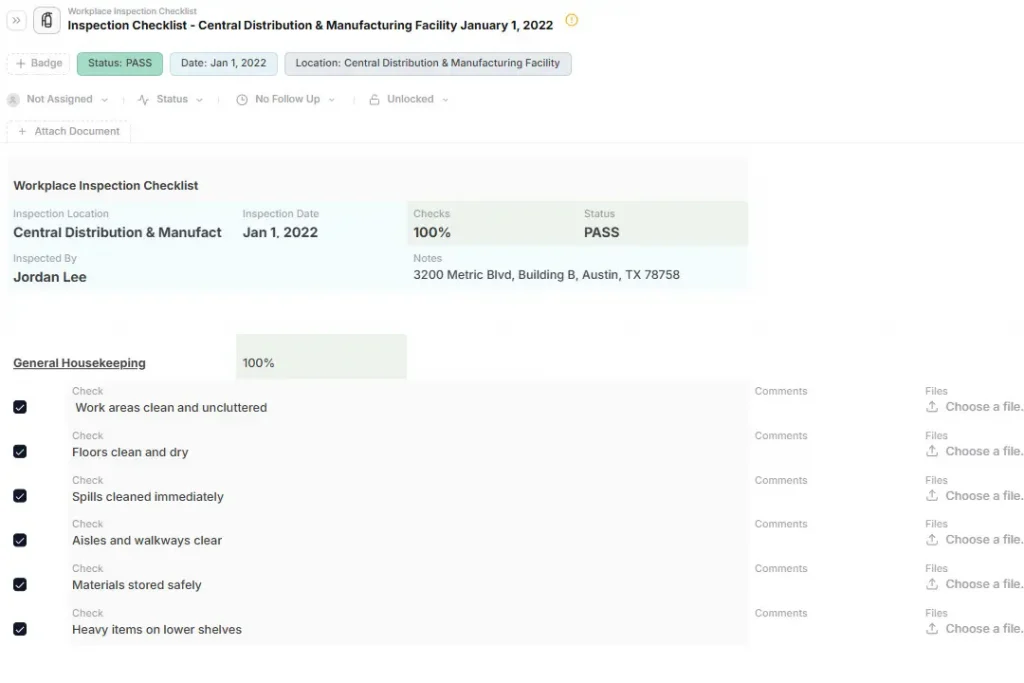
The advantage is precision. Maintenance is performed when needed, not too early and not too late, which helps optimize resources and avoid unnecessary interventions.
Condition-Based Maintenance (CBM)
Condition-based maintenance focuses on the current state of the asset. Maintenance actions are triggered by indicators such as performance changes, wear levels, or operational anomalies.
This method improves efficiency by aligning maintenance with actual equipment condition. It reduces routine work that may not be necessary while still preventing failures.
Reliability-Centered Maintenance (RCM)
Reliability-centered maintenance evaluates each asset based on its importance and the impact of potential failures. Maintenance strategies are defined according to risk, rather than applying the same approach across all equipment.
This allows organizations to prioritize critical assets and allocate resources more effectively, focusing effort where it matters most.
CMMS Software
CMMS (Computerized Maintenance Management System) software supports maintenance operations by centralizing work orders, schedules, inventory, and asset data in one system.
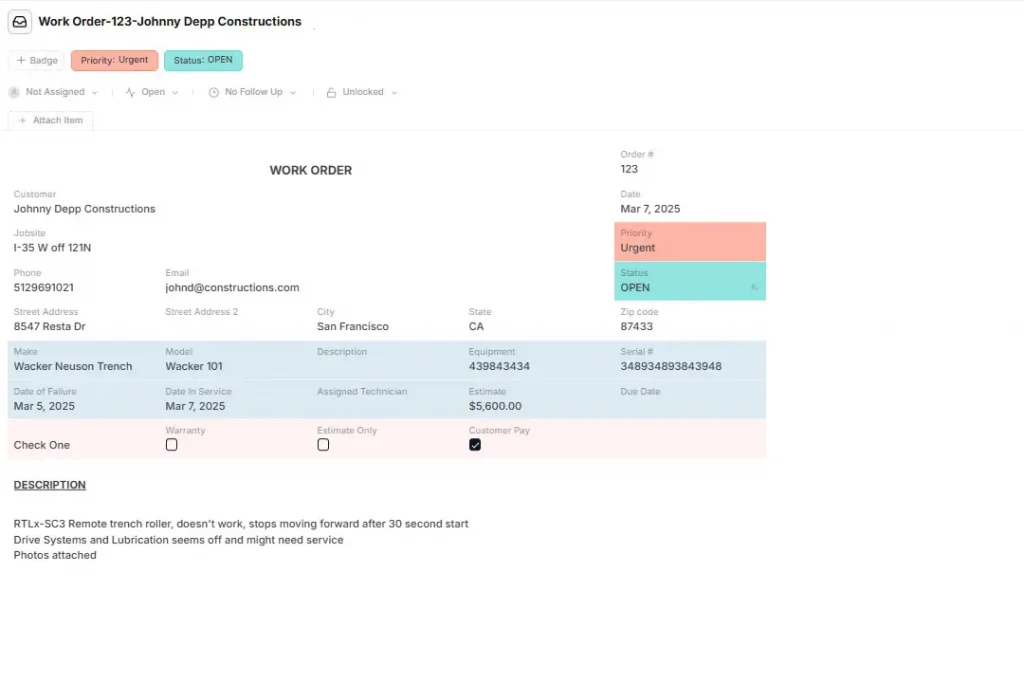
It provides structure to maintenance processes, ensuring that tasks are tracked, recorded, and executed consistently. This improves visibility and helps teams manage operations at scale.
Key Objectives & Benefits
Maintenance management is implemented to improve how assets perform, how teams operate, and how resources are used. When structured correctly, it delivers clear operational and financial gains:
- Reduce Asset Downtime: Maintenance management improves how issues are prevented and resolved. With structured planning and execution, teams reduce unexpected failures and keep equipment available for operations. This leads to more consistent performance and fewer interruptions in daily activities.
- Extend Asset Lifespan: Regular and well-planned maintenance helps preserve equipment condition over time. By addressing wear and potential issues early, organizations delay replacements and extract more value from their assets throughout the lifecycle.
- Control Costs: A structured maintenance approach reduces reliance on emergency repairs, which are typically more expensive and disruptive. It also improves labor allocation and planning, making costs more predictable and easier to manage.
- Safety & Compliance: Maintenance processes ensure that equipment operates within safe parameters and complies with regulatory requirements. This reduces risks for workers and helps organizations avoid penalties and operational disruptions.
- Inventory Control: Managing maintenance inventory ensures that required parts and materials are available when needed. This prevents delays in repairs and supports smoother execution of maintenance activities.
How Maintenance Management Evolves From Reactive To Proactive
The shift from reactive to proactive maintenance does not happen by adopting new strategies alone. It depends on how data is structured, accessed, and used across the operation.
Reactive environments typically operate with fragmented information:
- Work orders are incomplete;
- Asset history is inconsistent; and
- Maintenance decisions rely on individual experience rather than reliable data.
In this context, even well-defined preventive plans tend to break down over time.
Proactive maintenance requires a different foundation.
Teams need consistent, trustworthy data about assets, past interventions, failure patterns, and usage.
This data must be easy to capture during execution and immediately available for analysis. If the system is difficult to use or disconnected from daily workflows, data quality degrades quickly.
This is where many initiatives fail: organizations invest in predictive strategies but overlook the operational layer. If technicians do not consistently log work, if asset records are not structured, or if information is spread across multiple tools, predictive models lose accuracy and decision-making becomes unreliable.
A reliable system changes this dynamic. It standardizes how data is recorded, connects work orders to assets, and ensures that information flows across the operation without friction. More importantly, it must be simple enough for teams to adopt naturally, without extensive training or resistance.
When these conditions are met, maintenance evolves.
Teams move from responding to failures to anticipating them. Decisions are based on patterns, not assumptions. Operations become more predictable, and reliability improves as a result.
Maintenance Management As A Strategic Operational System
Maintenance management delivers real impact when it is treated as part of the operational system, not as an isolated function. When assets, work orders, inventory, and teams are managed in separate tools, decisions depend on manual coordination and incomplete information. This limits visibility and slows execution.
A unified approach changes how maintenance operates. Work orders are directly linked to assets, inventory is connected to execution, and teams work on the same data in real time.
This structure allows managers to understand what is happening, why it is happening, and what needs to be adjusted without relying on fragmented reports.
Most traditional systems fall short, because they organize maintenance activities but do not adapt easily to how each business operates. As processes evolve, teams either work around the system or introduce new tools, recreating the same fragmentation.
Instead of forcing predefined workflows, AnyDB allows you to structure your own operational model using connected business records. You can define how work orders are created, how assets are tracked, how inventory is linked, and how workflows move across teams.
All data lives in one place, connected and accessible, without the need for multiple systems.
This flexibility allows maintenance to scale with the business. As operations grow, the system evolves with them, without requiring complex reimplementation or costly changes.
If you are looking to move from reactive maintenance to a structured, scalable operation, the next step is to see how this works in practice. Book a demo call with AnyDB and explore how you can build a maintenance system tailored to your operations.
Frequently Asked Questions About Maintenance Management
Check out the answers:
What Is TBM And CBM In TPM?
TBM (Time-Based Maintenance) follows scheduled intervals, while CBM (Condition-Based Maintenance) relies on asset condition data. Both are part of TPM (Total Productive Maintenance) strategies to improve equipment reliability.
What Is The Difference Between Maintenance And Maintenance Management?
Maintenance refers to performing repairs or servicing. Maintenance management defines how those activities are planned, tracked, and optimized across assets and teams.
Is SAP An ERP Or CMMS?

The End-to-End Operations System that Finally Fits Your Reality.
No more scattered spreadsheets or rigid, disconnected tools.
AnyDB is a modern, customizable platform for managing business records and operations across teams, clients, and partners.
Learn More


Phone: (512)-761-7979
© 2024 Humanly Inc. All rights reserved.
What is AnyDB?
AnyDB is a unified, customizable data store designed to streamline and empower your entire organization. Effortlessly store, organize, and share custom business data to drive both internal and external operations across teams. Think of it as spreadsheets on steroids.Perfect for Sales, Marketing, Operations, HR, and beyond. Discover AnyDB