
Published on December 19, 2025


Internal audits play a key role in how a company learns, improves, and maintains trust. They help identify risks and ensure that the processes everyone relies on are actually working.
But today, internal audits are no longer occasional checklists handled once or twice a year. They have become continuous, collaborative, and cross-functional. They need clarity, structure, and quick access to information.
Yet many teams still rely on the same fragmented setup:
- Spreadsheets stored in different places
- Email threads that never end
- Rigid disconnected enterprise tools that only a few people know how to use.
This is where internal audit software steps in. The goal is to support compliance while creating a system where information flows and your audit process becomes clear. In this article, we explore a no-code approach that gets things done without complexity getting in the way.
What Internal Audit Software Should Do Today
Internal audit software today needs to support more than a scheduled checklist or a yearly compliance event. Organizations move quickly. Processes evolve. Teams shift. Risks change. To keep up, the internal audit process must be continuous and embedded into daily operations.
Modern internal software should help teams plan and schedule audits with clarity. It should:
- Centralize documentation in a single place, ensuring that files are verified and never mysteriously “missing’.
- Support risk assessment frameworks.
- Track nonconformities, corrective actions, and preventive measures.
- Enable transparent communication between auditors, compliance teams, and department owners.
- And give visibility to everyone involved in the audit cycle.
Finally, internal audit software needs to offer real-time reporting and historical traceability. Leaders must be able to answer questions such as: “What was identified? Did something change? What has improved? What still needs action?”
This is a clear shift from traditional audit platforms that were often built for large enterprise compliance departments. These systems tend to feel rigid and disconnected from the real workflows happening on the ground.
Modern organizations need internal audit software that adapts to them, not the opposite. Software that is flexible and able to reflect how the company operates.
Common Challenges With Traditional Internal Audit Software
Many organizations end up wrestling with tools that look sophisticated on the surface but feel heavy the moment real work begins. The experience can be surprisingly universal.
Teams across industry discussions, review boards, and audit forums often point to the same recurring pain points:
One of the most common challenges is complexity. Many internal audit platforms need lengthy onboarding and steep learning curves, which discourages adoption.
Cost is another barrier. Licensing models frequently limit how many team members or external auditors can take part. Audits become slower simply because not everyone who needs to be involved can access the system.
Then there is rigidity. Traditional software often forces organizations to adjust their own audit process to fit the tool instead of allowing it to adapt to the company. It feels backward.
Document storage can also get messy. When reports and supporting files live in many locations, version control becomes an ongoing guessing game. Everyone is working, yet no one is sure whether they are working on the latest information.
And integration limitations are a familiar story. If your internal audit software does not integrate smoothly with your existing data, you end up spending time transferring information. That slows everything down.Internal audits should empower teams with confidence. When the right system is in place, it does exactly that.

How a No-Code System Supports Continuous Auditing
A no-code platform like AnyDB allows your team to shape internal audit workflows around how your company operates. You create the structure. Not the other way around.
With a no-code system, teams can:
- Build audit records that reflect the requirements of your specific compliance frameworks.
- Centralize evidence, signatures, approvals, and corrective actions in a single source of truth.
- Share access with stakeholders or external auditors without worrying about extra licensing costs.
- Standardize audit checklists, templates, and recurrence schedules so nothing is left to memory.
- Ensure everyone works with the most up-to-date information, instead of outdated spreadsheet copies.
Pro tip: Reusable workflows are your quiet superpower. Once you define a consistent audit process, it becomes a repeatable system.
You move from “Let’s get this over with” to “This actually helps us work better.”
You may also like: How to Implement Audit Management Software in Your Organization
Why AnyDB is a Strong Alternative to Traditional Internal Audit Software
AnyDB takes a different approach. It helps you build an internal audit system that supports how your business already works and grows with it.
Everything Lives in One Place
Audit records, evidence documents, SOPs, and corrective actions stay connected to the same organized data. The result is a clean record of compliance that makes sense.
Flexible Workflows That Fit Your Process
Your audit method may already exist. It does not need to be repackaged to fit software logic. AnyDB allows you to redesign custom audit templates, routing plans, and approval flows, so the system reflects your reality.
Granular Access Controls Without Licensing Surprises
Teams can collaborate without triggering new fees every time someone needs access. Invite external auditors, temporary reviewers, or department leads. No forced workarounds.
Real-Time Dashboards for Better Oversight
Compliance should not be something you only see at the end. AnyDB gives leadership and auditors a live view of audit status, findings, and timelines. The result is faster closure and a stronger posture.
Example Use Case: Due Diligence with AnyDB
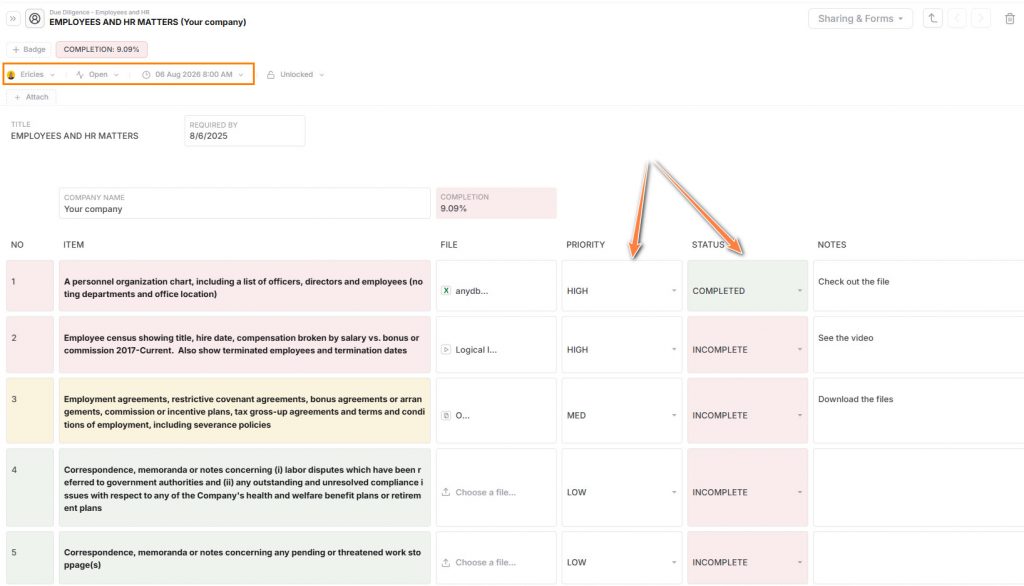
Due diligence often involves fragmented spreadsheets, scattered file shares, and manual status tracking. This leads to versioning issues, unclear accountability, and missed documents, slowing down transactions and increasing risk.
Use AnyDB to manage the due diligence process during legal audits, vendor evaluations, M&A, or fundraising. With the platform, you can:
- Create due diligence checklists with clearly defined sections and items.
- Track progress, ownership, and document status for each item.
- Store supporting documents and comments directly in the system.
- Assign items to team members or external advisors.
- Share access with buyers, investors, or legal teams securely.
Check out the step-by-step implementation of AnyDB’s Due Diligence Tracker here.
A Modern Way to Run Internal Audits
When internal audit software is intuitive, teams stay aligned. Documentation becomes easier to maintain, and compliance stops feeling like a burden and starts acting like a guide. That is the shift most organizations are truly looking for.
AnyDB supports this change with a structure that is simple to adopt and flexible to expand. You can start with our compliance templates and shape them to the way your team already works. No lengthy onboarding. No confusing menus.
If you are ready to see what this feels like in practice, sign up for a free AnyDB workspace and revolutionize your next audit cycle.

The End-to-End Operations System that Finally Fits Your Reality.
No more scattered spreadsheets or rigid, disconnected tools.
AnyDB is a modern, customizable platform for managing business records and operations across teams, clients, and partners.
Learn More


Phone: (512)-761-7979
© 2024 Humanly Inc. All rights reserved.
What is AnyDB?
AnyDB is a unified, customizable data store designed to streamline and empower your entire organization. Effortlessly store, organize, and share custom business data to drive both internal and external operations across teams. Think of it as spreadsheets on steroids.Perfect for Sales, Marketing, Operations, HR, and beyond. Discover AnyDB