Working with Connected Objects
Once objects are connected, data can flow between them.
In AnyDB, data flows in two primary ways:
- Attachments → let you add things (aggregate) up or down and share context
- Links → lookups (pull data from linked objects)
Attached objects: sharing information both ways
Attachments create one main thing with many parts:
- one main object
- many objects inside it
Because these objects live together, information can move both ways.
From attachment child records to the parent object
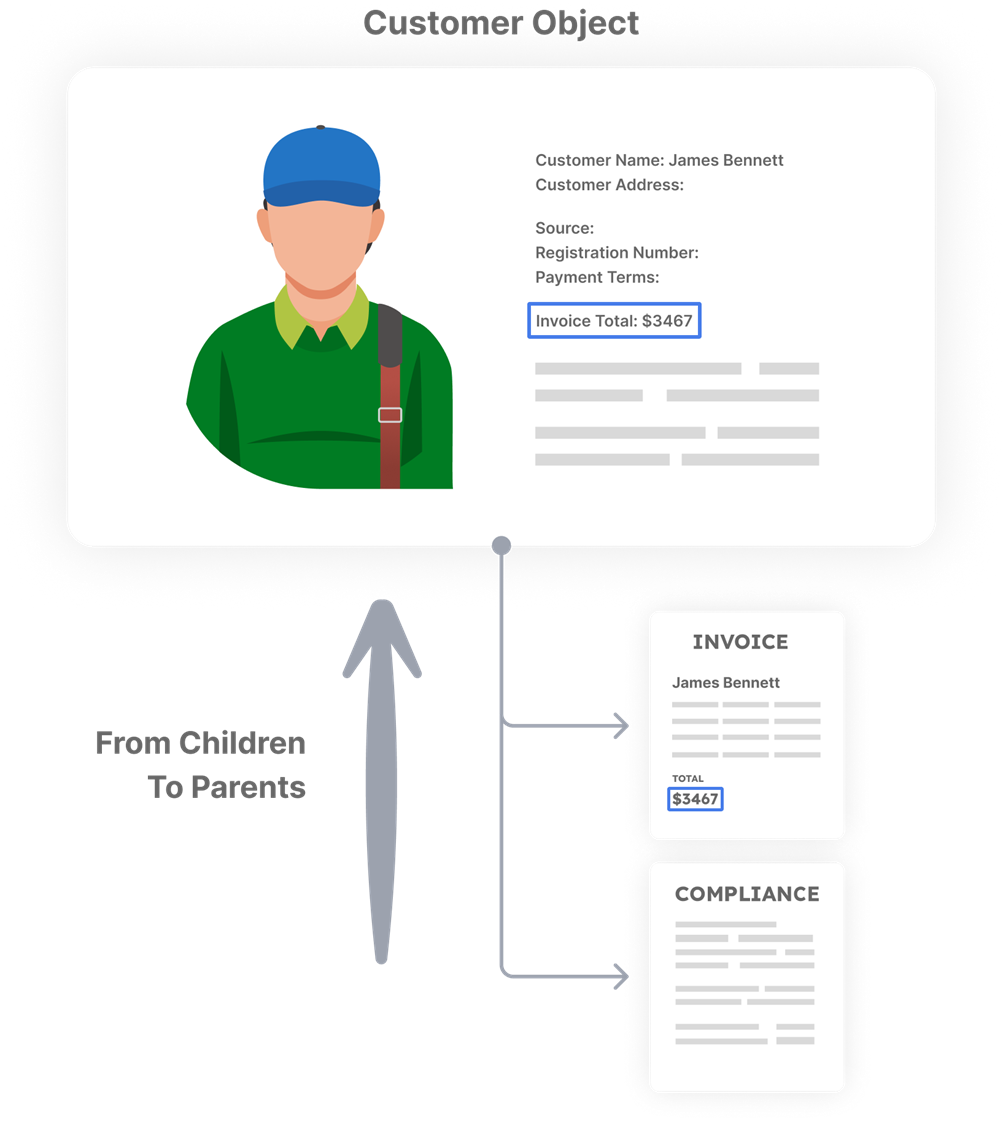
The parent or main object can:
- add up values from what’s attached
- count how many items there are
- show totals, progress, or status
Examples:
- an order showing its total from order lines
- a project showing progress from tasks
- a warehouse showing value from inventory
From the parent object to attached child records

Attached child objects can also read values from their parent objects, for example:
- inheriting customer, project, or warehouse context
- using parent-level status, dates, settings, or policies
- computing values based on parent data
Linked objects: lookups without containing it
A link connects one object to another without containing it.
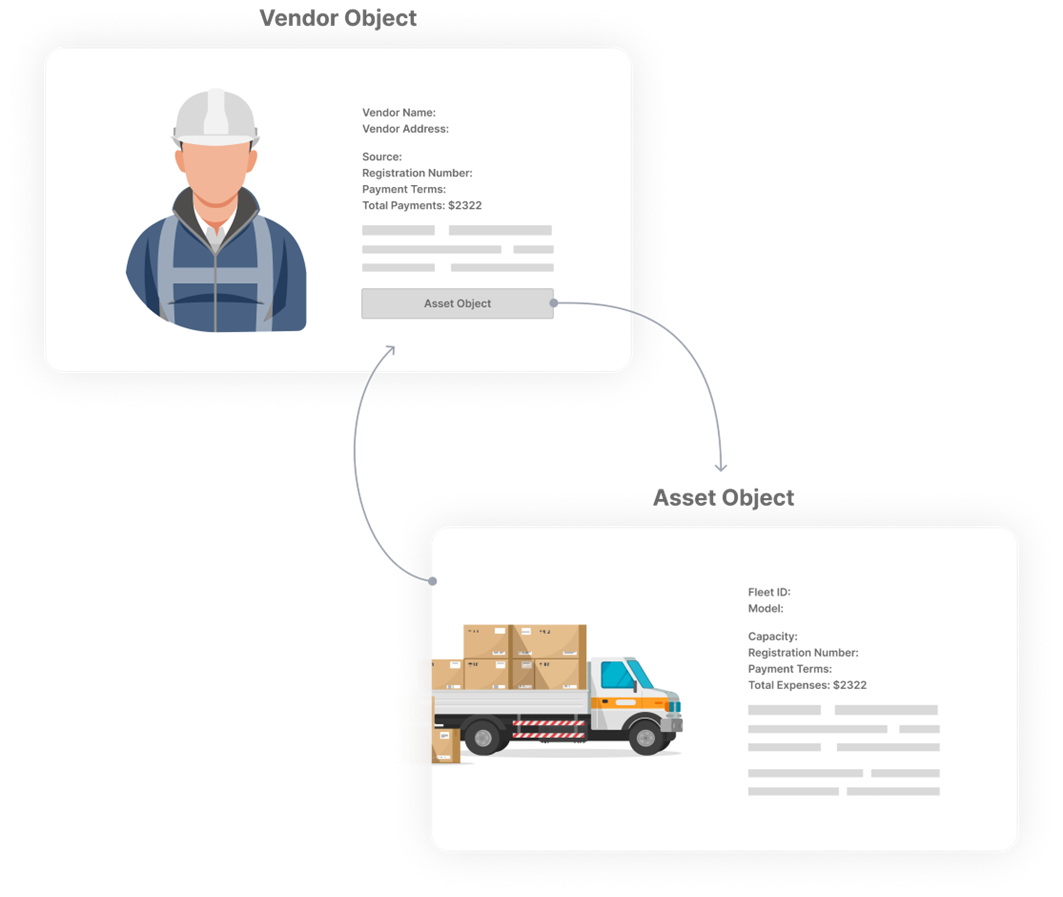
Linked objects remain independent and reusable, while still allowing data to flow between them.
Links enable lookups using DYNREF, which allows an object to:
- pull values from a linked object
- always show the latest data
- avoid copying or duplicating information
Common examples:
- an order links to a customer
- an order line links to a product or SKU
- a purchase order links to a vendor
Links are best for:
- reusable master data
- one-to-one references
- reading data without aggregation
Rollups vs lookups (key difference)
| What you want to do | Use |
|---|---|
| Group things together | Attachment (Child Record) |
| Add things up or show totals | Attachment (Child Record) |
| Show a value from another object | Link + DYNREF formula |
| Use the same object in many places | Link |
A common mistake
Do not use links when things actually belong together.
For example:
- Order lines should be attached to an order so totals work
- Products should be linked so they can be reused
That’s the whole idea.
What to remember
- Attach things that belong together
- Link things that are shared or reused
- How you connect objects decides what you can do with the data