
Published on January 19, 2026


Many companies believe they have control over their suppliers, yet their vendor contract lifecycle is scattered across PDFs, emails, and shared folders. The result is predictable: limited visibility, duplicate versions, and renewals happening without anyone noticing.
A common complaint is missing a renewal date due to the lack of reminders, often only realizing it after receiving a frustrated email.
That’s exactly why vendor contracts exist. They formalize agreements with suppliers, defining scope, responsibilities, timelines, pricing, and legal protections. In a world of increasing outsourcing and rising pressure for governance and traceability, this is no longer just bureaucracy: it’s a necessity.
As the volume and complexity of contracts grow, relying on disconnected documents just doesn’t work. That’s why more companies are looking for structured, connected ways to manage the full vendor contract lifecycle, from creation to monitoring and renewal.
What is a vendor contract?
A vendor contract is a formal agreement between a company and a supplier that defines responsibilities, scope, timelines, pricing, and legal protections. Unlike service agreements, purchase agreements, or Master Service Agreements (MSAs), it centralizes all the critical elements needed to ensure both parties deliver on their commitments.
Within the vendor lifecycle, a vendor contract typically follows vendor due diligence and vendor onboarding, serving as the foundation for tracking vendor performance and managing renewals or offboarding.
In short, it connects every stage of the supplier relationship, ensuring control, visibility, and compliance throughout.
Key components of a vendor contract
A robust vendor agreement ensures every partnership is clear, secure, and measurable. Essential elements include:
- Parties and purpose: who’s involved and why, aligning expectations upfront.
- Scope of work: clearly defines deliverables to avoid ambiguity and rework.
- Deliverables and timelines: turns obligations into measurable targets for contract tracking.
- Pricing and payment terms: ensures transparency and financial predictability.
- Responsibilities: outlines who does what, keeping each step accountable.
- Liability and legal protections: mitigates risk and defines consequences for disputes.
- Data privacy and compliance: keeps operations secure and aligned with regulations.
- Renewal, expiration, and termination: prevents surprises with expired contracts or auto-renewals.
- SLAs and KPIs: links contracts to real performance metrics.
- Attachments and documentation: centralizes certifications, reports, and evidence for auditability.
A well-structured vendor contract serves as an operational guide, connecting clauses to vendor performance and responsibilities, creating transparency and trust from signing to renewal.
Types of vendor contracts
Choosing the right type of vendor contract is essential to align expectations, manage risk, and ensure partnerships operate smoothly. There’s no one-size-fits-all approach. Each project, supplier, and risk level demands a tailored solution.
Key types of vendor contracts include:
- Fixed-price: predictable deliverables when scope is clear.
- Time and materials: flexible, paid by effort or hours, ideal for uncertain projects.
- SLA (Service-Level Agreement): defines performance metrics and penalties.
- MSA + SOW: master agreement with specific Statement of Work for each project.
- Purchase contract: for goods or materials with clear terms.
- Framework agreement: general terms for multiple future transactions.
- Short-term vs. long-term: short-term offers flexibility, long-term provides stability and better conditions.
Picking the right type turns your contract into a strategic tool, linking responsibilities, deliverables, and performance indicators to ensure clarity and efficiency across supplier relationships.
Using the vendor agreement templates in AnyDB, you can see how different contract types can be organized and managed.
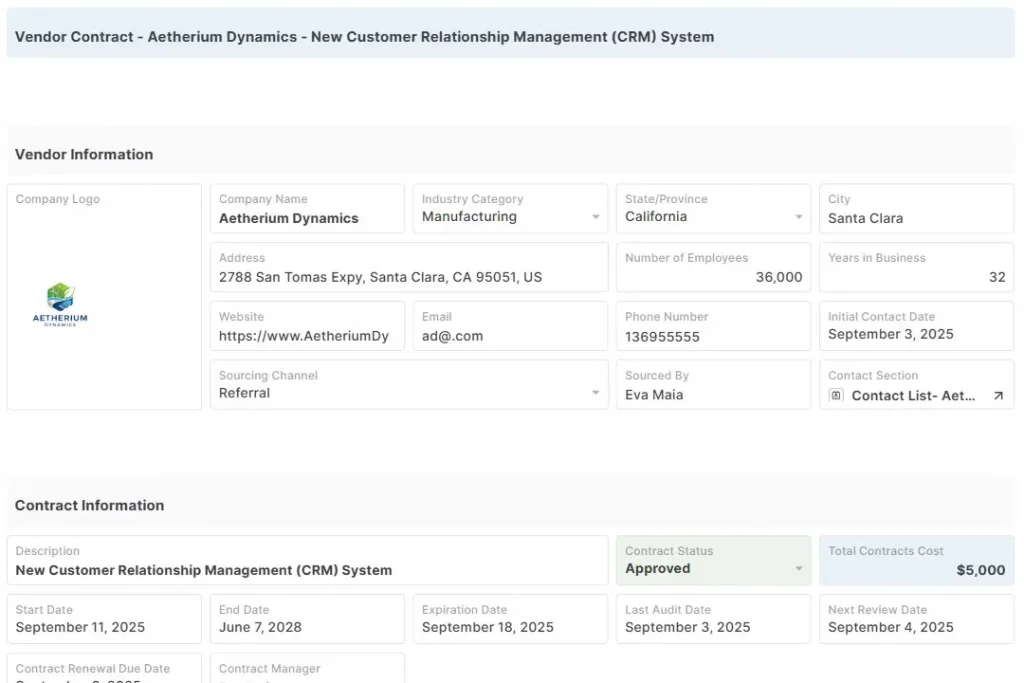
Vendor Contract Management: What it Involves
To maintain strict control over versions, changes, and approvals, vendor contracts need to be managed in a way that ensures every update is logged and fully traceable. It means that effective vendor contract management requires more than just storing agreements.
Monitoring expiration dates and renewals is critical to prevent missed opportunities or supply disruptions.
Also, connecting contracts to vendor performance and KPIs enables data-driven decisions rather than guesswork.
Finally, effective contract management also involves compliance, governance over attachments, and clear permission settings for internal teams and external stakeholders.
With these structured processes, companies gain a complete and reliable view of each supplier relationship, laying the groundwork for integrated tools like AnyDB.
Managing vendor contracts with AnyDB
Managing vendor contracts becomes far easier with AnyDB. You can track every stage of the vendor contract lifecycle, from initial registration to performance and compliance evaluation.
By connecting the Vendor Contract template directly to the Vendor Management Database, each agreement becomes a centralized point of control and visibility.
Key features include:
- Contracts linked to vendor records, compliance logs, and performance dashboards;
- Full history with notes, audits, attachments, and revisions;
- Automatic renewal alerts and deadline tracking;
- Public forms for submitting documents, proposals, or updates;
- Granular permissions, so auditors see only compliance, vendors see only what’s allowed, internal teams see everything;
- QR codes available for every record you want to share;
- Custom vendor dashboard to monitor performance, risk, and deadlines.
Everything centralized in a single system with zero data duplication.
With this setup, AnyDB turns vendor contract management into a transparent, organized, and secure process. Companies reduce risk, track strategic KPIs in real-time, and maintain complete oversight of every supplier relationship without complexity.
Create your vendor contract for free today!
FAQs About Vendor Contract
Below are quick answers to common questions about vendor contracts and management:
What is a vendor contract?
A vendor contract is a formal agreement outlining scope, responsibilities, timelines, pricing, and legal protections between a company and a supplier.
How do I write a vendor contract?
Start by defining parties, scope, deliverables, timelines, payment terms, and compliance requirements. Use clear language to align expectations and protect both sides.
What are the four types of vendor agreements?
Common types include fixed-price, time & materials, SLA, and MSA + SOW, each suited to different project scopes and risk levels.
How do I track contract renewals?
Monitor key dates, set reminders or automated alerts, and link contracts to performance dashboards for proactive management.
What is vendor contract management?
It’s the ongoing process of overseeing contracts from creation to renewal, ensuring compliance, performance tracking, and version control.

The End-to-End Operations System that Finally Fits Your Reality.
No more scattered spreadsheets or rigid, disconnected tools.
AnyDB is a modern, customizable platform for managing business records and operations across teams, clients, and partners.
Learn More


Phone: (512)-761-7979
© 2024 Humanly Inc. All rights reserved.
What is AnyDB?
AnyDB is a unified, customizable data store designed to streamline and empower your entire organization. Effortlessly store, organize, and share custom business data to drive both internal and external operations across teams. Think of it as spreadsheets on steroids.Perfect for Sales, Marketing, Operations, HR, and beyond. Discover AnyDB