AnyDB For Vendor Management
  • Retail
  • Manufacturing
  • Construction
  • Custom Services (HVAC, Solar Energy, etc)

Built to scale from dozens to thousands of vendors without losing control

Built to scale from dozens to thousands of vendors without losing control.
Free Demo / Setup
Book a demo and let us set up AnyDB for you. Free of charge!

Why Vendor Management Breaks Down?

It starts simple. Then it fragments.

As the vendor list grows, contracts, approvals, and compliance activities move across spreadsheets, drives, and inboxes.
Information spreads across tools and ownership becomes harder to follow.

  • Vendor details stored across spreadsheets, drives, and email threads

  • Contracts and documents difficult to locate

  • Performance and compliance not consistently tracked

  • Duplicate or outdated data across files

  • Communication scattered across teams and vendors

Vendor Management as an Operational System

Each vendor exists as a structured operational object with its own history, linked records, and audit trail.

Vendor information lives in a single operational record that connects the work around it.

  • Contracts
  • Compliance
  • Documents
  • Audits
  • Projects
  • Orders
  • Assets

This structure allows teams to manage vendor relationships as operational entities instead of isolated entries.


What this structure enables:

  • Vendors managed as operational objects, not spreadsheet rows
  • Direct links to contracts, compliance records, projects, orders, and assets
  • A complete activity history with approvals, status changes, and documents
  • Audit-ready traceability for compliance and internal reviews
  • A structure that remains stable as vendor volume grows

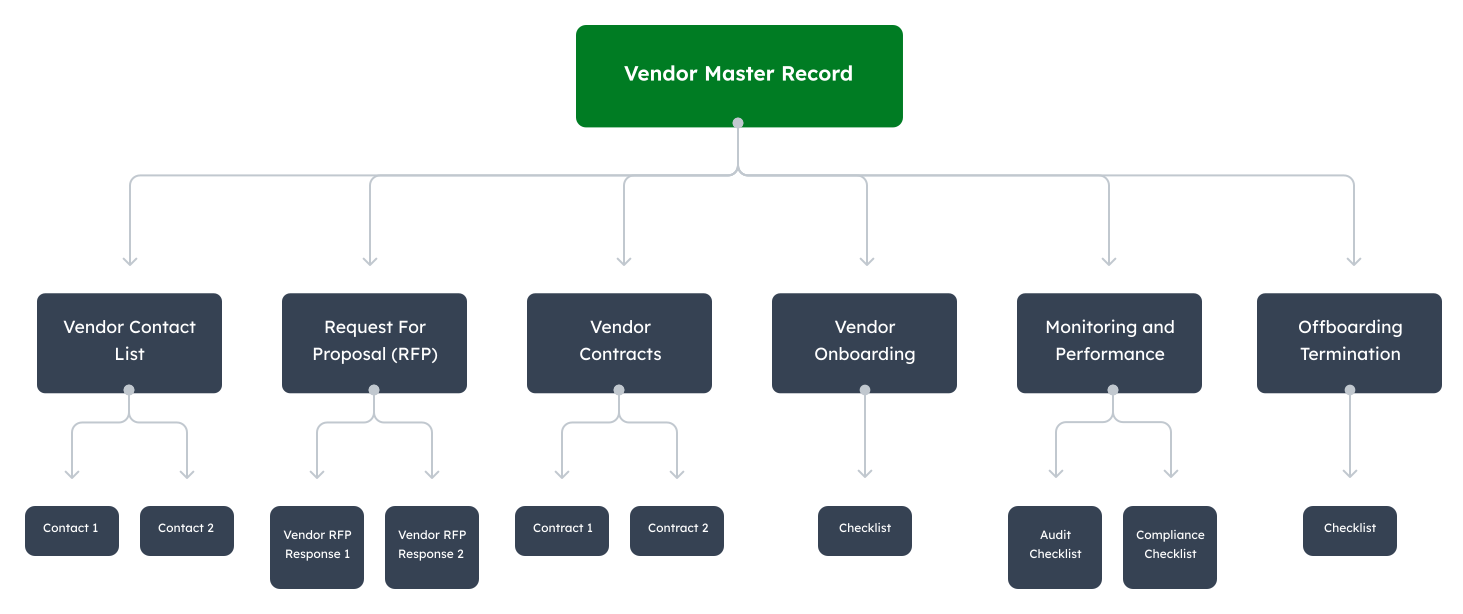
Vendor Management Data Model


Operational Key Objects

How It Works in Practice

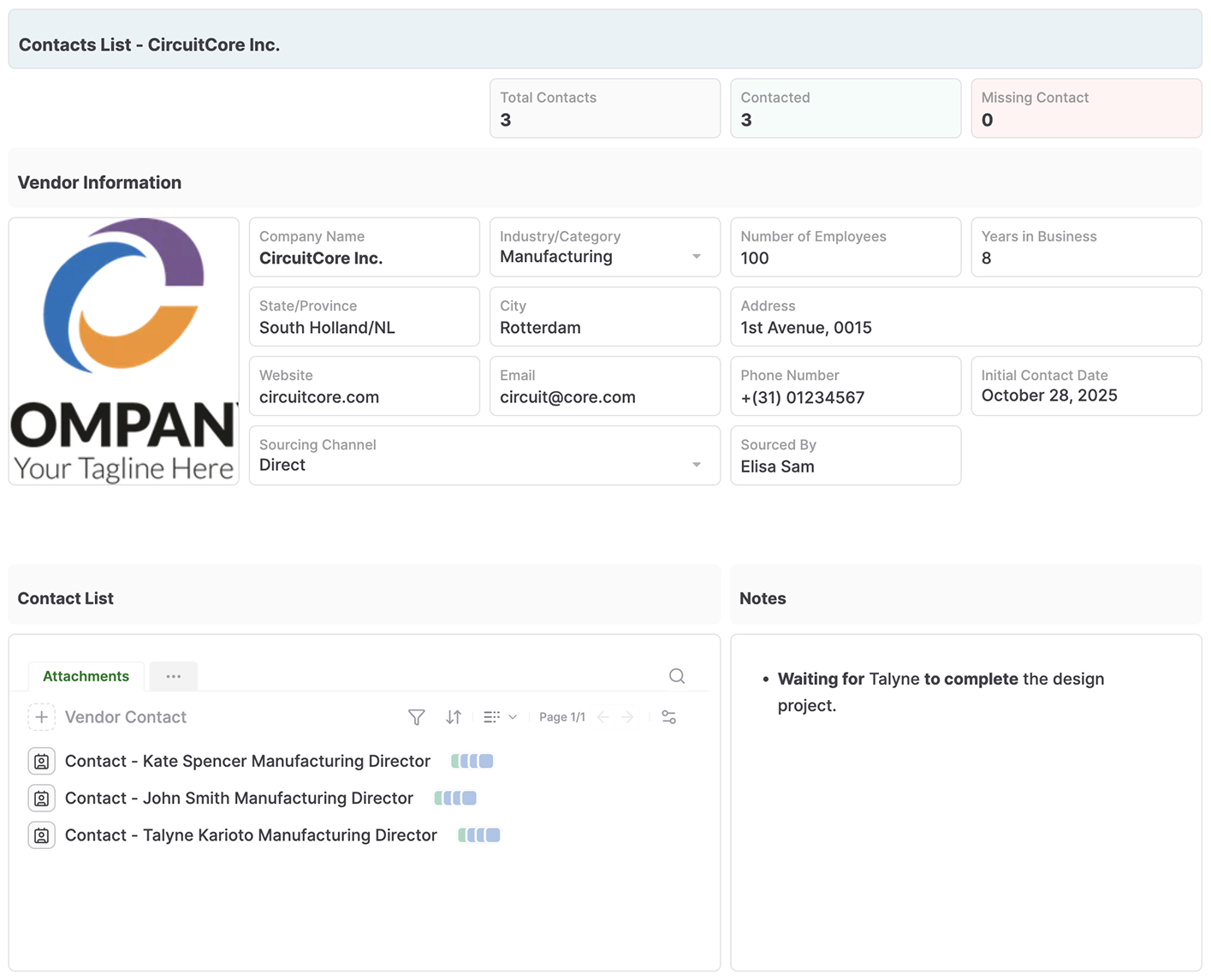
What the vendor record contains:

Each vendor lives as a structured operational record that holds the full operational context of the relationship.

Contracts, documents, reviews, and compliance activities stay attached to the same vendor object, which keeps updates consistent and easy to follow across teams.

Core vendor details, contacts, and ownership Linked projects, orders, or operational deliverables Required documents, certifications, and compliance records Full history of changes, approvals, and updates Audits, inspections, and performance reviews.

Operational Benefits

  • Vendor information stays centralized and consistent
  • Compliance and documentation remain attached to the correct vendor
  • Renewals, obligations, and risks become visible earlier
  • Teams work from the same record without exports or manual reports
  • Every update remains traceable for governance and audits
  • The workflow remains stable as vendor relationships grow in volume

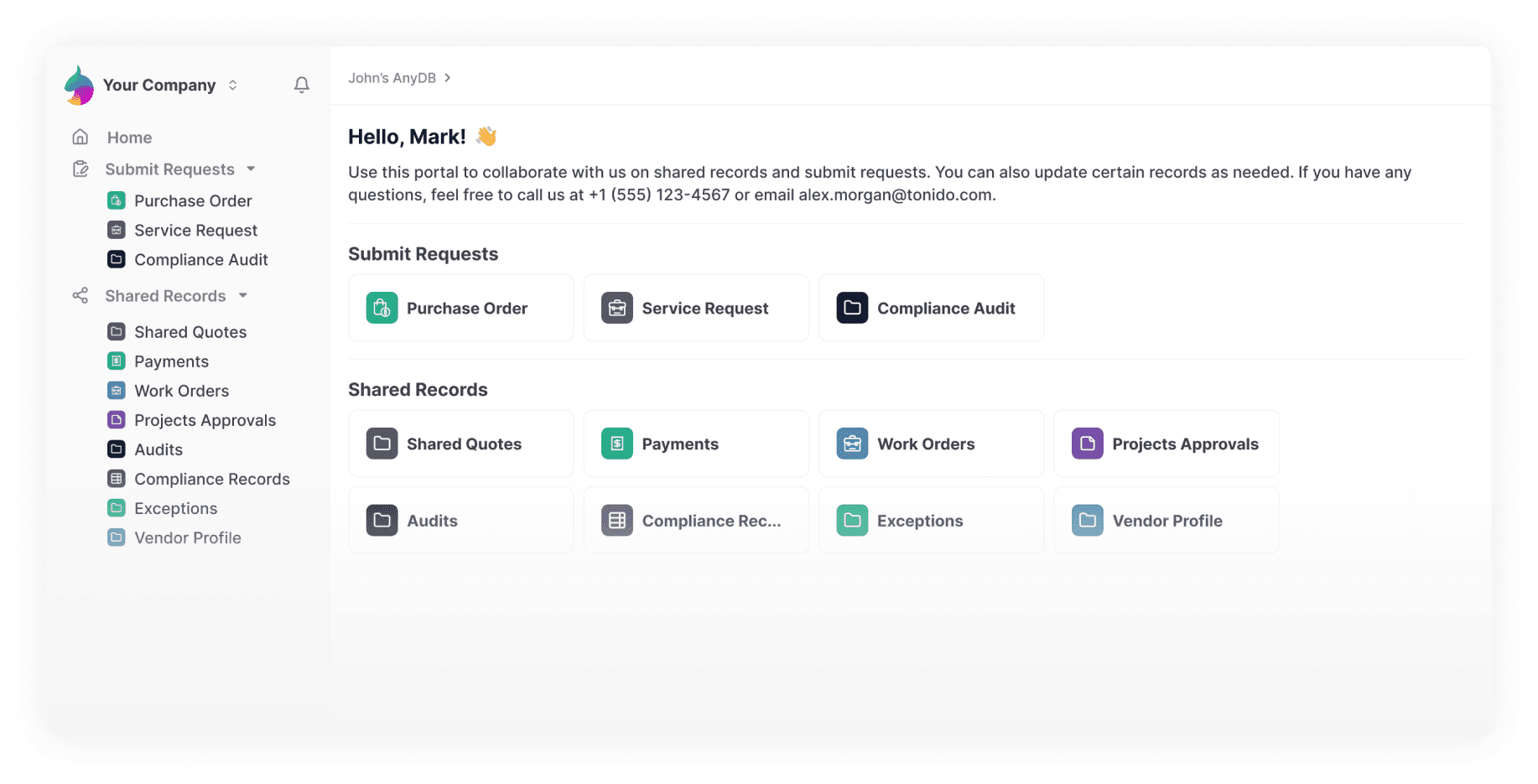
Portals in AnyDB

Vendors and partners collaborate through secure portals with controlled access and unlimited free guest accounts, which keeps collaboration simple and removes the need for paid seats.

What this structure enables:
  • Vendors managed as operational objects, not spreadsheet rows
  • Direct links to contracts, compliance records, projects, orders, and assets
  • A complete activity history with approvals, status changes, and documents
  • Audit-ready traceability for compliance and internal reviews
  • A structure that remains stable as vendor volume grows

Resources

AnyDB Help Center

Sharing and Collaborating With Portals

Watch Now

Vendor Management Overview

Watch Now

Get a working system built around your workflow

See your own vendor process running in a structured, connected system without rebuilding everything yourself.

We build the first version with you using your real data, so you can see it working right away and move forward with confidence.
Explore a sample vendor system or talk to us about your workflow