
Published on December 19, 2025


Procurement moves fast inside most organizations, yet the process itself often feels like organized chaos. Requests appear in inboxes with no context. Approvals get lost in Slack. Vendors send quotes in every format imaginable. Someone is always updating while trying to remember who approved what.
This is where purchase order software steps in as the operational backbone your process has been missing.
It creates a single source of truth so no one has to rely on scattered messages or last-minute reminders. It builds audit trails, strengthens accountability, and gives every team a clear view of what vendors should receive and when.
In this guide you will see what purchase order software actually does (or should do), why it matters for daily operations and cost control, and how to choose the right approach for your company.
Why Purchase Order Software Matters for Modern Operations
Purchase order software solves operational gaps by creating a single, reliable flow for requests, approvals, documentation, and vendor communication. It removes the silent guesswork that creeps in when people jump between tools that never speak to each other.
With this level of clarity, miscommunication turns into alignment, and surprises stop showing up on your doorstep.
For many companies, the pain points are easy to identify:
- Operational chaos.
- Reentering data over and over again.
- No version control.
- Documents shared in insecure ways.
- A complete lack of traceability.
- Zero real-time visibility.
The kind of environment where the smallest purchase becomes a small adventure.
Then something interesting happens. The moment a team receives a clean, approved, traceable purchase order, everyone breathes easier.
In short, effective P. O. software is a coordination engine
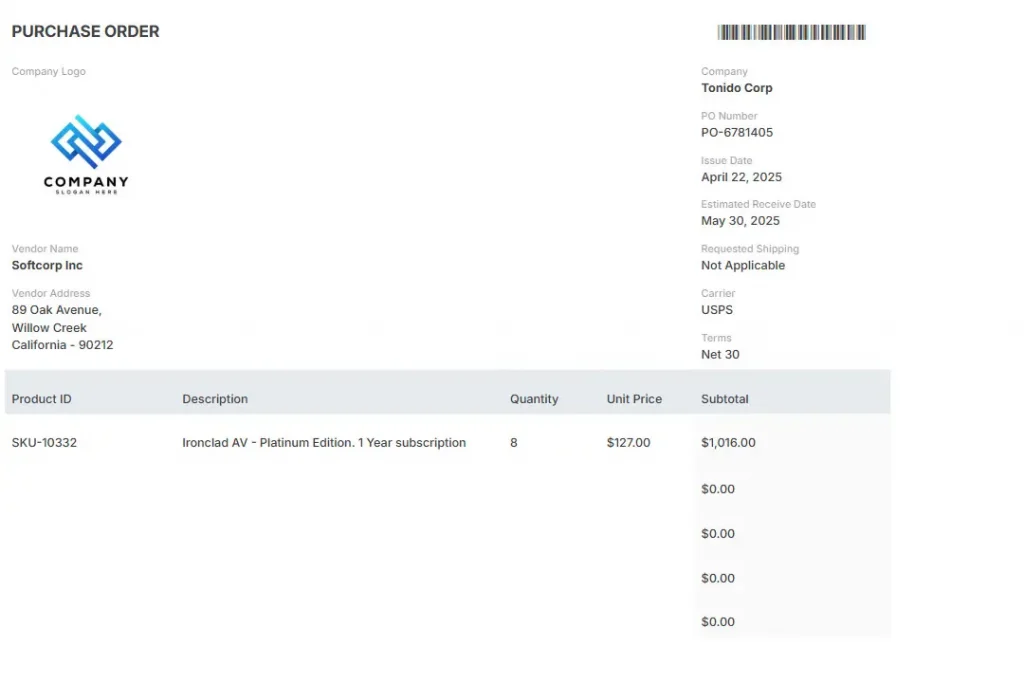
Key Features of Effective Purchase Order Software
Strong purchase order software creates structure without slowing anyone down. It gives teams a clear path from request to approval to supplier communication.
Below are the core capabilities teams should expect from a reliable solution:
Essential Intake and Validation
A clear intake process sets the tone for everything that follows. Look for software that offers:
- Structured request forms with fields for items, quantities, quotes, and documents.
- Budget validation that alerts teams when requests exceed planned spending.
- Accurate line item entry to prevent errors from manual data copying.
These features shorten decision time and reduce unnecessary back and forth.
Approval Flow That Actually Moves
Approvals should never disappear into inboxes. Strong software includes:
- Configurable approval routing across managers, finance, and operations.
- Real-time status tracking that removes internal messages like “Any update on that request”.
- Clear visibility of submitted, under review, approved, or rejected requests.
Teams stay aligned because the workflow stays visible.
Vendor Information That Stays Organized
Vendor clarity reduces operational friction. Look for:
- A centralized database with history, pricing, and performance.
- A place to store all attachments so documents do not get lost across chats and emails.
- Version consistency that prevents old files or outdated quotes from resurfacing at the worst time.
This avoids the familiar questions: Who supplied this last time? What price did we approve? Was this vendor flagged before?
Traceability and Accountability
Audit trails are one of the most valuable elements of purchase order software. They provide:
- A complete history of changes, comments, and decisions.
- Clear records for compliance and reporting.
- Confidence in data accuracy across departments.
When everything is traceable, nothing gets missed.
Internal and External Collaboration
The system should support both sides of the procurement flow:
- Safe access for internal users with permissions based on roles.
- Controlled collaboration with sellers who need to share quotes, confirm orders, or upload documents.
- Consistent communication channels, so information stays in one place.
This prevents risks created by scattered emails or spreadsheets.
Why Not Use ERPs, No-Code Tools, or Spreadsheets?
Traditional ERPs often need IT support for even small workflow changes. No-code apps promise flexibility but struggle under real operational complexity. Spreadsheets introduce risks because anyone can overwrite formulas without traceability.
You may also like: Vendor Onboarding Best Practices: From First Contact to Full Integration
Automate Requests and Approvals with AnyDB Templates
AnyDB makes the procure-to-pay flow clear and predictable. Purchase requests arrive with structure. Approvals move without confusion. Purchase orders stay organized from creation to delivery.
Everyone sees the same information, and no one chases updates across emails or spreadsheets.
You can try the workflow yourself using these free ready-to-use templates:
Or, if your procurement data already lives in spreadsheets, you can upload them directly into AnyDB!
The platform automatically turns your spreadsheet columns into a structured template and converts each row into an individual record.
No rework. No manual rebuilding. Just a faster way to bring order to the way your team already works.
The Purchase Request Template collects all essential details, so teams submit complete information the first time. Approvals follow the rules you define, and every status stays visible.
Once approved, the request becomes a Purchase Order inside AnyDB. Information, order lines, files, and updates live in one place. Sellers can be invited as guests to upload quotes, confirm orders, or share delivery notes without needing extra licenses.
This structure removes bottlenecks and gives managers the transparency they need to keep operations running.
Procurement Visibility, Cost Control, and Continuous Improvement
Purchase order software becomes far more valuable when it does more than organize requests.
The real strength appears when teams use it to track performance, reveal bottlenecks, and guide smarter decisions. Visibility turns procurement from a reactive function into a predictable system that protects budgets and keeps operations flowing.
There are a few metrics that show the true health of procurement:
- Time to approve purchase requests.
- The number of delayed approvals.
- Vendor delivery performance.
- Budget deviations.
- Purchase order accuracy.
- Missing documents.
- Cycle time from request to delivery.
These indicators reveal where processes slow down or where information is incomplete.
AnyDB helps teams improve because everything is structured and measurable.
Teams understand what is working, what needs attention, and where improvements will deliver real value.
Predictability becomes the norm because decisions rely on seeing what’s working and processes that evolve based on real data.
| What You Need | AnyDB |
| Adjust a workflow | ✅ Change it yourself in a no-code excel-like interface. |
| Scale without surprise costs | ✅ Pay only for what you use with transparent pricing. |
| Maintain control over structure | ✅Version control keeps structure safe and trackable. |
| Collaborate with external partners | ✅External portals are built in and easy to configure. |
| Keep processes aligned with daily operations | ✅ Flexible relational database that mirrors real workflows. |
| Reduce long-term risk | ✅ Configurations stay stable and evolve with your business. |
Bring Clarity to Procurement and Empower Your Team
You do not need to overhaul everything at once. Start with one request workflow. Refine it. Then expand. Small steps create momentum, and the improvements become obvious faster than most teams expect.
AnyDB gives organizations the structure they need without forcing them into rigid systems or fragile spreadsheets. Purchase requests stay organized, and everyone understands where each order stands.
You can try it today. Sign up for a free AnyDB workspace, activate the procurement templates, invite one vendor, and see how predictable it can feel every step of the way.

The End-to-End Operations System that Finally Fits Your Reality.
No more scattered spreadsheets or rigid, disconnected tools.
AnyDB is a modern, customizable platform for managing business records and operations across teams, clients, and partners.
Learn More


Phone: (512)-761-7979
© 2024 Humanly Inc. All rights reserved.
What is AnyDB?
AnyDB is a unified, customizable data store designed to streamline and empower your entire organization. Effortlessly store, organize, and share custom business data to drive both internal and external operations across teams. Think of it as spreadsheets on steroids.Perfect for Sales, Marketing, Operations, HR, and beyond. Discover AnyDB